A Good Day for a Smile

Nora Roberts sells 21 books every minute. When you go to her website, you’ll find all of her titles are available in an Excel spreadsheet. 160 of her books have been New York Times bestsellers. After all these years and all these books, I wonder if she still feels a sense of excitement and adventure on the day each new novel is listed on Amazon. On each book’s official release date, does she sit back in an easy chair, smile and enjoy the experience?

SeaCoverMy second novel, Jock Stewart and the Missing Sea of Fire, was listed there yesterday. Exhausted from non-stop proofreading, I didn’t notice the listing until late in the evening and the book’s description hadn’t appeared yet. It’s there now and yes, it does make me smile–partly because it’s there, partly because my Jock Stewart character is so off the wall, I can’t help but be amused at the antics he gets away with while following truth, journalism and the evil-doers who stole the mayor’s racehorse and killed his publisher’s girl friend.

Writing is an adventure that unfolds in the quiet of an author’s den. My den’s a mess and I have no clue where anything is. I’m the hermit of a room lined with books, some by Ms. Roberts and dozens of other authors whose work has also contributed to my on-going education. It’s nice, though, to step outside the solitude once in a while and see what’s going on in the world past my horizon of books. Seeing one’s book listed on Amazon is a perfect excuse.

I have a smile on my face today. When you read the book, I hope you will, too.

‘100 Years, 100 Stories’

The National Park Service has been plans for the 2010 Glacier National Park Centennial. Montana residents have already had a chance to view exhibits of centennial artwork at multiple locations including the airport at Kalispell.

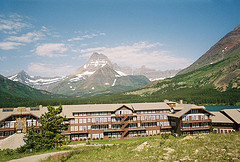
This November, the NPS plans to release a commemorative book of stories about the park written by visitors, workers and long-time area residents called 100 Years, 100 Stories: The View Inside Glacier National Park. I’m pleased that my story about salvaging furniture and then cleaning up the rooms at a flooded Many Glacier Hotel during the 1964 Montana flood has been included.

Among other things, the book is expected to serve as not only a collection of memories, but as a fund raising memento to help cover costs for the 2010 centennial. I’ll post an update when the book becomes available.

Malcolm

Many Glacier Hotel
Many Glacier Hotel

Review: Rachel Kushner’s ‘Telex from Cuba’

Telex from Cuba: A Novel Telex from Cuba: A Novel by Rachel Kushner

My review


rating: 5 of 5 stars
Rachel Kushner’s well-researched debut novel about American nickel mining and sugarcane interests in Cuba’s former Oriente Province during the years leading up to Castro’s rise to power is a masterpiece quite simply because the author didn’t take the easy way out.

Her trips to Cuba, her family’s history and her interviews of multiple sources could have led to a commercial novel with a linear plot and a third-person restricted point of view. She could have plucked anyone out of her rich cast of characters and fashioned a credible story. Such a story would have read as realism, perhaps even as history, and given her writing skills, the novel probably would have done well.

Kushner took a risk when she stepped outside the domain of plot-driven, photographic realism and chose to allow multiple characters to tell portions of her story via a character-driven, theme-driven kaleidoscopic structure that is often a hallmark of literary fiction. Kushner has given her readers more of an impressionistic view of the well-off and largely isolated Americans in Cuba rather than a news story or a textbook view.

The result is a very rich immersion into the mindset and the culture of the time and place and people, much of which we learn two characters whose wouth is being defined by the swirl of events, K. C. Stites and Everly Lederer. The end of their childhoods is symbolic of the end of the Americans’ little paradise and sets the tone for this beautifully done novel.

View all my reviews.

Celebrating Glacier’s 2010 Centennial: Lord and Lady Snowdrift

In celebration of Glacier National Park’s 2010 centennial, here’s the first in a series of memories and historical anecdotes about Montana and the park. The following excerpt from “Garden of Heaven” is based on a pair of white wolves, called Lord and Lady Snowdrift, who purportedly were the terror of Montana many years ago. (See historical note at the end of the post.) In my view, today’s wolfers are just as determined and cruel as my fictional Jack “Jayee” Gordon.

In the following, my protagonist’s grandmother tells the story of her broken nose:

I could praise him, my husband Jayee, and forgive him for his long absences if it weren’t for Lord Snowdrift.

You know Mark Twain’s claim that he came in with Halley’s comet and expected to go out with it. Elizabeth Jane, my Little Deer, came and went with a white wolf.

Between 1916 and 1923, Jayee hunted Snowdrift, the “soulless wolf” who rampaged—so it was said—from the Bear’s Paw Mountains to the Belt Mountains, killing cattle and sheep. Snowdrift brought out the worst men and the worst in men. Wolves were evil, an ‘enemy of the state’ according to wolfer Ben Corbin who wrote The Wolf Hunter’s Guide some years earlier. Manic in his pursuit of the “sinister canis lupus” or “the devil’s four-legged scourge” as Jayee called the misunderstood puppies, your grandfather disappeared into the great fastness of his own skull where there was plenty of room for long journeys.

Jayee liked the role of the wolfer-hero and he packed the hallowed tools of his trade with the same care attended to his surveying instruments. He lived and breathed death in the clothing of traps, guns, strychnine, arsenic, cyanide, matches and gasoline, and dynamite. He was less cruel than some. He slept with the gospel of Ben Corbin closer to his heart than the words of Matthew, Mark, Luke or John.

I cannot say how often he set eyes on the illusive Snowdrift. Like as not, he saw more of that wolf with a claw missing from his left front foot than of his daughter with her open spine. Truth be told, I reared Jayee’s first daughter and truth be told, I buried his second daughter, Betty—my exuberant Áwakásipok—for the want of good medicine on May 1, 1923. Jayee missed those last days. He came by the ranch later that month after verifying Snowdrift had been shot stone cold dead by wolfers Stevens and Eckerd in the Highwood Mountains and that’s when I told him the news.

He found me in the pens clipping the cord of a new born that had just fought its way into the world hind legs first. The ewe gave me trouble and was in a fair sour mood.

Jayee burst into my line of fire like Santa, with an armload of dolls, his coat pockets bulging with scrip from Buttrey’s store.
‘Where’s my sweet bouncing Betty?’ he asked. I believe he thought she’d be playing in one of the pens. ‘Where’s Daddy’s little girl?’

‘She’s down in the cottonwoods,’ I said.

I had grabbed up the lamb by its front feet and was sloshing a bit of iodine on the navel cord when the heel of Jayee’s boot slammed into my face. He was accustomed to kicking fractious stock and used to laugh his ass off saying the ewes thought his foot was a battering ram. Odd to say, I reflected on that as I lay on my back while a squirming lamb caressed my freshly broken nose and a spooked ewe kicked me in the ribs.

‘Damn squaw. Has all your sense run off? How the f— can you leave her off alone while you mother the sheep?’ Jayee was into a first class shout. ‘I’m just asking you how the damned f— can you leave her?’

When I didn’t answer due to the ongoing commotion of sheep, he flung the ewe off me and allowed me to sit up and lean against the side of the pen. I wouldn’t let him near the lamb.

‘Did you bury the wolf?’

‘Wasn’t mine to bury.’

‘Betty was, had you been around.’

‘What are you saying?’

‘Walk down and read her tombstone while I settle myself.’

His face bleached out and that surprised me.

‘God, no. When?’

‘Two weeks ago. Pneumonia on top of everything else was the death of her.’

‘You could have written.’

‘Written where? The Havre, the Fair, the Grand? Your actual Havre address has been vague.’

‘The yard office might have been a start. Did you have any help?’

‘Fiona stayed with us.’

‘Tom’s fiancé?’

‘Of course.’

‘Where do we do from here?’

‘Well Jack, I’ve got a broken nose, a splitting headache, a bruised rib, a dress covered with iodine, and a lamb to see to. What about you?’

He reached down and wrenched my nose more or less straight. ‘I meant you and me,’ he said.

‘You and me what?’

‘Having a bite of supper and talking about our life.’

‘As for supper, why not heat yourself some sheep dumplings. As for our life, if the law allowed, I’d divorce you again.’

‘That’d be double jeopardy, my sweet pine.’ He flung a handful of scrip at me. ‘This’ll fetch you a new dress at Buttrey’s next time you come looking for me in Havre.’

‘I’ll come looking when pigs fly,’ I told him.

He left the ranch close near dark, though there was light enough for him to pay Betty his last respects—such as they were.

Now, my little bear cub, we have gone further than facts into the true story of How Granny Got Her Crooked Nose.


Historical Note:

Like as not, we can blame a combination of well-intended false sightings, good natured fibbing, tall tales, moon light, whiskey, and the probable existence of multiple white wolves for the lack of precise details about the real exploits of the wolves called Lord Snowdrift and Lady Snowdrift in Montana beginning in 1917.

Lord Snowdrift purportedly ranged over a 70,000 square mile area of Montana for many years preying on cattle and sheep. With or without the help of his mate Lady Snowdrift he was blamed for over 1,500 kills and credited with the ability to maintain a five mile-per-hour run for 24 hours straight. He was variously reported killed in 1919, 1923, 1930 and other dates.

In my brief account, I settled on 1922 and 1923 respectively for the years in which Lady Snowdrift and Lord Snowdrift were killed. These dates are provided by Jack Holterman’s book Who Was Who in Glacier Land, privately published in 2001 at West Glacier, Montana.

Copyright (c) 2009 by Malcolm R. Campbell, author of “The Sun Singer,” a novel set in a fictionalized version of Glacier National Park.

Real journalists vs. great targets for satire

I am often critical of journalists. That’s because my father was a journalist and journalism educator, and I heard a lot from him while I was growing up how real journalists ought to approach the skills and ethics of their profession

HowToReportSeveral years ago, I accepted a posthumously awarded press association award on behalf of my father, Laurence R. Campbell (1903-1987). Standing up there in front of a room full of veteran student publications advisers, a few of whom were once my father’s students, I wondered how a writer who didn’t follow in his father’s footsteps could possibly connect with the audience.

All I knew to say was: “I worked as a college journalism instructor and student publications adviser for three years. I have to tell you that I felt like I was on a runaway horse.”

They knew what I meant. My father spent his life training others to be real journalists. He wrote hundreds of trade publication articles, ran summer journalism institutes and authored or co-authored numerous textbooks. The advisers attending that Florida scholastic Press Association convention in Tampa knew these books better than I even though I was there when Dad wrote them. I think, though, that I connected with the luncheon audience that day because, while I was an outsider, I cared a great deal about the profession.

SeaOfFireCoverWith my novel Jock Stewart and the Missing Sea of Fire coming out this summer from Vanilla Heart Publishing, I’m still an outsider looking into a world my father knew so well. My novel is a thriller with a lot of satire and comedy in it. To some extent, I’m satirizing the journalism profession and to some extent, I’m satirizing some of the pretentious people who make the news.

If I didn’t care, I couldn’t write the satire. I’m not a real journalist, but I know what one looks like and how he or she ought to act. For me, it was a real hoot poking fun at those who don’t live up to my expectations. I think my father would understand.

Copyright (c) 2009 by Malcolm R. Campbell

Review: “Who’s to Blame?”

Who's to Blame?: A Literary Comedy Who’s to Blame?: A Literary Comedy by Jeffery S. Williams

My review


rating: 5 of 5 stars
SherChristispeare, “the greatest sleuth during Renaissance England” and Pancho, “the most loyal of sidekicks during Renaissance England” have two cases to solve in Jeffery S. Williams’ delightfully clever spoof of the Immortal Bard’s beloved “Hamlet” and “Romeo and Juliet.”

In Book One, SherChristispeare travels to Denmark to find out what manner of conspiracy led to the death of Hamlet and other notables. After using his advanced investigative skills and witty turns of phrase—while fending off siren spies and other tasty evils—to bring order to the chaos behind the crimes, our sleuth heads for Verona where Romeo, Juliet and others have recently been murdered in a manner must curious, if not foul. As they unearth twisted clues and sharp retorts, SherChristispeare and Pancho discover (more than once) that their lives are in jeopardy, and frankly they don’t see as much humor in it as readers will espy.

No knowledge of the Shakespeare plays is required to enjoy this hilarious novel. However, readers familiar with “Hamlet” and “Romeo and Juliet” will find Williams’ humor a rich stew seasoned with non-stop references and tangled-up lines. Suffice it to say, while all’s well that end’s well in “Who’s to Blame?,” SherChristispeare’s evidence points everyone—including the reader—in unforeseen directions, most of which are complicated, elaborate, and somewhat different than the original author of the plays anticipated.

The greatest strength of this novel arises out of dialogue which is clever, crafted by an adept author with a deep knowledge of his source material, and that is almost pure burlesque in style and tone. This dialogue is most effective in scenes where it introduces characters or otherwise advances the plot:

“Noble Ambassador,” I said and bowed, “I am SherChristispeare court—“

He waved me off. “I know who you are.”

I straightened to my full measure, “I am here to ask you about—“

“The Queen, the King, the Prince, and a soul named Laertes—all blood-stained and most still, most secret, and most grave.” His eyes twinkled at his pun.”

“So they were all at supper, ay?” I said.

“Supper?”

“Food for worms.”

“For what?”

“Never mind. What did you learn?”

The Ambassador recounted the story of we he had heard from the voice of Horatio—rife with carnal, bloody and unnatural acts, of accidental judgments, casual slaughters, and deaths put on by cunning and forced abuses.

“Tragical-comical. Historical-ironical,” I said.

Williams doubles the strength of his parody by making SherChristispeare and Pancho aware that they are punning, borrowing lines, and creating highly crafted Shakespearian-style wit. In dueling conversations between the sleuth and his sidekick, points are lost for lack of originality and theft from the Bard himself.

The novel sags ever so slightly in a few places where the plot is moved onto the back burner, giving way to long strings of one-liners which are essentially bouts of verbal one-upmanship. The plot, while inventive is overtly farcical and serves in many ways more as a scaffold for the jokes than as a strong storyline.

That said, “Who’s to Blame?” belongs on the top shelf with Richard Armour’s “Twisted Tales from Shakespeare” and our other favorite parodies. Lovers of words and wit will admire the care with which this sleuthing jest was created, wherein wordplay’s the game to bring an able sleuth acclaim.

View all my reviews.

Book Review: “They Plotted Revenge Against America”

THEY PLOTTED REVENGE AGAINST AMERICA THEY PLOTTED REVENGE AGAINST AMERICA by Abe F. March

My review


rating: 5 of 5 stars
Terrorism, by definition, operates outside the traditional rules of war. It’s hard to combat because attacks are no longer limited to people wearing military uniforms at well-formed battle lines: they can happen anywhere, at any time, and they may well target people who don’t have any direct knowledge of the peoples and issues involved.

This is the arena of Abe F. March’s chilling novel “They Plotted Revenge Against America.” The novel is chilling, not because it’s filled with larger than life James Bond daring-do in faraway trouble spots. Quite the contrary: this novel takes place on American soil as survivors of the American attack on Baghdad blend in to mainstream America to personally extract revenge against everyday citizens.

“They Plotted Revenge Against America” is a plausible, sobering, intricate and effectively plotted story about a group of well-trained, well-coordinated teams who slip into the U.S. with forged papers and then painstakingly work through a plan that will infect food and water supplies with a deadly virus.

These team members are not the gun-wielding, grenade-throwing stereotypical terrorists we see in most TV shows and movies. They are everyday people who have suffered personal loss and who want to fight back. Once their mission is complete, they plan–if possible–to go back to their normal lives. As the mission unfolds, they alternate between excitement and doubt while trying to avoid detection, and in the process, they discover while blending into community life, that Americans are not the monsters they expected.

Since the overall mission leader is a double agent working for Israel’s Mossad, group members must not only avoid Homeland Security and other U.S. law enforcement agencies, but the highly effective Israel intelligence agency as well. This subplot is a nice touch in a book that suggests we’re more vulnerable than we suspect.

View all my reviews.

Another Novel Makes the Rounds

I knew when I completed GARDEN OF HEAVEN in March, 2008, that a 240,000-word novel by a relative unknown would be a hard sell. Nonetheless, I will continue trying to sell it.

However, I’m turning my immediate attention on a 60,000-word novel called JOCK STEWART AND THE MISSING SEA OF FIRE that began making the rounds this week. Those of you who have chanced by my Morning Satirical News weblog have already met the main character: he bills himself as a hard-boiled reporter for the Junction City Star-Gazer of the kind seen in Hollywood’s noir movies of the 1940s and 1950s.

Whereas “Morning Satirical News” takes a gallows-humor look at real issues, the novel finds Jock–and some of the recurring fictional characters from the blog–trying to track down who stole the Mayor’s prized racehorse Sea of Fire and who killed the Star-Gazer publisher’s prized girl friend Bambi Hill.

I’m classifying the book as humor. Now, I’m keeping my fingers crossed that a prospective publisher also thinks it’s funny.

Book Review: The Fall of Rome

The Fall of Rome (Wild West Romance) The Fall of Rome by Beth Ciotta

My review


rating: 5 of 5 stars
“The Fall of Rome” is a hilarious conclusion to the trilogy Ciotta slung into our consciousness with “Romancing the West” in 2006, then followed up with “Lasso the Moon” in 2007. Reading Ciotta’s fast-moving books with fast-draw, fast romancing characters on all sides of the law has been rather like getting caught in a stampede. Too bad it’s over. But if it has to be over, the shenanigans that begin in Gila Gulch, Arizona Territory (1878) wonderfully tie together a passel of characters and plot lines that go way back to the first book. The good, the bad and the ugly get what they’re dreaming about and/or what they deserve. The sprawling Garrett family and its friends within the covert Peace Maker Alliance bring to Arizona the best qualities of characters played by Gary Cooper, John Wayne, and Glenn Ford along with a dash of the funniest people from “Saturday Night Live.” Needless to say, when a nasty guy like Bulls-eye Brady and a dime-novel hero like Rome Garrett both set their attentions on the same woman, one Kat Simmons of card-shark fame, there will be plenty of fireworks and a paddock full of surprises. Non-stop action with a lot of laughs per page.

View all my reviews.

Book Review: ‘Saara’s Passage’ by Karen Autio

Saara's Passage
Saara's Passage
Two days before her twelfth birthday, Saara Mäki became one of only four children to survive the May 1914 sinking of the RMS Empress of Ireland in Karen Autio’s acclaimed debut novel “Second Watch.” (2005) Now, the beautifully written “Saara’s Passage” picks up the story during the months after her ordeal in the dark, cold waters of the St. Lawrence River.

Saara, who is suffering through graphic nightmares about the tragic end of the family’s dream trip to see her grandparents in Finland, faces the disruption of her schoolgirl world as a new ordeal appears: her Aunt Marja has been stricken with tuberculosis, and Marja’s baby Sanni needs a caretaker during Marja’s lengthy stay in the TB sanatorium.

Times are difficult as Canada begins sending troops off to fight in World War I. Can Saara’s uncle, father and mother–who are desperately trying to earn a living–take on childcare duties? Or, can Saara step in and become an adult over night and look after the child and also do the associated housework?

When the Empress of Ireland sank, 68% of the passengers died. Saara wondered why she was spared. During the early 1900s, 45% of those with TB died. Aunt Marja may never come home, and if she does, she will probably be too contagious and weak to care for her baby. Saara is asking herself if she survived for Marja and Sanni.

Saara faces a new passage, one of heartbreak and loss and purpose. This rich, wonderfully detailed historical novel opens a wide window into the world of Canada’s Finnish immigrants almost 100 years ago. Facing challenges of their own, today’s young readers (primarily from 9 to 12) will discover in “Saara’s Passage,” a timeless story that remains inspiring and relevant for all generations.