Summer Reading…as the LA Times Sees It

Can you hear the bandwagon, the buzz and the hype? All that sound and fury is the mad rush of newspapers, magazines and blogs to trot out their lists of the hottest, sexiest, and scariest summer reads for beach, boudoir and ballpark. Yes, there’s a lot to like. I have already found some “must reads” on the lists, including The Final Storm by Jeff Shaara and The Chieu Hoi Saloon by Michael Harris.

Yet, from my perspective, the LA Times doesn’t “get it.” Neither do most of the other summer reading lists bring disseminated by the older, well-established newspapers and magazines. What we have here is “old media” promoting “old media.” By that, I mean the traditional big boys in the fading world of print are promoting large, old media publishers as though the congomerates are the only game in town.

It’s been an elite club for years. Look at the names of the publishers on the LA Times’ list. You’ll be hard-pressed to find an independent and/or small press publisher in the group. You’ll find Scribner, W. W. Norton, Penguin, Random House, Knopf and William Morrow.

I’ll stipulate that even in a world where many old-line publishers are in trouble, where book stores are failing, and where e-books are overtaking print books in sales, most of the buzz and the books sold are still coming from the old-media conglomerate publishers. But that’s just the tip of the iceberg when it comes to reading opportunities.

Depending on those estimate you like, there are about 300 medium sized pubishers in the U.S. Most of them, much less the small publishers, never appear on the summer reads or the Christmas reads lists. (I was happily surprised to see a McSweeney’s book on the LA Times list.) But otherwise, what a shame, ignoring most of the publishers in the country.

New Pages features a fine list of Independent Publishers and University Presses here. The majority of the reading public either doesn’t know those publishers exist or inaccurately presumes the books coming from them are filled with footnotes and niche-market symbolism and weird experimental stuff. But take a look. See what you’ve been missing.

Alternative Selections

A Heaven of Others by Joshua Cohen from Dzanc Books.

Knuckleheads by Jeff Hass from Dzanc Books.

Bogmeadow’s Wish by Terry Kay from Mercer University Press.

The Coffins of Little Hope by Timothy Schaffert from Unbridled Books.

Scorpion Bay by Michael Murphy from Second Wind Publishing.

Light Bringer by Pat Bertram from Second Wind Publishing.

Hyphema by Chelle Cordero from Vanilla Heart Publishing.

Maze in Blue by Debra H. Goldstein from Chalet Publishers.

These books ought to be enough to get you started this summer.

Malcolm

Jock Talks…The Collection combines four e-books in one for only $3.99.

Jock Stewart, who refutes charges that he was raised either by alligators or hyenas, believes that modern-day journalism would be going to hell in a hand basket if hand baskets were still readily available. He has chosen to make his stand for old-fashioned reporting at the Junction City Star-Gazer, a newspaper that—while run by fools and buffoons—knows the difference between real news and “stuff that sounds like real news.”

Book Review: ‘Adagio & Lamentation’

Adagio & LamentationAdagio & Lamentation by Naomi Ruth Lowinsky

My rating: 5 of 5 stars

A delicate writing desk stands ready for use in a sunny room on the cover of Naomi Ruth Lowinsky’s collection of poems, Adagio & Lamentation. The room is filled with light from the world outside the high arched window. The watercolor painting by the poet’s grandmother Emma Hoffman (“Oma”) displays a room Lowinsky saw many times as a teenager when she visited Oma’s house.

One can imagine Lowinsky working in such a room with a pen so sharp that it tears the paper, cutting through the desk’s polished veneer to carry ink and light deep into the primary wood. “I wish you could stop being dead,” Lowinsky writes to Oma in the opening poem, “so I could talk to you about the light.”

The nib on Lowinsky’s pen shreds the curtain of time that conceals her ancestors and allows them to speak. “The spirit of my dead grandmother came to us as we lay after love in the renovated Old Milano on the northern California coast.” The spirit’s words in “ghost gtory” cut deep. In “Adagio and Lamentation,” the poet hears her father playing the piano while “our dead came in and sat around us a ghostly variation/and my grandmother sang lieder of long ago.”

Lowinsky’s collection of poems is organized into four sections, “before the beginning and after the end,” “what broke?,” “great lake of my mother” and “what flesh does to flesh.” With strength, certainty and intuition, the poems live and breathe on their pages, and when experienced together, comprise an ever-new song about long-ago wars, colors, shadows, moments and people.

Joy and sorrow dance slowly in the light throughout Adagio & Lamentation. From the opening invocation to Oma to the closing “almost summer,” Lowinsky’s words—written with “a flicker of serpent’s tongue in her ear”—tear through the paper-thin present and drive their way deep into the underworld of the unconscious where the inspirations of her muse are fiery, erotic, earthy, transcendent and whole.
View all my reviews

–Malcolm R. Campbell is the author of “The Sun Singer,” “Garden of Heaven: an Odyssey” and “Jock Stewart and the Missing Sea of Fire.”

Book Review: ‘In a Flash’

Mark Twain once wrote that “thunder is good, thunder is impressive; but it is lightning that does the work.”

Smoky Trudeau Zeidel’s “In a Flash” describes the kind of work lightning does when the “lightning rod” it selects is the umbrella in a young woman’s hand.

The woman died. That was to be expected. But not for long.

Lightning struck Smoky Trudeau Zeidel twenty two years ago on an overcast day in a Chicago suburb. Life since then has not been easy: the number of trips to the hospital, the number of surgeries and the number of days and nights in pain are sufficient evidence of that.

This is a well-told story about courage, strength and the work lightning does. Surprisingly, it’s also a story about counting one’s blessings. One can only read it and weep, and then experience a lingering euphoria for the challenges a person can endure.

You May Also Like

Other short stories recently released on Kindle by Vanilla Heart Publishing include:

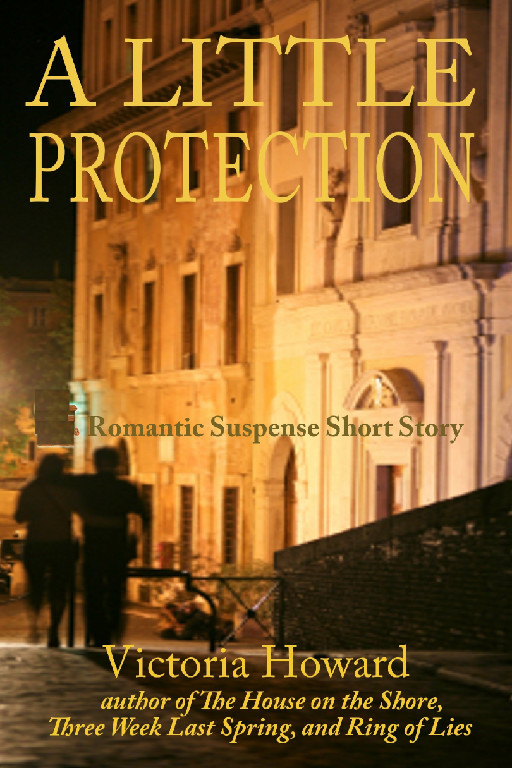
A Little Protection by Victoria Howard – Handsome Matt Hemmings meets scientist Alexa McAllistair at a conference on nuclear energy in Rome…and against his professional judgment, he is smitten. The vulnerable – and beautiful – scientist arouses his protective instincts, and the desire to kiss her senseless. And it’s more than evident that she feels the same way about him.

Paco’s Visions by Robert Hays – Paco has visions, and his most recent vision helps him believe in the power of love. For a twelve year old boy, it is a big revelation. He and his sister, Rosa, live with Mama Jan, in a rich man’s mansion on Sanibel Island. Will his vision become their reality?

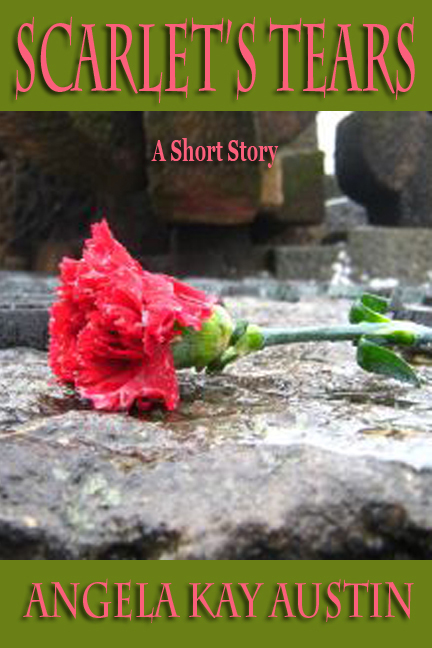
Scarlet’s Tears by Angela Kay Austin – When you lose everything you love, how are you supposed to believe it won’t happen again? The knife at her throat didn’t frighten Scarlet Anderson.  In fact, it was a relief.  Finally, she didn’t have to worry any longer about living another empty day.  She’d be reunited with the ones she loved. Joshua Davis had faced a lot of challenges in his life, his faith and the love of his family had seen him through his latest battles.  But, no person could help him, now.  How had he managed to fall in love with someone who’d stopped loving herself?  And what was he supposed to do?

Kindle Edition

What are your favorite comfort books?

When people are feeling stressed, tired, depressed or overworked, they often head for comfort food like macaroni and cheese, a pizza, Kentucky Fried Chicken or that tasty TV dinner with all the salt. Of course, there’s always a stiff drink.

When things are really bad, people add a movie to the menu. Once upon a time, folks would grab a musical like “The Music Man” or “Singing in the Rain.” Now, maybe they head for “Babe” or “Finding Neno” or something light and romantic like “Notting Hill” or “You’ve Got Mail.”

Comfort Books

And then there are books, either the real thing or something on a Nook or Kindle to cuddle up with on a cold winter night or take out to the beach during the summer.

Some people define comfort books as spiritual books or something with an uplifting story and a happy ending. Others want a good adventure, a story that has twists and turns and enough action to make them forget how tired, overworked, depressed or burnt out they are.

Personally, I have so many books on my to-be-read list that I can hardly keep up with them, much less opt to re-read older books.  One blogger said she turns to the Harry Potter books for comfort books. While, I haven’t re-read any of them, the Harry Potter movies do make good comfort movies around our house.

For comfort books, I’ve re-read Katherine Neville’s The Fire and The Eight multiple times. Why? Not totally sure, but it’s probably because they are long and have involved plots. They are fun as well as distracting. For me, if a comfort book is too light weight, it doesn’t hold my attention well enough to keep from thinking whatever dark thoughts led me to search for an old friendly book to read.
Suggestions?

Last December, the Overdecorated Bookcase blog listed these as great comfort books:

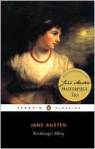
  • Northanger Abbey (Austen)
  • Persuasion (Austen)
  • Leave It To Psmith (Wodehouse)
  • 84 Charing Cross Road (Hanff)
  • The Importance of Being Earnest (Wilde)

Meanwhile, Reading in Reykjavík includes these on her top ten list:

  • My Family and Other Animals (Durrell)
  • All Creatures Great and Small (Herriot)
  • Moving Pictures (Pratchett)
  • The Hobbit (Tolkien)
  • Anne of Green Gables (Montgomery)

To these, I can add:

  • The Prince of Tides (Conroy)
  • Winter’s Tale (Helprin)
  • Lonesome Dove (McMurtry)
  • To Dance With the White Dog (Kay)
  • Shadow of the Wind (Zafón)

It Depends on My Mood

There are days, when watching the first or second Terminator movie is just what the doctor ordered, while a week later, I might prefer Sleepless in Seattle. Same thing is true with books. How about you?

Do you use books to help you relax and/or chase the blues away? If so, how does your mood play into it? That is, do some moods require a good romance while others definitely need a mystery or a fantasy?

Only one problem I haven’t solved with comfort books—unlike comfort movies, it’s hard to enjoy them with comfort food. I don’t want pizza toppings all over my books. Reading, perhaps, requires something that works well with a straw.

At any rate, books, movies and food are much cheaper than a trip to the shrink.

–Malcolm

–Jock Stewart, Special Investigative Reporter for the Star-Gazer. Download his free “Jock Talks…Satirical News” e-book from Smashwords.

JTSATIRICAL

Handy Guidebook for Glacier Park’s Wildflowers

During the Spring and Summer, hikers throughout Glacier National Park report being enchanted by the colorful profusion of wildflowers from McDonald Valley to Granite Park to the Belly River Valley. For years, I counted on Guide to Glacier National Park by George C. Ruhle and Plants of Waterton-Glacier National Parks by Richard J. Shaw and Danny On for identifying just what I was seeing along the trail.

Sad to say, both of these books are out of print and relatively hard to find. The pages of my old wildflower book are now a loose-leaf collection of sheets; the same would also be true of Ruhle’s book if it were not spiral bound.

Last year, Mountain Press Publishing came out with a wonderful replacement for the book by Shaw and On: Wildflowers of Glacier National Park and Surrounding Areas. Written by botanists Shannon Fitzpatrick Kimball and Peter Lesica, the book features beautiful photographs and layperson friendly details.


A botanist for 15 years, Kimball has served as a consultant for the park. Lesica is also the co-author (with Debbie McNeil) of A Flora of Glacier National Park, Montana and other books based on his 25 years as a Montana botanist.

Published in April 2010, this 260-page guide is an easy-to-use wonder for Glacier’s visitors from Red Bus tourists to casual hikers to ardent backpackers and climbers. The book is available from Amazon and through the Glacier Association. Like my earlier book, this one also groups flowers by color—a very handy technique.

Readers of Glacier Park Magazine will also enjoy Kimball’s article “The Healthy Rose” in the magazine’s Spring 2011 issue.

You May Also Like

The first time I drove to the lake it was a lakemy Earth Day post about a lake that now exists more in my memory than in fact

Malcolm

A Glacier Park Novel

Review: ‘The Other Life’ by Ellen Meister

The Other LifeThe Other Life by Ellen Meister
My rating: 4 of 5 stars

Quinn Braverman gave up her life in the big city with her high-energy, neurotic boyfiend Eugene for life in the suburbs with a loving son, Isaac, a stable but undemonstrative husband Lewis and a Volvo. The Volvo is a nice touch, for it symbolizes what Quinn believes she has—a rock solid middle class life with no spark in it. Quinn has “issues.” In fact, all of the characters in Ellen Meister’s poignant, yet somewhat flat, “The Other Life” have issues.

Quinn’s artistic mother, who suffered from depression, escaped her lot in life through suicide. As Quinn tries to come to grips with a difficult pregnancy, the loss of her mother and whether or not her own life is worth living in its present form, she has an escape hatch that’s better than death but ultimately just as absolute.

Quinn has always known that another Quinn lives another life in an alternative universe. She is aware of portals between the here and now and that look-alike place. In the other life, she’s still with Eugene, isn’t carrying a daughter who might never have a life at all, and isn’t driving a Volvo with all that entails. Seeking answers, if not escape, she finally steps through the portal in her basement. She likes what she sees. She feels guilty for liking it. It pulls at her like a dark undertow on a sunny beach. Yet, if she likes it too much and chooses to stay there, then Isaac and Lewis will be lost to her. Early on, she understands that she will not be able to step back and forth between these lives forever.

“The Other Life,” isn’t science fiction; yet some readers might appreciate additional clarity about Quinn’s universe next door. While Quinn acknowledges that the other life contains another version of herself, she never meets this self, nor does she become that other self and suddenly have all of the continuity and knowledge that would bring her. One gets the impression that the universe next door exists in stasis until Quinn appears.

More importantly within the scope of the novel, however, is the reality with which Meister presents the typical, and often difficult, challenges a woman faces in marriage, balancing the needs of a husband and a child with her own creaturehood, the losses of parents, and the prospects of a heartbreaking future with a daughter who may be born retarded. There’s an honesty here that we don’t often see in fiction, the concept that a woman can be happily married while wondering if that marriage is really the choice she should have made.

Quinn, as all real and fictional characters, must make painful decisions. Meister’s inventive next-door universe gives Quinn a unique option even though more magic, spark and facts about how that other life works would have strengthened the novel. While Quinn herself comes across as self-centered and a bit hard for anyone, including a mother, to love, her choice is no less difficult. Her thought processes as she makes her choices about the road not yet taken are the story’s greatest strength.

View all my reviews

Malcolm R. Campbell is the author of “The Sun Singer,” a mountain adventure about a young man who steps through a portal into an alternative universe.

It’s just your imagination, kiddo

“We’re going through!” The Commander’s voice was like thin ice breaking. He wore his full-dress uniform, with the heavily braided white cap pulled down rakishly over one cold gray eye. “We can’t make it, sir. It’s spoiling for a hurricane, if you ask me.” “I’m not asking you, Lieutenant Berg,” said the Commander. “Throw on the power lights! Rev her up to 8,500! We’re going through!” The pounding of the cylinders increased: ta-pocketa-pocketa-pocketa-pocketa-pocketa. The Commander stared at the ice forming on the pilot window. He walked over and twisted a row of complicated dials. “Switch on No. 8 auxiliary!” he shouted. “Switch on No. 8 auxiliary!” repeated Lieutenant Berg. “Full strength in No. 3 turret!” shouted the Commander. “Full strength in No. 3 turret!” The crew, bending to their various tasks in the huge, hurtling eight-engined Navy hydroplane, looked at each other and grinned. “The old man will get us through” they said to one another. “The Old Man ain’t afraid of Hell!” . . .
“Not so fast! You’re driving too fast!” said Mrs. Mitty. “What are you driving so fast for?”

“Hmm?” said Walter Mitty. He looked at his wife, in the seat beside him, with shocked astonishment. She seemed grossly unfamiliar, like a strange woman who had yelled at him in a crowd. “You were up to fifty-five,” she said. “You know I don’t like to go more than forty. You were up to fifty-five.” Walter Mitty drove on toward Waterbury in silence, the roaring of the SN202 through the worst storm in twenty years of Navy flying fading in the remote, intimate airways of his mind.

— James Thurber in “The Secret Life of Walter Mitty”

I no longer remember when I first read James Thurber’s famous short story, but I appreciated Walter Mitty. While I had no intention of growing up to be a hen-pecked husband, I was addicted to the world of my imagination, and Mitty was the epitome of imaginators.

Even though my school teachers assigned the Walter Mitty story every few years, they did so for purposes of a tedious discussion and not so we would go and do likewise, imagination-wise.

While Mrs. Skretting was conjugating German verbs and Mrs. Johnson was talking about the symbolism in “The Grapes of Wrath, I was far away.


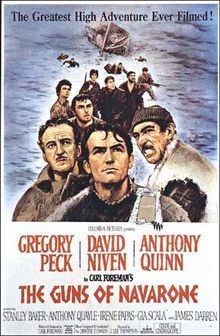
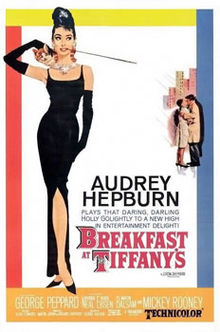
I was storming the guns of navarone in the Greek islands with Gregory Peck or riding across the desert with Lawrence of Arabia or kissing Holly Golightly after having breakfast at Tiffany’s.

Early in life, I learned that my imagination was much more interesting–and often more sexy–than diagramming sentences, dissecting happless frogs, or computing the area of a triangle. When asked why I was a lousy student, I said, probably with a touch of youthful arrogance, that I wasn’t planning a career in diagramming, dissecting, or triangles.

“Well where have you been?” my teachers, pastors, parents and other mentor-type individuals asked with a touch of exasperating.

“Trying to save the Alamo,” I said.

“That’s just your imagination. It’ll never get you anywhere good.”

“Tell that to Hemingway, Faulkner and the people behind Mad Magazine.”

“The odds of you being any of those people are small,” they said. “Better to stick with the real world and be a tinker, tailor, soldier or a spy. Or, perhaps you could sell insurance.”


While I fondly remember kissing Holly Golightly in the rain, I’m past that now, for my imagination moves on. This morning I was imagining riding on a flying horse about an Illinois river and this afternoon I plan to imagine fighting a nasty flock of crows in the Mountains.

I’m an author and my imagination is my stock in trade even though I could probably earn more selling insurance or being a tinker or a tailor.

Today is the the 72nd anniverary of the original publication of Thurber’s story. It was, of course, just his imagination. After all these years, I’ve got to tell you that if you think I’m not listening while you tell me about Aunt Mable’s gall blatter surgery or the number of red lights between your house and your office, you’re right.

I’m far away listening to the pounding of the cylinders increase, ta-pocketa-pocketa-pocketa-pocketa-pocketa, as my star cruiser flies in low over the trackless wastes of Mercury where a Klingon War Bird is about to decloak and fire a barrage of photon torpedos.

Malcolm R. Campbell is the author of “Jock Stewart and the Missing Sea of Fire,” an imaginary story about a reporter trying to find a missing race horse in a town that doesn’t exist in real life.

A powerful story of motherhood, seasons and snakes

SnakesSnakes by Patricia Damery
My rating: 5 of 5 stars

Snakes, by Patricia Damery (Farming Soul, 2010) is a beautifully written novel about a woman coming to terms with family continuity as small farms are packed up and sold off at auctions to those who will never know who once lived there and made of them enduring homes.

Angela leaves the Midwestern farm her family has worked for generations because the roads and fields and traditions are, in spite of their deep values, confining to her coming-of-a-age soul. She attends college in California, receives a degree in biology, becomes a teacher, marries, and has a family. When teaching proves to be an unsatisfactory career, she focuses on her new and all-consuming avocation of weaving.

Snakes is a poetic meditation about the intertwined cycles of life and farming. It is also an evolving letter of love from Angela to her recently deceased father about life as it was, mundane and unexpected daily events, and, of course, the snakes. Snakes and the cycles of life are constant images throughout the book; snakes in the corn crib, snakes in the garden, snakes in the kitchen. We fear snakes, yet we also see them as protectors of the land and as symbols of the natural stages of everlasting life.

For Angela to come to terms with herself and the disintegration of families and farms, she must come to terms with snakes. Her weavings become her medium and her message, the storyboard of her life as it was and as it is, all the memories, dreams and reflections of a nurturing mother claiming her authentic role within the natural order of children and husbands, kitchens and bedrooms, warm tidal pools and freshly ploughed fields, and gardens where snakes live amongst the flowers.

View all my reviews

Malcolm R. Campbell is the author of “Garden of Heaven: an Odyssey,” the story of an alchemist and shaman who journeys between heaven and hell in a world where each place can be mistaken for the other.

Review: ‘kiDNApped’ by Rick Chesler

KiDNAppedKiDNApped by Rick Chesler
My rating: 4 of 5 stars

Three months after wealthy biotechnology company CEO William Archer is lost at sea or kidnapped off his research yacht in the warm waters of the Hawaiian Islands in Rick Chesler’s inventive thriller “kiDNApped,” Special Agent Tara Shores faces a very cold case.

She also faces the uncertainties of three civilians intruding into an investigation. Was Dave Turner really looking for a wedding ring on the ocean floor when his dive boat was stolen and his employer was murdered? What can Archer’s son and daughter from the mainland possibly contribute just two days before the court declares their father legally dead?

Shores, a veteran agent who first appeared in “Wired Kingdom” (2010), is about to stamp the case file “INDETERMINATE” because there are no leads and no ransom demands. While Archer’s son Lance wants to drink beer and chase girls until he can collect his inheritance, his sister Kristen wants Dave to return to the ocean floor on the off chance his interrupted search is related to her father’s disappearance.

When their dive attracts unwanted attention, Shores and her disparate crew are suddenly in the line of fire. Kristen wonders if her genius father encrypted a call for help in the DNA of ocean bacteria. Shores wonders how she can possibly babysit civilians who are more likely to get in the way and/or get killed than anything else.

Rick Chesler has written a breathtaking tropical adventure that combines a cutting-edge technology search for clues with a madcap, island-to-island race against bad guys that would put a smile on the face of any James Bond aficionado.

Agent Shores definitely needs a new rubber stamp for her case file: HAZARDOUS TO MY HEALTH.

View all my reviews

Download the magic to your Kindle today
<

Hero’s Journey: Books for the trip

“Ancient Greek heroes were men of pain who were both needed by their people and dangerous to them.” – Jonathan Shay in “Odysseus in America.”

“A slave stood behind the conqueror holding a golden crown and whispering in his ear a warning: that all glory is fleeting.” –Gen. George C. Patton

We reward our heroes with medals and praise whether they march away to war or run into burning buildings to bring people out to safety.

In either case, praise, like glory, is fleeting, and the transcendent renewal expected through trial by fire (or under fire) in the mythic sense of the hero’s journey may be a dream unrealized. The hero’s character, as Jonathan Shay, author of Achilles in Vietnam and Odysseus in America believes, may be wrecked by the trauma of the experience.

A psychiatrist working with Vietnam War veterans suffering from post traumatic stress disorder (PTSD), Shay focuses his books on what soldiers need to know before they go to war and on what all of us need to know when they return in psychologically damaged condition.

New York Times reviewer Chris Hedges, in his review of a translation of Homer’s Odyssey, wrote “It is his hero’s heart that he must learn to curb before he can return to the domestic life he left 20 years earlier. The very qualities that served him in battle defeat him in peace. These dual codes have existed since human societies were formed; and every recruit headed into war would be well advised to read the ‘Iliad,’ just as every soldier returning home would be served by reading the ‘Odyssey.'” The same can be said of Shay’s “Achilles in Vietnam” and “Odysseus in America.”

Those who march away are praised for marching away and for going beyond the call of duty to perform those duties thrust upon them. When they return, we ask what it was like, but our eyes glaze over when they try to tell us. Is the problem to large to fix? Shay doesn’t think so.

Betrayal of What’s Right

As Shay points out, soldiers often face what happened to Achilles in the “Iliad” when they go into combat. They face a betrayal, via commanders or the system, of what they believe is right and proper. Likewise, when they leave the battlefield, they often face what Odysseus faced in the “Odyssey.” They face the lack an adequate way of dealing with what they experienced while re-integrating into the mainstream world.

Whether it’s the trauma of war or the trauma of other horrific, and often traumatic, events where heroes serve of humanity’s behalf, Shay’s books are wonderful resources for the journey. Shay brings an optimism to his work that might help those who were there and those who were not there come to terms with each other and what happened before the medals were awarded and the fleeting praise was bestowed.

The books are also excellent reference materials for writers, psychiatrists and philosophers who study the classic hero’s journey.

Malcolm R. Campbell