‘Inheritance: The Lost Bride Trilogy, Book 1’ by Nora Roberts

Years ago when Nora Roberts had only written maybe 5,000 novels, my wife and brother’s wife used to share some of her books with me and, I had to confess, I liked them. Not the straight romance stuff, but novels more in the mystery/thriller category such as Dark Witch, Shadow Spell, and Blood Magick. At 73, she’s still churning out the books, and this new trilogy (released November 23) might just be interesting to readers of multiple genres. According to Roberts’ website, “Over the last 30 years, an average of 27 Nora Roberts books were sold every minute.” I can believe it.

From the Publisher

“Inheritance is the first in The Lost Bride Trilogy by #1 New York Times bestselling author Nora Roberts―a tale of tragedies, loves found and lost, and a family haunted for generations.

“1806: Astrid Poole sits in her bridal clothes, overwhelmed with happiness. But before her marriage can be consummated, she is murdered, and the circle of gold torn from her finger. Her last words are a promise to Collin never to leave him…

“Graphic designer Sonya MacTavish is stunned to learn that her late father had a twin he never knew about―and that her newly discovered uncle, Collin Poole, has left her almost everything he owned, including a majestic Victorian house on the Maine coast, which the will stipulates she must live in it for at least three years. Her engagement recently broken, she sets off to find out why the boys were separated at birth―and why it was all kept secret until a genealogy website brought it to light.

“Trey, the young lawyer who greets her at the sprawling clifftop manor, notes Sonya’s unease―and acknowledges that yes, the place is haunted…but just a little. Sure enough, Sonya finds objects moved and music playing out of nowhere. She sees a painting by her father inexplicably hanging in her deceased uncle’s office, and a portrait of a woman named Astrid, whom the lawyer refers to as “the first lost bride.” It’s becoming clear that Sonya has inherited far more than a house. She has inherited a centuries-old curse, and a puzzle to be solved if there is any hope of breaking it…”

Nothing beats a centuries-old curse.

From Kirkus Reviews

“Roberts is in fine form here. Her lush, ethereal world of ghosts and spirits is the perfect foil for Sonya’s down-to-earth, almost spartan manner. Another Roberts hallmark is on display: her continuing thematic exploration of how an individual defeats evil—not by acting alone, but by forming a community and harnessing its members’ strength and power for the coming battle.

“Exciting launch for Roberts’ new trilogy, which promises to explore the mystical power of women to do both good and evil.”

Book Reporter notes, “Nora Roberts has crafted another story with a practical-minded female protagonist who is strong enough to grapple with the good and evil in the Poole family legacy. Her novels are well known for these quintessential battles, and this one has it all — a haunted house, a curse, secrets to uncover, and a cast of characters who are sure to charm. This reviewer can’t wait to read the next book in the series.”

–Malcolm
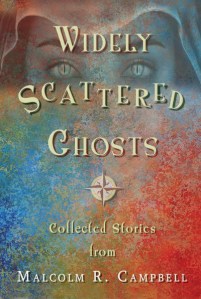
Malcolm R. Campbell often takes a walk through the paranormal.

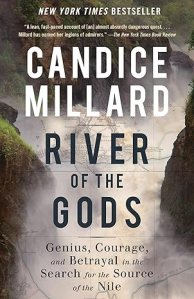
‘River of the Gods: Genius, Courage, and Betrayal in the Search for the Source of the Nile,’ by  Candice Millard 

One benefit of exchanging pen-pal-style emails with an old friend who reads as many books as I do is hearing about new books I might have overlooked. In the 1960s, we were hiking partners in the Rocky Mountains; neither of us suspected then that we’d be writing to each other this many years later. Her latest recommendation is River of Gods, and it’s a good one. It reminds me of my high school history classes that include a lot of material about explorers in Africa.

I definitely agree with the New York Times Book Review comment that “River of the Gods is a lean, fast-paced account of the almost absurdly dangerous quest by [Richard Burton and John Speke] to solve the geographic riddle of their era. . . Candice Millard has earned her legions of admirers. She is a graceful writer and a careful researcher, and she knows how to navigate a tangled tale.”

From the Publisher

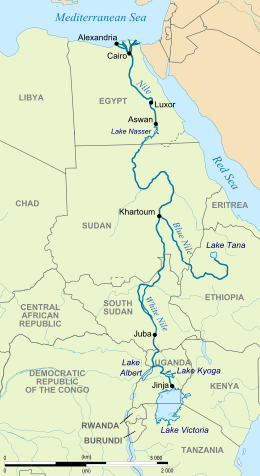
“For millennia the location of the Nile River’s headwaters was shrouded in mystery. In the 19th century, there was a frenzy of interest in ancient Egypt. At the same time, European powers sent off waves of explorations intended to map the unknown corners of the globe – and extend their colonial empires.

“Richard Burton and John Hanning Speke were sent by the Royal Geographical Society to claim the prize for England. Burton spoke twenty-nine languages, and was a decorated soldier. He was also mercurial, subtle, and an iconoclastic atheist. Speke was a young aristocrat and Army officer determined to make his mark, passionate about hunting, Burton’s opposite in temperament and beliefs.

“From the start, the two men clashed. They would endure tremendous hardships, illness, and constant setbacks. Two years in, deep in the African interior, Burton became too sick to press on, but Speke did and claimed he found the source in a great lake that he christened Lake Victoria. When they returned to England, Speke rushed to take credit, disparaging Burton. Burton disputed his claim, and Speke launched another expedition to Africa to prove it. The two became venomous enemies, with the public siding with the more charismatic Burton, to Speke’s great envy. The day before they were to publicly debate, Speke shot himself.

“Yet there was a third man on both expeditions, his name obscured by imperial annals, whose exploits were even more extraordinary. This was Sidi Mubarak Bombay, who was enslaved and shipped from his home village in East Africa to India. When the man who purchased him died, he made his way into the local Sultan’s army and eventually traveled back to Africa, where he used his resourcefulness, linguistic prowess, and raw courage to forge a living as a guide. Without Bombay and men like him, who led, carried, and protected the expedition, neither Englishman would have come close to the headwaters of the Nile, or perhaps even survived.
“In River of the Gods, Candice Millard has written another peerless story of courage and adventure, set against the backdrop of the race to exploit Africa by the colonial powers.”

Book Page Review

The Nile’s mythic reputation as the longest river in Africa, and arguably the world, once inspired generations of European explorers to seek its source—and exploit Africa’s vast resources in the process. Now, thanks to this richly detailed story well told by historian Candice Millard, a colorful and controversial chapter in world history resurfaces. In River of the Gods: Genius, Courage, and Betrayal in the Search for the Source of the Nile, 19th-century explorers’ egos loom godlike over expeditions, their abused local guides save lives and prompt discoveries, and the second largest continent on Earth finally gets mapped.

–Malcolm

Malcolm R. Campbell is the author of the contemporary fantasy “The Sun Singer.”

Well-Read Parents Might Be Dangerous

When well-read parents own a lot of books–mine had several thousand or more–multiple ideas lurk on those shelves like landmines and/or philosopher’s stones waiting for curious kids to find. I found plenty. Whether or not I found these by my folks’ and mischievous spirits’ designs or by  coincidence when I was ready to read them, I don’t know except to say that I don’t believe in coincidences.

Both of my parents were high school student publications advisers and my dad was a college journalism dean and the author of journalism textbooks. So, I became a writer, a college journalism instructor, and an adviser for a college’s student newspaper. Like my father, I ultimately married one of my students. My father’s journalism school and my journalism program were both destroyed by politics, though our marriages endured.
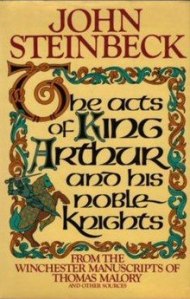
My long-time interest in King Arthur and the Grail romances began when I found John Steinbeck’s posthumously published The Acts of King Arthur and his Noble Knights on the shelf.  After discovering that book, I went on to read everything I could find about King Arthur who, strange as it may seem, actually appears in the genealogy of the Clan Campbell family in Scotland.

I’ve written often here about magic and ancient mysteries books, and without a doubt that interest began with James Allen’s 1903 book As a Man Thinketh. Over time, the beliefs in that book changed my life.

My favorite poet St.-John Perse came into my consciousness when I found a 1944 book published in English and French called Éloges and Other Poems. I remember my college English teacher who threw me out of class for disagreeing with him about the value of journalism, telling me, talk to me after you know about poets like St.-John Perse. I showed him a copy of this book at the next meeting of the class.  “This has been in my family since the year I was born. Any questions?” He wanted to buy the copy which I said belonged to my mother and was not for sale. Nonetheless, I was re-admitted to the class. I don’t deal well with know-it-all English teachers, especially those who say journalistic writing is bad writing.
Perhaps you remember finding some of your parents’ books that influenced your interests years later. I hope so. My parents and I disagreed about a lot of things, many of which stemmed from their books left out in the open on the family’s shelves. Ironic, I think.

I never really needed a library because all I could ever want was under my own roof–for better or worse.

–Malcolm

‘Reckoning,’ book 26 in Catherine Coulter’s FBI Series

Released in 2022

I’ve read all, or almost all, of the books in this series which began in 1996 with The Cove. She co-authored three books with J. T. Ellison in a Brit in the FBI series. All of these novels move quickly, feature snappy dialogue, and have characters whose histories have grown deeper (like, for example, the characters in James Patterson’s Alex Cross books) as the series progresses. The action focuses on husband and wife agents Agents Dillon Savich and Lacey Sherlock, and for those who wonder, somebody finally said, “No shit, Sherlock,” just to get that slang out of the way. I haven’t read any of Coulter’s romance series, so can’t speak to them.

From the Publisher

Agents Savich and Sherlock are back in the latest installment in Catherine Coulter’s #1 New York Times bestselling FBI Thriller series, and this time both are enlisted to help women with traumatic pasts who are in mortal danger.

“When she was twelve years old, Kirra Mandarian’s parents were murdered and she barely escaped with her life. Fourteen years later Kirra is a commonwealth attorney back home in Porte Franklin, Virginia, and her goal is to find out who killed her parents and why. She assumes the identity of E.N.—Eliot Ness—and gathers proof to bring down the man she believes was behind her parents’ deaths. She quickly learns that big-time criminals are very dangerous indeed and realizes she needs Dillon Savich’s help. Savich brings in Special Agent Griffin Hammersmith to work with Lieutenant Jeter Thorpe, the young detective who’d saved Kirra years before.

Coulter

“Emma Hunt, a piano prodigy and the granddaughter of powerful crime boss Mason Lord, was only six years old when she was abducted. Then, she was saved by her adoptive father, San Francisco federal judge Ramsey Hunt. Now a twelve-year-old with a black belt in Tae Kwon Do, she narrowly saves herself from a would-be kidnapper at Davies Hall in San Francisco. Worried for her safety, Emma’s entire family joins her for her next performance, at the Kennedy Center in Washington, D.C.. Sherlock and officers from METRO are assigned to protect her, but things don’t turn out as planned…”

From the Reviews

Kirkus: “Pulse-pounding terror mixed with romance makes for page-turning pleasure.”

Publishers Weekly: “Scintillating suspense surrounds the dual mysteries as the stakes rise for Savich and Sherlock and those they’re seeking to protect. Series fans will be riveted from the very first page.”

Library Journal: “The twenty-sixth installment of Coulter’s FBI series delivers just what the author’s fans have come to expect: a story that doesn’t go where we might expect it to; a supporting cast of new and exciting characters; and two familiar faces, Savich and Sherlock, who have come to feel like old friends.”

–Malcolm

Malcolm R. Campbell is the author of the Florida Folk Magic novels which you can buy at a savings in one Kindle volume

Addictive Reading: Reference Books

Not long after we were married, my wife and I discovered that both of us love reading reference books, primarily dictionaries and enclopedias and–in my case–Brewer’s Dictionary of Phrase and Fable.  Contrary to what our critics say, we don’t walk to the book shelf, pull out a reference book, and start reading. No, it starts innocently enough. We’re there to look something up but, en route, we see other interesting entries and find ourselves engrossed in them.

My family started out with Compon’s Encyclopedia when my brothers and I were in grade school and junior high, and then moved on to the Encyclopædia Britannica which thereafter became my favourite. It was published as a physical book from 1768 to 2010, and there after as an online publication. My wife’s family had World Book. My Scot’s ancesters would approve of the thistle.

My dictionary of choice is Webster’s New Collegiate Dicitionary which is listed with a publication date of 1977, though I think my copy came out before that. I use it now because the spellings in it are those I grew up with and  refuse to change. You’ll never find me using the words “donut” or “plow” because they look flat wrong. The versions of words I use are, in current dictionaries, listed as “British Spellings” even though I learnt them in the Florida school system.  If I can’t find a word here, it’s not a word. Needless to say, this view has caused problems with teachers and editors, but I always tell them to suck it up and let the old guy have his way.

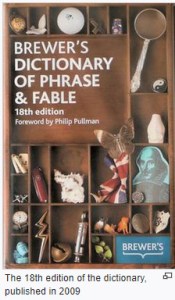
My favourite reference book, which I see I mentioned on this blog about twenty years ago, is Brewer’s Dicitionary of Phrase and Fable. It’s very easy to get lost for hours in this one. Brewer’s, which has been around since 1870, is described by Wikipedia “is a  reference work containing definitions and explanations of many famous phrases, allusions, and figures, whether historical or mythical. The “New Edition revised, corrected, and enlarged” from 1895 is now in the public domain, and Web-based versions are available online. The most recent version is the 20th edition, published in November 2018 by Chambers Harrap Publishers.”

I think I last mentioned it on this blog about twenty years go. None the less, it sits close at hand on my bookshelf and has been responsible for many hours of reading what I really didn’t need to read. I have noticed, however, that when reading reference books, one comes across a lot of things he didn’t know but needed to know. Now that’s synchronicity.

–Malcolm

Malcolm R. Campbell is the author of contemporary fantasy, magical realism, and paranormal stories and novels.

‘The Urantia Book’

The Urantia Book (sometimes called The Urantia Papers or The Fifth Epochal Revelation) is a spiritual, philosophical, and religious book that originated in Chicago, Illinois, United States sometime between 1924 and 1955. The authorship remains a matter of debate. It has received various degrees of interest ranging from praise to criticism for its religious and science-related content, its unusual length, and the unusual names and origins of the authors named within the book.” Wikipedia

I read this 2000-page book thirty or forty years ago. For an individual reared in a Presbyterian household, I found it strange but fascinating, and when I reached the end I had no doubt that I would never subscribe to its point of view.

While the book is available from Amazon, it’s in the public domain, and with a little searching around, one can find free copies. If your curiosity exceeds the scope of the publisher’s description, you can find more information on the website of the Urantia Foundation. The Wikipedia article, quoted above, includes some of the book’s criticisms including the charge that some portions were taken without attribution from other works.

From the Publisher

“You have just discovered the literary masterpiece that answers your questions about God, life in the inhabited universe, the history and future of this world, and the life of Jesus. The Urantia Book harmonizes history, science, and religion into a philosophy of living that brings new meaning and hope into your life. If you are searching for answers, read The Urantia Book!

“The world needs new spiritual truth that provides modern men and women with an intellectual pathway into a personal relationship with God. Building on the world’s religious heritage, The Urantia Book describes an endless destiny for humankind, teaching that living faith is the key to personal spiritual progress and eternal survival. These teachings provide new truths powerful enough to uplift and advance human thinking and believing for the next 1000 years.

“A third of The Urantia Book is the inspiring story of Jesus’ entire life and a revelation of his original teachings. This panoramic narrative includes his birth, childhood, teenage years, adult travels and adventures, public ministry, crucifixion, and 19 resurrection appearances. This inspiring story recasts Jesus from the leading figure of Christianity into the guide for seekers of all faiths and all walks of life.”

–Malcolm

‘Other Birds’ by Sarah Addison Allen

Southern author Sarah Addison Allen (Garden Spells) writes books that blend magic, magical realism, and well-drawn characters into delightful stories that seem as real as the world outside my window. I haven’t mentioned her work here since Lost Lake was released in 2014. So, let’s get up to date with Other Birds which came out in the summer of 2022 from St. Martin’s Press. As Readers Digest aptly notes, “Allen’s gift for whimsical, poetic language, makes Other Birds one of our most-anticipated books for 2022. You’re going to want to read this one with your book club.”

From the Publisher

“From the acclaimed author of Garden Spells comes a tale of lost souls, secrets that shape us, and how the right flock can guide you home.

“Down a narrow alley in the small coastal town of Mallow Island, South Carolina, lies a stunning cobblestone building comprised of five apartments. It’s called The Dellawisp and it’s named after the tiny turquoise birds who, alongside its human tenants, inhabit an air of magical secrecy.

“When Zoey Hennessey comes to claim her deceased mother’s apartment at The Dellawisp, she meets her quirky, enigmatic neighbors including a girl on the run, a grieving chef whose comfort food does not comfort him, two estranged middle-aged sisters, and three ghosts. Each with their own story. Each with their own longings. Each whose ending isn’t yet written.

“When one of her new neighbors dies under odd circumstances the night Zoey arrives, she’s thrust into the mystery of The Dellawisp, which involves missing pages from a legendary writer whose work might be hidden there. She soon discovers that many unfinished stories permeate the place, and the people around her are in as much need of healing from wrongs of the past as she is. To find their way they have to learn how to trust each other, confront their deepest fears, and let go of what haunts them.

“Delightful and atmospheric, Other Birds is filled with magical realism and moments of pure love that won’t let you go. Sarah Addison Allen shows us that between the real and the imaginary, there are stories that take flight in the most extraordinary ways.”

From Book Page

“What does it mean for a story’s setting to really act as an additional character? It can’t just be a well-defined place where players act out their roles. Rather, it must feel like an extra layer where secrets might be kept—and possibly revealed. An apartment building on Mallow Island, South Carolina, beautifully illustrates this principle in Sarah Addison Allen’s sixth novel, Other Birds.”

–Malcolm

Malcolm R. Campbell is the author of magical realism and contemporary fantasy novels and short stories available via at books stores and online sellers from from Thomas-Jacob Publishing.

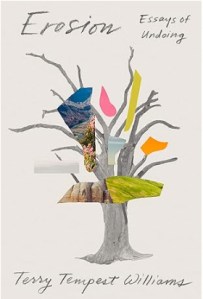
‘Erosion’ by Terry Tempest Williams

Erosion came out in 2019. My apologies for not mentioning here sooner. Perhaps my bias in favor of Williams’ activism and writing made me too cautious to talk about it as though I might inadvertently “oversell it.”

Wikipedia provides a quick overview of her life and work: “Terry Tempest Williams (born 8 September 1955), is an American writer, educator, conservationist, and activist. Williams’ writing is rooted in the American West and has been significantly influenced by the arid landscape of Utah. Her work focuses on social and environmental justice ranging from issues of ecology and the protection of public lands and wildness, to women’s health, to exploring our relationship to culture and nature. She writes in the genre of creative nonfiction and the lyrical essay.” You can learn more on her website here.

From the Publisher

“Timely and unsettling essays from an important and beloved writer and conservationist

“In Erosion, Terry Tempest Williams’s fierce, spirited, and magnificent essays are a howl in the desert. She sizes up the continuing assaults on America’s public lands and the erosion of our commitment to the open space of democracy. She asks: “How do we find the strength to not look away from all that is breaking our hearts?”

“We know the elements of erosion: wind, water, and time. They have shaped the spectacular physical landscape of our nation. Here, Williams bravely and brilliantly explores the many forms of erosion we face: of democracy, science, compassion, and trust. She examines the dire cultural and environmental implications of the gutting of Bear Ears National Monument―sacred lands to Native Peoples of the American Southwest; of the undermining of the Endangered Species Act; of the relentless press by the fossil fuel industry that has led to a panorama in which “oil rigs light up the horizon.” And she testifies that the climate crisis is not an abstraction, offering as evidence the drought outside her door and, at times, within herself.

“These essays are Williams’s call to action, blazing a way forward through difficult and dispiriting times. We will find new territory―emotional, geographical, communal. The erosion of desert lands exposes the truth of change. What has been weathered, worn, and whittled away is as powerful as what remains. Our undoing is also our becoming.

Erosion is a book for this moment, political and spiritual at once, written by one of our greatest naturalists, essayists, and defenders of the environment. She reminds us that beauty is its own form of resistance, and that water can crack stone.”

“Williams makes a poignant connection between the political and the personal . . . If Williams’s haunting, powerful and brave book can be summed up in one line of advice it would be this: try to stare down the grief of everyday life, speak out and find solace in the boundless beauty of nature.” ―Diane Ackerman, The New York Times Book Review

–Malcolm

‘Buffalo Dreamers’ by John Newman

This novel was published by Sweetgrass Books (Farcountry Press) on October 4, 2022, and is set in Montana, my favorite state.

From the Publisher

“A YOUNG MARINE PROTECTS WHAT IS MOST SACRED

“For Sam Comstock, a young Iraq war vet with PTSD, the need to find a way to heal his wounded soul is a matter of life or death. His Marine sniper skills lead him to Montana on a mission to help manage an infamous wildlife challenge: killing migratory buffalo outside Yellowstone Park that are presumed to carry an infectious disease for cattle. This places Sam seriously at odds with a renegade band of Indian warrior-dreamers who are determined to save the buffalo from slaughter. Thrown together and isolated in the Montana wilderness, meanwhile relentlessly pursued by the combined forces of military, law enforcement, and the cattle industry, Sam and his native compatriots must depend upon one another for survival. Along the way, Sam becomes enmeshed in the way of the buffalo, confronting his suicidal pain and emerging from a long trail of suffering.

“Through Sam, we come to understand that we have much to learn from our native neighbors. We may even discover our own inner buffalo spirit.”

The Way of the Buffalo

In an article called “The Meaning of the Buffalo to Our People,” Karlene Hunter cites an article by Richard Williams that states, “The American Indian and the buffalo coexisted in a rare balance between nature and man. The American Indian developed a close, spiritual relationship with the buffalo. The sacred buffalo became an integral part of the religion of the Plains Indian. Furthermore, the diet of primarily buffalo created a unique physiological relationship. The adage “You are what you eat” was never more applicable than in the symbiotic relationship between the buffalo and the Plains Indian. The Plains Indian culture was intrinsic with the buffalo culture. The two cultures could not be separated without mutual devastation.”

From Kirkus Reviews

Newman

“Over the course of this novel, Newman writes with a vivid sense of place (“The snow fell all night, cleansing the blood-stained ground and creating a white canvas upon which creatures large and small could paint the tracks of the new day”) and a palpable respect for Montana’s land and its many denizens. Smith is something of a one-dimensional villain that would have benefited from deeper character development. However, Sam’s captors are depicted with a sense of depth and great sensitivity. The scenes involving the slaughter of bison and cattle are certainly brutal (“the blood now flowing freely across the roadway, the men tracking it every direction”) but not exploitatively so.

“A compelling and empathetic story of salvation.”

–Malcolm