“The Raven Boys” has a compelling premise” and a very interesting set of characters in a contemporary fantasy playing off “locals” (including a family of psychics) against the ultra rich male studens at a local upscale school.
The life of protagonist Blue Sargent, who is the adolescent member of that psychic family of readers, intersects with several of the young men from Aglionby Academy when she learns that one of them is about to die–and he might be the one she’ll fall in love with.
I enjoyed the premise and the characters, but didn’t like the ending or the pacing. Inasmuch as this book is the beginning of the series, the ending seemed abrupt, skewed off on a secondary character, and more designed to prepare readers for the next installment than to properly wrap of Blue’s involvement. The pacing dragged because the rich students had a heavy, but essential, backstory about a search for ley lines and (possibly) to keep the book from straying too far into the territory reserved for the next book.
This is a young adult book that also works for adult readers.
Malcolm R. Campbell is the author of two contemporary fantasies, “Sarabande” and “The Sun Singer,” both of which are available in paperback, Kindle, Nook, and multiple e-book formats at Smashwords.
If you still have some holiday shopping to do, here are a few of my favorites this year that might make for some very nice gifts:
“Goatsong” by Patricia Damery, il piccolo editions Fisher King Press (November 1, 2012), ISBN-13: 978-1926715766 – A wise view of the world through the eyes of a child, homeless women, a goats.
From my review:When you read Goatsong, you are breathing in fresh air off the Pacific ocean, smelling the sweet scent of the bay laurel, and cooling your tired feet in sacred streams flowing through old redwoods in the company of wise women who, without agenda, may well change you as they changed the ten-year-old Sophie in those old family stories about the town of Huckleberry on the Russian River.
“In Sunlight and Shadow” by Mark Helprin, Houghton Mifflin Harcourt (October 2, 2012), 978-0547819235 – A combat veteran whose business is threatened by the mob falls in love with a young woman from a rich and influential family. Readers will discover a poetic view of New York City played off against the Mafia’s protection racket and the protagonist’s combat experiences as a behind-enemy-lines pathfinder.
From my review: Mark Helprin recalls post World War II New York City throughout In Sunlight and in Shadow with the accuracy and atmosphere of A Winter’s Tale (1983) and his protagonist’s combat experiences with the chilling combat detail of A Soldier of the Great War (1991).
“The Casual Vacancy” by J. K. Rowling, Little, Brown and Company (September 27, 2012), ISBN-13: 9780316228534 – Rowling steps away from teenagers and contemporary fantasy with a story about the people and politics of a small English town.
From my review:Winesburg, Spoon River, Grover’s Corners and Peyton Place reside so powerfully in the consciousness of readers as accurately rendered representations of small town life that their people, town squares, relationships and secrets are forever in our memory almost crossing the boundary from fiction into reality. The English village of Pagford in J. K. Rowling’s The Casual Vacancy belongs on this list.
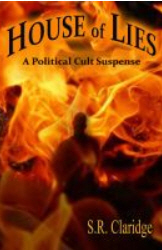
Picture this: You spend many months writing a mystery/thriller, work with your publisher to fine-tune the story and the cover art, and experience the thrill of seeing your novel appear on Amazon. Then, suddenly, a high-profile crime occurs, and it seems to have borrowed your plot.
Claridge told FOX news, “From my regular readers who knew more about me and from personal friends — they were saying, ‘Have you seen this? Like, this is your book playing out in real life’ and that was kind of scary.”
Publisher’s Description: A strange message sets Skylar Wilson on a perilous journey to rescue her sister from a deadly cult. Searching for answers, Skylar discovers that the cult stretches far beyond its pseudo-evangelical veil, penetrating the upper echelon of the United States government and pushing a lethal international agenda.
To expose the truth, she must first unravel the lies, each one leading her down a trail filled with dangerous scandals and mysterious deaths. For this nightmare to end, Skylar will have to go back to where it all began.
Opening Lines:Tess grabbed her cell phone and dashed into the bathroom of her tiny, one bedroom apartment, locking the door behind her. With trembling fingers, she sent a text: COME HERE! HURRY! Within moments she heard them burst into her apartment, hollering her name. Diving into the tub, she pulled the white shower curtain closed and prayed. She knew it was only a matter of time before they would kick through the door and take her.
Claridge, who also wrote the popular Just Call Me Angel series, is writing a sequel to House of Lies that will be released next year. House of Lies is dedicated to Claridge’s family and to “anyone who has fought to rescue a loved one from the grips of a cult-type organization.”
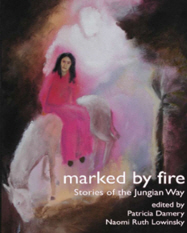
“Marked by Fire: Stories of the Jungian Way,” edited by Patricia Damery and Naomi Ruth Lowinsky, Fisher King Press; First edition (April 15, 2012), 196 pages
From the Publisher:
When Soul appeared to C.G. Jung and demanded he change his life, he opened himself to the powerful forces of the unconscious. He recorded his inner journey, his conversations with figures that appeared to him in vision and in dream in The Red Book. Although it would be years before The Red Book was published, much of what we now know as Jungian psychology began in those pages, when Jung allowed the irrational to assault him. That was a century ago.
How do those of us who dedicate ourselves to Jung s psychology as analysts, teachers, writers respond to Soul’s demands in our own lives? If we believe, with Jung, in “the reality of the psyche,” how does that shape us? The articles in Marked By Fire portray direct experiences of the unconscious; they tell life stories about the fiery process of becoming ourselves.
Contributors to this edition of the Fisher King Review include: Jerome S. Bernstein, Claire Douglas, Gilda Frantz, Jacqueline Gerson, Jean Kirsch, Chie Lee, Karlyn Ward, Henry Abramovitch, Sharon Heath, Dennis Patrick Slattery, Robert Romanyshyn, Patricia Damery, and Naomi Ruth Lowinsky.
From Co-editor Patricia Damery
In a recent blog post, Patricia Damery (“Snakes,” “Goatsong”) mentioned that a guest at an event for this book asked why and how the chapters in this anthology came to be so interesting, to be more than simply personal stories.
Damery said, in part, that, “The personal stories in Marked by Fire are not journal entries but ones much further down the line, ones that have been “worked.” That is what analysis does: it takes the raw material of everyday life, the prima materia, and composts it, until it fertile ground, food for soul development. Although complexes may still be there, they do not obliterate contact with the Self or the Divine.”
These stories have a much wider application than analytical psychology, impacting everyone who appreciates the depth and scope of Carl Jung, comparative mythology, and the trials and joys of every seeker/self on the path.
Malcolm R. Campbell is the author of contemporary fantasy novels and the recent paranormal Kindle/Nook short story “Moonlight and Ghosts.” The story draws on Campbell’s experience as a unit manager at a developmental center.
“We get on social media, we try different kinds of events, we create interesting displays, we sell the hell out of the books we love, but none of that reaches the boardrooms where the big decisions are made. If I could get one wish from the ghost of Sylvia Beach, it’s that she, or someone who cares about the inherent value of books, gets a seat in those boardrooms to advocate for readers not consumers, for books as a pillar of culture not as a unit of sales, and for bookstores as community centers not retail outlets and merchandise showrooms.” – Josh Cook of Porter Square Books, Cambridge, Mass
We hear stories from time to time about artists, jewelers, furniture makers and other stubborn souls who, after perfecting the art and the craft of their work for nearly a lifetime, refuse to sell their work to customers whom they believe won’t appreciate the work for its inherent beauty and artistry or who try to prostitute themselves, the art and the artists by acquiring the perfect bentwood rocker, diamond ring or sonnet at a rock bottom price.
Amazon, the Internet and parents who rear children to believe they (the children) are the center of the universe are conspiring like planets in trine to create a book buying atmosphere in which many (but thankfully, not all) prospective readers feel entitled to free, or almost-free books. This attitude is strengthened by the unfortunate, but popular, mindset that anyone selling or making anything is corrupt, cheating at taxes, and trying to rip off customers one way or the other. Therefore, like every other false right people are claiming to have these days, cheap books have become a component of the public’s feelings of entitlement and a way to get back at those who are purportedly stealing us blind.
If you listen to Amazon and to those who believe Amazon has done more for authors and readers than anyone since Gutenberg, then you are hearing that an e-book is just a file. That means that neither the publisher nor the author is paying printers to print it, nor warehouses to store it. Those who buy books as units or widgets or just files, see no value in the product other than the momentary gratification of reading them. They not only do not see the inherent artistry in the storytelling, nor the expenses an author incurs in creating that file which might include: (a) a year or two of full-time work, (2) hiring at editor, (3) paying for cover art, (4) travel and other research, (5) promotional efforts including mailing off free review copies, maintaining a website, traveling to book signings, purchasing bookmarks and fliers.
Some authors who have become household names by selling their books through large publishers, can take their fame—as well as their talents—off into the self-publishing world and earn a living selling books for a dollar or two on Amazon. They will lead you to believe that any author or publisher who asks you to pay, say, $5.00 for an e-book is ripping you off because (after all) the book is just a file.
According to the Census Bureau, the current poverty income level in the United States is $8,959. Looking at this simplistically, if I take a year to write an 80,000 word novel, I would have to sell at least 8,959 copies of that book on Amazon at the $1 price to break even at the poverty level. If I had any expenses in creating the book, I’d be under the poverty level.
In spite of the success stories we read about from time to time, most self-published books sell less than a hundred copies. Small-press authors are lucky if they sell 1,500 copies. In both cases, the authors are under the poverty level.
My great hope is that my readers will be happy with my books and will feel that a near-lifetime of art and craft has gone into them. I’m just an everyday, journeyman writer, so I do not feel like a “Hemingway in the making” or a “not-yet-discovered” Pat Conroy or John Grisham. Nonetheless, I do work very hard to tell exciting stories, with three-dimensional characters, pitch-perfect descriptions and themes that provide food for thought. Yet, and I tell you this without vanity or guile, if you want to purchase any of my novels at rock-bottom prices to you and to others like you, don’t bother.
If you think my e-book is just a file rather than the words and the work within the file, I don’t want you buying any of my books because, while we might have to agree to disagree about this, I don’t think you will appreciate them for their value as art/craft/culture. And, if you are earning an income above the poverty level, my strong belief is that if you want me to live below the poverty level selling my books with a rock-bottom, Amazon-style price, then you’re not the kind of person who will appreciate me as an author.
Based on the comments I’ve received on this blog, either directly, or when I post the links on Twitter or Facebook, I know that my regular visitors agree with the Josh Cook quotation I used to set the stage for this essay. I’m not talking to you because that would be rather like preaching to the choir. I’m talking to the people who will find this post via search engines with search words like “rock bottom prices” and “Amazon.” If you are one of those people and if you came here hoping I can “get it for you wholesale” or give it away for nothing, then I don’t want you.
For everyone else out there who respects books for their stories, words fail me in telling you how much I appreciate you.
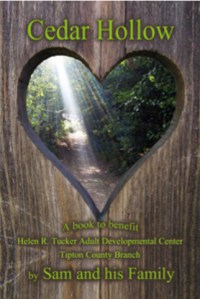
“Cedar Hollow,” by Patty Hayner Franklin, Bill Franklin, Eric Thomas Johnson, Melinda Clayton, Samuel Joseph Franklin, Frankie Johnson, W. Michael Franklin and Tracy R. Franklin, Vanilla Heart Publishing (October 2012), 150 pp, paperback and e-book
While Cedar Hollow is the fictional town in Melinda Clayton’s novels (“Appalachian Justice,” “Return to Crutcher Mountain” “Entangled Thorns”), the Franklin Family is lovingly real as are the flavor, ambiance and wonders in this book.
All author and publisher proceeds from this anthology, created by Sam Franklin’s family, will go to the “Helen R. Tucker Adult Developmental Center, Tipton County Branch [in Tennessee] where Sam currently spends many of his days interacting, learning, growing, and experiencing life. With great honor, Vanilla Heart Publishing is pleased to support this center and the people who make it possible.”
Pushcart Prize Nominee Short StoryErma Puckett’s Moment of Indiscretion by Melinda Clayton is included, along with stories, poems, lyrics and music score, recipes, and more from Sam and his Family, including his father, mother, sisters, and both his eldest brother and his brother-in-law.
Excerpt about Sam from his sister, Melinda Clayton
My brother is funny and sweet. He likes basketball, dancing, and singing. He loves old reruns of shows he watched as a child. He likes to play the keyboard and the drums. He loves foods that aren’t healthy for him, but always follows the doctor’s orders. Most of all, he loves his family.
And, by the way, he has Down Syndrome.
Just one little sentence in the whole of who he is.
There’s a lot of prose and poetry to look forward to in this anthology. Even so, I’m also tempted by the recipes for Darryl Lane’s trout, Peggy Mitchell’s burgers, Kay Lanley’s key lime pie, and Beryl Dickson’s holiday cookies.
P.S. Vanilla Heart is also my publisher, Melinda Clayton is my friend and I was once a unit manager in a developmental center where some residents had Down Syndrome. You might say I am fully biased in favor of this book in every possible way.
Reshaping Our National Parks and Their Guardians: The Legacy of George B. Hartzog Jr., by Kathy Mengak, with a foreword by Robert M. Utley, University of New Mexico Press (April 2012), 336 pp
When Glacier Park’s Centennial Program Committee received the George and Helen Hartzog Volunteer Group Award for promoting the park’s 2010 centennial, many visitors were unfamiliar with the man who led the National Park Service between 1964 and 1972 or with the award established in 1998 (and subsequently supported via a fund created by his wife) to honor those donating time to help the parks.
Published earlier this year, Kathy Mengak’s Reshaping our National Parks and Their Guardians ably tells the story of the highly successful NPS director who added 72 new parks to the system during a contentious political era in American history. In his book review in the Autumn 2012 issue of “Montana The Magazine of Western History,” Craig Rigdon writes that while the author’s “fondness for Hartzog is evident…she provides a fairly balanced review of his career.”
Originating with Mengak’s dissertation at Clemson University, the book draws heavily on twelve years of interviews conducted with Hartzog and other key officials. Hartzog died in 2008.
Kurt Repanshek (National Parks Travler) writes that Hartzog “was a cigar-chewing, Scotch-loving, Stetson-wearing, lover of fishing, hard-charging director who often knew exactly what he wanted and found a way to get it. One way or another.” His review of the book is posted here.
From the Publisher
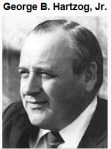
Wikipedia Photo
This biography of the seventh director of the National Park Service brings to life one of the most colorful, powerful, and politically astute people to hold this position. George B. Hartzog Jr. served during an exciting and volatile era in American history. Appointed in 1964 by Secretary of the Interior Stewart Udall, he benefited from a rare combination of circumstances that favored his vision, which was congenial with both President Lyndon Johnson’s “Great Society” and Udall’s robust environmentalism. Hartzog led the largest expansion of the National Park System in history and developed social programs that gave the Service new complexion. During his nine-year tenure, the system grew by seventy-two units totaling 2.7 million acres including not just national parks, but historical and archaeological monuments and sites, recreation areas, seashores, riverways, memorials, and cultural units celebrating minority experiences in America. In addition, Hartzog sought to make national parks relevant and responsive to the nation’s changing needs.
I like Rigdon’s comment that while most people remember the National Park Service’s first two directors, Stephen Mather and Horace Albright, Reshaping Our National Parks and Their Guardians demonstrates that “some of the most critical years in the agency’s history took place during George B. Hartzog’s tenure as director.”
Updates are collected at the end of the post. As you’ll see, the updates focus on the school rather than on the books. Most recent update is July 2019.
A writer friend of mine in Florida who knows I’ve been working on a series of short stories set in the Florida Panhandle, sent me this link as an idea for a story: Mystery surrounds graves at boys’ reform school. Here’s how it begins: This Florida panhandle town is the home of a mystery that has been lost to time. A small cemetery buried deep into the grounds of a now-defunct boys reform school dates back to the early 1900s. Rusting white steel crosses mark the graves of 31 unidentified former students. (See updates at the end of this post.)
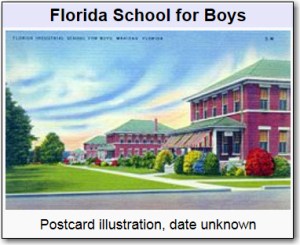
When I read the story, I didn’t initially recognize the school because its most recent name, Arthur G Dozier School for Boys, didn’t connect in my brain with the name, Florida Industrial School for Boys, used for the Marianna, Florida reform school when I was living in Florida in the 1950s and 1960s. The Florida Department of Juvenile Justice operated the school between 1900 to 2011.
Several facts became clear as I read the story and then followed links and Google searches to other stories. The use of the word “school” to describe a physical plant that looked Edenic but which contained unidentified graves of former “students” was misleading to the general public, including those of us who lived in the state capital 85 miles away who had no clue that some of the authorities there based their approach to “reform” on the worst techniques for the control of “undesirables” coming out of World War II POW camps.
The White House
The ugly truth
Connecting the dots, the boys’ “progress” in the school included a small white house where the rapes, beatings and other horrors occurred after which possibly some of them were buried in the unmarked graves now being investigated. Logically, this is unlikely because, as local historian Dale Cox notes, why would the state murder a student and then mark and maintain his grave? Others contend the graves are for those who died in an influenza outbreak and a fire.
Fortunately, most of the men survived; unfortunately, they have enough haunting memories to last a lifetime.
Some 300 of these survivors have formed an organization called The White House Boys. On their website, you will find news about recent press reports, stories contributed by those who are just now coming forward to tell the world what was happening in Marianna, and links to recent press reports about the State of Florida’s investigation that began several years ago.
I got through high school without any brushes with school authorities or police. Some of those who had problems, many of them trivial, were packed off to reform school. I don’t know if any of the White House Boys were in school with me at Tallahassee’s Leon High School. I haven’t yet seen any names I know. The “problem” students just went away: expelled, dropped out, or joined the service. If they caught the State’s attention through what (for them) was called “the justice system,” news stories in the local paper often said they were being sent to “reform school.”
The old secret.
Then, I had no concept what was supposed to happen at a reform school. Remedial classes? Encounter groups? Campfire sings? Rape and beatings never crossed my mind as mainstays of the curriculum. Right now, I’m too angry about it to remotely consider writing fiction.
I’m angry because it happened in a nearby town I visited often (due to the Florida Caverns State Park there), and I’m angry that it happened right under the noses of state lawmakers and they were either blind or indifferent to it, and I’m angry that even now the story about the investigation, the abuses and the graves has been going on across the border in Florida and I heard nothing about it until my friend sent me that link.
If you want to learn more, and you really don’t even though you must, click on the White House Boys link and/or do a Google search and you will find more than you can bear to know.
The Books
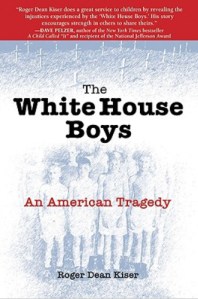
Two books are among those spelling out the details: The White House Boys and The Boys in the Dark.
The White House Boys: An American Tragedy, by Roger Dean Kiser, publisher’s description:
Hidden far from sight, deep in the thick underbrush of the North Florida woods are the ghostly graves of more than thirty unidentified bodies, some of which are thought to be children who were beaten to death at the old Florida Industrial School for Boys at Marianna. It is suspected that many more bodies will be found in the fields and swamplands surrounding the institution. Investigations into the unmarked graves have compelled many grown men to come forward and share their stories of the abuses they endured and the atrocities they witnessed in the 1950s and 1960s at the institution.
The White House Boys: An American Tragedy is the true story of the horrors recalled by Roger Dean Kiser, one of the boys incarcerated at the facility in the late fifties for the crime of being a confused, unwanted, and wayward child. In a style reminiscent of the works of Mark Twain, Kiser recollects the horrifying verbal, sexual, and physical abuse he and other innocent young boys endured at the hands of their “caretakers.” Questions remain unanswered and theories abound, but Roger and the other ‘White House Boys’ are determined to learn the truth and see justice served.
–
The Boys of the Dark: A Story of Betrayal and Redemption in the Deep South, by Robin Gaby Fisher, Michael O’McCarthy, and Robert W. Straley, publisher’s description:
A story that garnered national attention, this is the harrowing tale of two men who suffered abuses at a reform school in Florida in the 1950s and 60s, and who banded together fifty years later to confront their attackers.
Michael O’McCarthy and Robert W. Straley were teens when they were termed “incorrigible youth” by authorities and ordered to attend the Florida School for Boys. They discovered in Marianna, the “City of Southern Charm,” an immaculately groomed campus that looked more like an idyllic university than a reform school. But hidden behind the gates of the Florida School for Boys was a hell unlike any they could have imagined. The school’s guards and administrators acted as their jailers and tormentors. The boys allegedly bore witness to assault, rape, and possibly even murder.
For fifty years, both men—and countless others like them—carried their torment in silence. But a series of unlikely events brought O’McCarthy, now a successful rights activist, and Straley together, and they became determined to expose the Florida School for Boys for what they believed it to be: a youth prison with a century-long history of abuse. They embarked upon a campaign that would change their lives and inspire others.
Robin Gaby Fisher, a Pulitzer Prize–winning journalist and author of the New York Times bestselling After the Fire, collaborates with Straley and O’McCarthy to offer a riveting account of their harrowing ordeal. The book goes beyond the story of the two men to expose the truth about a century-old institution and a town that adopted a Nuremberg-like code of secrecy and a government that failed to address its own wrongdoing. What emerges is a tale of strength, resolve, and vindication in the face of the kinds of terror few can imagine.
Looks like a college – Wikipedia Picture
I thank my friend for sending me the link. I don’t have the knowledge to turn this into a gripping novel. But then, I don’t need to, for those who were there are already telling their stories. I can’t so better. I wouldn’t presume to try. And, as a 1968 newspaper story about the school (Hell’s 1,400 acres) suggests, Florida didn’t just learn about this problem.
UPDATE: From NBC news on December 11, 2012: Abuses at infamous Florida boys reform school even more widespread, report says – “Scientists have found 19 previously unknown grave shafts on the grounds of a notorious Florida reform school, suggesting that many more boys died there amid brutal conditions than had previously been known”
UPDATE: (January 28, 2014): Remains of 55 bodies found near former Florida reform school – “Excavations at a makeshift graveyard near a now-closed reform school in the Florida Panhandle have yielded remains of 55 bodies, almost twice the number official records say are there.”
UPDATE: (March 8, 2016) State offers to rebury victims of Dozier School abuse – “A measure intended to help heal a community and people who suffered at a former reform school where the remains of 51 boys have been unearthed is headed to the desk of Gov. Rick Scott.”
UPDATE: (November 5, 2016) Special Report: Dozier School, What’s Next? Talks are underway about what should be done with the school’s property so that it can transition into another use that would have a positive economic impact on the community. But first, the state has to relinquish the property.
UPDATE: (January 13, 2017) Discussions are underway about whether to tear down or preserve the building known as the White House where boys were abused.
UPDATE: (May 23, 2018) “White House Boys’ Tour Dozier Campus” – “MARIANNA, Fla. – Friday, the ‘White House Boys’ toured the Dozier School for Boys Campus and held a memorial service, for closure.The tour was private and members of the group would not talk with the media.”
UPDATE: (October 11, 2018) – Author Colson Whitehead’s latest novel, The Nickel Boys, will be released next summer. According to the New York Times, “Colson Whitehead was set to write a crime novel set in Harlem. But he couldn’t stop thinking about a story that haunted him, about the abuses — beatings, torture, neglect, suspicious deaths — that took place at the Arthur G. Dozier School for Boys, a reform school in the Florida panhandle that operated for more than a century.”
UPDATE: (April 12, 2019): More ‘possible graves’ found at Dozier School for Boys – Tampa Bay Times: “A company doing pollution cleanup at the old Dozier School for Boys property in Marianna, 60 miles west of Tallahassee, has discovered 27 ‘anomalies’ that could be possible graves.”
UPDATE: (July 17, 2019): Researchers to look for more graves at Florida reform school – “University of South Florida forensic anthropologist Dr. Erin Kimmerle will be back at the former Dozier School for Boys on Monday, the same place where she spent four years researching and unearthing the remains of boys buried on the massive 1,400-acre site in Marianna, located about 60 miles (96 kilometers) northwest of Tallahassee.” – Associated Press 7/23: No new graves were found.
UPDATE: (July 17, 2019) Rooted In History, ‘The Nickel Boys’ Is A Great American Novel (Review) – “It’s pretty rare for a writer to produce a novel that wins the Pulitzer Prize and the National Book Award and, then, a scant three years later, bring out another novel that’s even more extraordinary. But, that’s what Colson Whitehead has done in following up his 2016 novel, The Underground Railroad, with The Nickel Boys. It’s a masterpiece squared, rooted in history and American mythology and, yet, painfully topical in its visions of justice and mercy erratically denied.” – NPR. See also, this review: For The ‘Nickel Boys,’ Life Isn’t Worth 5 Cents.
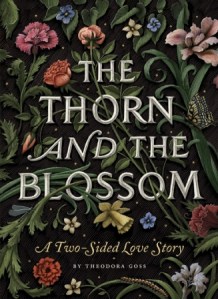
When Theodora Goss’ novella The Thorn and the Blossom: A Two-Sided Love Story was released last year, the book’s imagery, dual stories and unique construction created a bit of a stir. In the story, Evelyn Morgan and Brendan Thorne meet by chance and become lovers after he hands her a copy of a medieval romance.
In her Bookslut review, Colleen Mondor said: “Slipcovered and with an accordion-fold binding, “The Thorn and the Blossom” is designed so it can be flipped and readers may thus enjoy Brendan and Evelyn’s separate perspectives of the same tale. While the publisher’s work is impressive, it is Goss’s handling of the story itself that really blew me away. You do not have to read these perspectives in any particular order; you can start with Brendan or Evelyn and either way you will not ruin critical moments or spoil the ending.”
Publishers Weekly said: “The fantasy elements are light, revolving mostly around Gawan’s story and Evelyn’s visions of fairies and trolls. Overall this makes the tale align more with old-fashioned romance than pure speculative fiction, but Goss’ appealing characters and modern magic atmosphere will continue to attract a following.”
Some reviewers on Amazon liked the unique look of the book, but found the accordion-style presentation difficult to read because the pages easily fell away in long folds. Other authors with two stories to tell in one book have solved this problem by formatting the stories from alternate ends of the book but with standard binding. Needless to say, the issue becomes a non-issue for those reading the e-book version.
Nonetheless, showing the same story from two points of view is an age-old technique that’s been handled in multiple ways, and whenever it appears it adds both drama and depth to the material. Readers naturally feel some stress when they are told it doesn’t matter which account to read first and also when they see that there will be no resolution to the contrasting viewpoints. The depth, aided in part in this case by Goss’ evocative language, comes from understanding that people see events and relationships differently rather than via the single, linear viewpoint commonly used in most fiction. So, the dual stories show us what we often miss in fiction, though we experience it in our lives.
Available in hardcover and e-book, “The Thorn and the Blossom” is likely to enchant lovers of fantasy, romance, and well-told tales.
Malcolm R. Campbell is the author of contemporary fantasy, including the gritty, magical adventure “Sarabande.” His paranormal Kindle short story, “Moonlight and Ghosts” was released last month.
Author Don Westenhaver (Nero’s Concert) returns to the ancient world with a historical thriller set in Alexandria Egypt at a time when the Roman Empire’s rule was being challenged by a group known as “The Mob.” Set in 92 AD, Alexander’s Lighthouse is a smooth mix of fictional characters and events in a thoroughly researched historical setting.
Marco, a young Greek doctor arrives in Alexandria to study for a year at the city’s Museum and Library with something most visiting students do not have: a famous Gladiator father remembered fondly by the Empire. He secures a meeting with the Roman Prefect Titus Cornelius which leads to a position with a museum department tasked with the discovery of new weapons and other practical equipment. Marco’s access to the royal palace, his courtship of the prefect’s daughter, and his work on secret projects soon bring him to the attention of the mob.
The historical detail in this well-written novel provides readers with three-dimensional characters living, working and fighting within the scope of the long-ago politics and culture of Egypt in the city founded by Alexander the Great after it came under Roman rule. While Alexandria is an advanced, shining city with more than the usual amount of tolerance for its mix of Roman, Greek, Egyptian, Christian and Jewish citizens, there are conflict areas ready to be exploited by Free Egypt, the latest incarnation of the mob.
The inventive plot features a weapon under development by Marco and three colleagues in the museum’s special projects group that both the Roman rulers and the Free Egypt rebels desperately want to have. Spies are everywhere. It’s difficult to know whom to trust. And the friction between those who relish the laws and order of Roman rule and those who want the return of an independent Egypt lurks beneath the surface. The story builds through one intrigue after another toward the inevitable open rebellion. Marco, his co-workers, the prefect’s daughter, Paula, and a rich and alluring widow named Nebit are simultaneously players and pawns in a very deadly game.
While the novel’s historical detail intrudes at times, the story moves at a rapid and believable pace in Westenhaver’s re-created Alexandria with a powerful what-if premise: what-if the weapon in the book had been created at the famous museum? No, it isn’t historical. But as Westenhaver says in the Author’s Note, “My only defense is that the weapon should have been invented much earlier than it was.” (It contained well-known and commonly used materials.)
Like Nero’s Concert (2009), Alexander’s Lighthouse has great depth along with the kind of action that keeps readers turning pages. The novel is available in trade paperback and on Kindle.
Malcolm R. Campbell is the author of four novels, including the contemporary fantasy “Sarabande.” His “Book Bits” writers’ links appear several times a week on his blog The Sun Singer’s Travels.
 The Raven Boys by Maggie Stiefvater















 Malcolm's Round Table