Have You Ever Been in a Book Discussion Club?

bookclubMany of us, authors included, have a few unsettling memories of some of the book discussions that occurred during our high school and college English classes. I wondered at the time how many prospective readers would swear off books forever after being subjected to highly technical book criticism discussions in survey and other general literature courses.

In contrast, book discussion clubs and readers’ groups can provide a breath of fresh air. The catch is, you have give some thought to your club’s membership, book selection methods and discussion format at the beginning, and then select a moderator who keeps things on track and gives everyone a chance to talk. Rachel Jacobsohn provides a few tips that will get you started. The American Library Association also has had some great ideas.

In fact, if you search on line with search terms like “readers group tips” and “how to start a book discussion club,” you’ll find more than enough ideas from publishers, The Library of Congress and libraries to get your group up and running.

Basic Discussion

Personally, I think you can have a great evening talking about a novel by focusing on relatively standard discussion questions:

  • What happened?
  • What plot twists surprised you?
  • Who were the main characters and how did they interact with each other?
  • Did the characters change during the course of the story?
  • Did the author have a theme and/or a message behind the story?

If a novel fits into a specific genre, you might want to add a question about, say, its approach to fantasy, how romance fit into the storyline, or whether the mystery/thriller aspects of the plot were set up and then resolved.

Adding Depth

Many publishers provide discussion guides or book club starter questions to help reading group moderators lead memorable discussions. You can decide whether this information should be handed out to all members after they read the book but before the discussion begins, or whether to keep these materials on hand for use by the discussion leader as needed.

Since most clubs are discussing novels for the members’ enjoyment rather than approaching fiction as it might be taught in a college course, I think you’ll usually get more spontaneity out of your group if you don’t show them in-depth discussion questions in advance. Sure, these questions provide food for thought, but they can also lead to members planning their answers in advance rather than listening to and responding to what other members are saying as the discussion unfolds.

I’ve spent the morning writing “starter questions” for the novels in my upcoming series of fantasy adventures. As I wrote them, I wished I could turn myself invisible and listen in on some of the discussions. I haven’t been in a reading group for a long time and miss the great discussions that come up right after people finish reading a memorable novel.

Malcolm

trilogybanner

The Messy Spiral of Grief

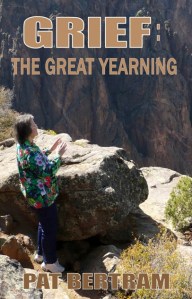
patToday’s guest post about grief and coping with the death of a spouse or a life mate, is by author Pat Bertram (“Light Bringer,” “Daughter Am I,” “More Deaths Than One” “A Spark of Heavenly Fire”)  who, I’m happy to say, has stopped by Malcolm’s Round Table several times before for some great discussions.

Pat’s most recent book is “Grief: The Great Yearning.”

The Messy Spiral of Grief

I am no stranger to grief. In December, 2006, I lost my younger brother, and exactly a year later, I lost my mother. I thought I knew what grief was all about, but the grief over those deaths in no way prepared me for the depth and breadth of the grief I experienced after the loss of my life mate/soul mate.

I’d known he was dying, and I’d prepared myself for the inevitable — in fact, at the moment of his death, I felt only relief that his suffering was over. When I returned home without him, I realized he was truly gone, and grief slammed into me with such ferocity it stunned me. It wasn’t just mental agony, but also physical pain. My chest ached so much I felt sure my heart had shattered. My stomach hurt. My arms ached. I felt dizzy and nauseous. I couldn’t breathe, couldn’t swallow, couldn’t even think. The only way I could relieve the incredible stress was to scream. And so I did.

One of the worst aspects of grief was the feeling of his goneness. I could feel the void in my life and my soul where he’d been ripped from me, but I couldn’t sense him at all. Toward the end, as we struggled to go our separate ways — he to death, me to continued life — we spent much of our time in separate rooms, and somehow I figured that’s what it would feel like after he died, but it was like nothing I’d ever experienced before. I still have no words to describe the finality, the undoableness, the vacuum of death. He was part of my life for thirty-four years. We breathed the same air. We were connected by our thoughts, our shared experiences, the zillion words we’d spoken to each other. And then he was gone from this earth. Erased. Deleted. Almost three years later, I still can’t wrap my mind around that.

griefOne of the ways I handled my grief from the beginning was to write letters to him. For all those years, I’d talked over everything with him, and I desperately needed to talk to him about this horror that had befallen us. So I wrote him. Sometimes it even made me feel connected to him for a few brief moments, as if perhaps we were still in this situation together. I also did some stream of consciousness writing to help me try to figure out what was going on.

My grief, and the grief of most people I have met since, does not follow the neat timeline of Kübler-Ross’s stages of grief. Grief is such a messy spiral of hundreds of different physical, mental, emotional, and spiritual permutations that it’s almost impossible to know what is going on, and writing helped me make sense of it.

I never intended to make my grief public, but shortly after he died, I read a novel about a woman who lost her husband, and the only acknowledgment of her grief was a single sentence: She went through all five of the Kübler-Ross stages of grief. That so appalled me that I decided to tell the truth about grief after the loss of a spouse, if for nothing else, to keep novelists from such superficial descriptions.

Selections from my letters, journal entries, and blogs have been combined into a book, Grief: The Great Yearning, which chronicles my struggle to survive the first year after his death. Grief: The Great Yearning was published by Second Wind Publishing, and is available from Amazon, B&N, and other online stores.

Pat’s Website: http://www.patbertram.com/

Pat’s Blog: http://ptbertram.wordpress.com/

Getting Started in Fantasy Reading

wikifantasy

“Fantasy: A general term for any kind of fictional work that is not primarily devoted to a realistic representation of the known world. This category includes several literary genres describing imagined worlds in which magical powers and other impossibilities are accepted.” – The Concise Oxford Dictionary of Literary Terms

When I tell people I write contemporary fantasy, sometimes they say, “wow, cool” and sometimes they say, “I read the Chronicles of Narnia when I was little, but know little about the genre.”

There are so many types, styles, flavors an sub-genres in fantasy, the wealth of material out there to read is often hard to explain to those wanting to know more. I agree with Terry Pratchett when he says that  “Fantasy is an exercise bicycle for the mind. It might not take you anywhere, but it tones up the muscles that can. Of course, I could be wrong.” However, here are a few links and ideas that are a bit more specific.

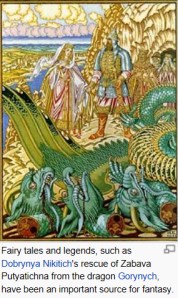
Wikipedia has a decent article on fantasy that works as a starting point. (Click on the graphic to read it.) The main article branches off into a series of additional links for sub-genres, books, and authors.

When people want to know more about the types of fantasies, I often send them to sites like Focus on Fantasy for a quick overview and Top 50 SciFi & Fantasy Novels blogs where they can sample some of the viewpoints and commentary out there.

bestfantasyI like Best Fantasy Books because it introduces newcomers to fantasy by listing books in various groupings and then, for each book, showing others that are similar to it. If you look at this site, you’ll find stand-alone books, books in a series, influential books, and a cool list called “Fantasy That Blows Your Mind.”

To keep up with recent books and new titles, you can subscribe to Amazon’s list via RSS. This puts it on your browser where you can click on it easily and see the names of the titles. You’ll find recent fantasy book reviews on Fantasy Book Critic. This site also displays an excellent blogroll that will send you off on an exploration of fantasy blogs, most of which links you to more blogs.

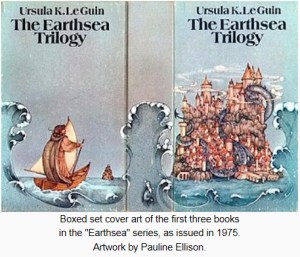
earthseaOnce you find a favorite author and genre, s/he will often be another source via comments, interviews and viewpoints in a personal blog or web site.  Fantasy is so diverse, that it’s really hard to nail it down and say that any one book of series is representative of the genre. Personally, I like contemporary fantasy the best because it overlaps are known world as J. K. Rowling did with her Harry Potter series. Rowling, though, is apples and oranges different from, say, Tolkien, or Erin Morgenstern’s recent The Night Circus or Ursula K. Le Guin’s classic Earthsea series.

Kindle, Nook and other e-readers make it easy to sample a variety of fantasy books at a lower cost before adding your newly discovered favorites to your bookshelf in hardcover or paperback. You can even find some of the older fantasies available on Project Gutenberg and other sites as free downloads. Happy exploring!

–Malcolm

Malcolm R. Campbell is the author of contemporary fantasy, including “The Sun Singer,” “Sarabande,” and the upcoming “The Seeker” (March 2013).

trilogybanner

Briefly Noted: ‘I Do: A Cultural History of Montana Weddings’

“A young and plucky eastern girl moves to the Wild West to be swept off her feet by a handsome and muscular cowboy: it’s the stereotypical plot of countless romance novels set in Montana.” – Montana Historical Society Press

We’ve all seen wedding stories like this in movies, novels and television shows. Some of those stories might even be real. However, historian Martha Kohl, a fifteen-year specialist at the the Montana Historical Society in Helena, found that the reality of Montana weddings over a 150-year period was every bit as romantic and absorbing as the fiction.

If you live in or near Helena, you can meet the author and enjoy the society’s new exhibit “And the Bride Wore…Montana Weddings, 1900-1960” on January 10th, between 6:30 and 8:30 p.m. at the MHS headquarters at 225 North Roberts.

IdoFrom the Publisher:

Through engaging stories of romance, insightful analysis, and historic intriguing photographs, I Do: A Cultural History of Montana Weddings provides an intimate and surprising look at an important tradition. I Do journeys through the last 150 years of Montana history, from the 1860s gold rush to the internet age, to reveal the lives of ordinary people, from Finnish homesteaders, Chinese restaurateurs, and Métis fiddlers to struggling miners, Blackfeet students, and Jewish merchants.

About the Exhibit:

MHSlogoThe Montana Historical Society’s newest temporary exhibit, will examine how history has shaped weddings—and particularly wedding fashion—during the first half of the twentieth century. Sixteen delightful and diverse dresses will be on display, including a hand-stitched dress made of white lace and yellow silk ribbon (worn in Butte in 1907), a Crow elk-tooth dress (worn in Lodge Grass in 1945), and a ballerina-style white dress of synthetic satin, lace and tulle (worn in Hardin in 1957). An opening reception will be held January 10, 2013, from 6:30-8:00. The opening will feature a wedding dress fashion show, a 1950s style cake and punch reception, a book signing by Martha Kohl, author of I Do: A Cultural History of Montana Weddings, and Slovenian wedding dance music. Don’t miss the fun! Viewers will be asked to participate in the exhibit by voting for their favorite ensemble and trying their hand at an old-fashioned Singer treadle sewing machine. The dresses will remain on exhibit through November 2013.

The exhibit is listed on line here with contact information and other details.

Malcolm

A long-time member of the Montana Historical Society, Malcolm R. Campbell is the author of contemporary fantasy novels partially set in Glacier National Park, including “The Sun Singer,” “Sarabande,” and the upcoming new adventure, “The Seeker.” Watch the trailer.

gohFBcover

Book Review: ‘Handover’ by Paul Blaney

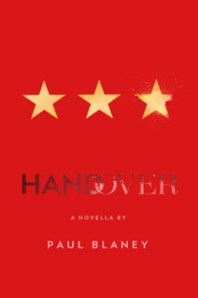
handoverOn July 1, 1997, the British Crown Colony of Hong Kong became the unique Hong Kong Special Administrative Region  of the People’s Republic of China, ending 156 years of colonial rule. Hong Kong, which translates to “Fragrant Harbor,” had for years been considered in financial, governmental and tourism circles, as a shining jewel.

The colony attracted many expatriates who were lured there for the heady “East-Meets-West” mix of people, the city’s dazzling cultural attractions and nightlife, the innovative high-density architecture and by the prospects of fortunes to be made and new lives to be started. Expats, however, always live within a curious limbo because they are never quite native and never quite who they were before they arrived. This limbo became more intense in Kong Kong as the date of the handover from British to Chinese rule approached.

Three interlocking stories comprise Paul Blaney’s novella Handover (Signal 8 Press, November 2012). His three expat Brits arrive in Hong Kong and find that the complexities of their own lives are somehow made more urgent and dear because of the changes and potential turbulence of the long-awaited handover.

Tess, whose aunt and uncle live in Kong Kong, graduates from college and then arrives and  finds work as a photo editor. Rob arrives with a head filled with memories of a former girlfriend who once lived there and begins to relive them while working as a bartender. Sally, a magazine editor, must confront on-the-job sexual harassment and the abandonment of her family when she defends herself and ends up in the colony’s criminal justice system.

The novella’s sections, each of which is—like Kong Kong—a compact and shining jewel, are bound together by the setting, minor characters and by the looming political and cultural manifestations of the handover. The stories are told in a non-linear style, giving them a kaleidoscopic organization and texture akin to that of Hong Kong itself. As such, the the novella depicts multiple slices of life rather than a traditional tale with a plot line leading through conflicts to an overt resolution.

Well-read readers may see the dark and gritty world of Blaney’s expats as a prospective new level of hell for Dante’s Divine Comedy: here in a heady world where everything wonderful is so close and so possible, doom is a likely result. Adventurous readers, those who love new things, new things with a hint of danger and intrigue, will discover that Paul Blaney’s Handover has many gritty delights to offer.

The novella is also a spot-on description of the the beauty and poverty of Kong Kong during a time in its history when nothing was certain.

Malcolm

The author of contemporary fantasy and paranormal short stories, Malcolm R. Campbell enjoyed his long-ago visit to Hong Kong and was happy when Signal 8 Press supplied a complimentary copy of a novel set in one of his favorite tourist destinations.

Thank you for the 14,000 views in 2012

WordPress claims—and I believe them—that Malcolm’s Round Table had 14,000 views of its 115 new posts this past year. Thanks for visiting.

whitehousebook1A fair number of you were reading my post about an organization called “The White House Boys”, an ongoing story about alleged abuses at the now-closed Marianna, Florida  Arthur G Dozier School for Boys. I grew up 90 miles away from that school in Tallahassee.

Obviously, I was aware of the school. I drove past it multiple times. Classmates at my high school always speculated about the people who ended up there. But abuses, that was all new to me until this year. I mentioned this school indirectly in “Cora’s Crossing,” my Kindle short story about the nearby (and purportedly haunted) Bellamy Bridge.

goatsongA lot of you have stopped by to read the book reviews both here and on Literary Aficionado. I saw in GalleyCat this morning that GoodReads users published 20,000,000 reviews on that site this past year. I can’t compete with that even though some of those reviews are mine! In 2012, I liked The Casual Vacancy by J. K. Rowling, In Sunlight and In Shadow by Mark Helprin, Goatsong by Patricia Damery and The Storyteller’s Bracelet by Smoky Zeidel.

Many of you stopped by while searching for information about the hero’s journey. Since my reading and writing have been influenced by Joseph Campbell’s The Hero With a Thousand Faces, I write about the steps on the heropath frequently.

Coming in 2013

Kindle Edition
Kindle Edition

You’ll see more about the hero’s journey on this blog in 2013 as my publisher releases my series of novels called The Garden of Heaven Trilogy. Two of my 2012 short stories (“Moonlight and Ghosts” and “Cora’s Crossing”) are now available on Kindle, but there are more on the way. That means, you’ll also be seeing more posts about ghosts, swampy Florida settings, and stuff that happens on dark and stormy nights.

There will be more reviews, too, beginning in January with Paul Blaney’s Handover which is set in Hong Kong during the country’s transfer of power from British to Chinese rule. I had a chance to visit Hong Kong in the 1960s, so I was interested in the author’s perspective of the city as it was in 1997.

I’m waiting for the second installment in Maggie Stiefvater’s four-book series The Raven Boys and Diana Gabaldon’s Written in My Own Heart’s Blood (coming in the fall of 2013). Yes, we’ve had to wait a while for the eighth book in her Outlander series.

As a writer, I don’t like being rushed. As a reader, I’m always in a hurry for the next best thing. With a bit of luck, 2013 will be another great year for both reading and writing, and for sharing thoughts about our favorite books with each other.

Malcolm

MRCcoversDec2013

What books do you return to year after year?

woodwifeWhat do you do when—and I know other authors will hate this phrase—you run out of “factory fresh books”?

Suddenly, all the books on the nightstand have been read, all the Amazon boxes opened, and the other nooks and crannies emptied of new reading material. I try not to let this happen often.

When it does, I either rummage through the books on my wife’s shelves or re-read a favorite. I tend to return to the same books over and over rather than adventurously taking equally great books off the shelf that aren’t (for me) the kind of book-comfort-food I’m seeking.

This Christmas holiday, my wife and I visited non-WiFi relatives and—without the distractions of the Internet—I knew I’d need a good book. I chose Terri Windling’s “The Wood Wife.” I like this book for its visceral portrayal of the desert and for it’s magical realism. I think Carlos Castaneda would have liked this book because Windling focuses on some of the same kinds of ephemeral, or potentially ephemeral, spirit entities that we found in Castaneda’s Don Juan books.

Like Castaneda’s work, this book takes me outside my comfort zones of mountains, forests. swamps and coastlines. I’m used to Mother Nature as I find her within my comfort zones. Though beautiful, the desert and its spirits are very alien. I find it exciting from time to time to confront “the other” in the desert that is so very different from “the other” in mountains and woods.

More Favorites

  • I often return to Katherine Neville’s “The Eight” and “The Fire” because they are long, complex and feature plots that are so intricate that I cannot remember all the ins and outs until after they come and go in each re-reading.
  • Pat Controy’s books, most especially “The Prince of Tides,” draw me back again and again. I like Conroy’s descriptions of his place settings.
  • Though a lot of people do not remember “The Great Gatsby” fondly, I find it compelling enough to draw me back again and again. Perhaps it’s the look into a very different time and place that I like.
  • “The Shadow of the Wind” has always been a favorite for its depth and its magic.

What about you? Do you have four or five favorites you can easily read again and again when you’re waiting to make a trip to the bookstore or simply need something old and familiar?

–Malcolm

Malcolm R. Campbell is the author of contemporary fantasy novels, including “The Sun Singer”

A Glacier Park Fantasy Novel

‘The Totally Out There Guide to Glacier National Park’ offers fun facts for teens and adults

Can you squeeze both feet onto a 2″ x 6″ piece of rock? What if that rock is 3,000 feet above a cold mountain lake?

Mountain goats, the iconic symbol of Glacier National Park, can place all four feet on a rocky pinnacle or ledge that small, and they can leap from rock to rock. The design of the mountain goats’ legs and feet makes them very good climbers.

totallyoutthereDonna Love (“The Wild Life of Elk” and “Henry The Impatient Heron”) filled “The Totally Out There Guide to Glacier National Park” (Mountain Press, 2010) and the free Arts and Activities Guide (PDF download) with facts like these. Illustrated by Joyce Mihran Turley, the book’s visually exciting art work will delight the younger members of the family. The text is written for both teens and adults.

From the Publisher:

Glacier National Park remains a unique ecosystem, one of the most unspoiled in the world, full of wonders to discover. Triple Divide Peak is the only place in the United States where water flows to three oceans west to the Pacific Ocean, east to the Atlantic, and north to the Arctic. The Big Drift, the snowdrift that forms on Logan Pass each winter, can grow to over eighty feet high and takes road crews months to clear each spring. Come discover the Crown of the Continent with The Totally Out There Guide to Glacier National Park, the first in a new book series that encourages kids and their grownups to get off the couch and get totally out there experiencing the wonders of our national parks.

Join acclaimed author Donna Love as she examines the park s twenty-five remaining active glaciers, explains the formation of the park s towering mountains, vibrant valleys, and pristine lakes, and looks at living things from beargrass to grizzly bears. You ll learn about the park s human history as well, from the arrival of the first ancient peoples to the establishment of the park in 1910 to plans for the twenty-first century and beyond. Whether you re taking a real trip or an imaginary adventure, you ll definitely enjoy the journey!

Coming Soon

Donna is working on a similar book for fans of Yellowstone National Park. Donna says on her website that “When our children were young, I found I had the ability to explain nature to them. I believe that the more you know about something, the better care you can give it, so I enjoy learning about new subjects. To learn about the subjects for each of my books, I study it until I understand it. Then I explain it. I think that’s why children, as well as adults, love my writing.”

Her approach has, I think, made the 96-page “The Totally Out There Guide to Glacier National Park” a classic. We can look forward to her Yellowstone book with high expectations.

You May Also Like: A review of Sheridan Hough’s romantic mystery “Mirror’s Fathom.”

Malcolm

BearsWhereTheyFoughtCoverMalcolm R. Campbell is the author of “Bears; Where They Fought – Life in Glacier Park’s Swiftcurrent Valley.”

Follow me on Twitter

Visit my Facebook page

Announcing: New Paranormal Short Story ‘Cora’s Crossing’

coracoverI’m happy to announce the publication of my e-book short story “Cora’s Crossing” released this week by Vanilla Heart Publishing. Priced at only 99 cents, this Florida Panhandle ghost story is already available on Kindle, PDF on OmniLit, and in multiple formats at Smashwords. The Nook version will be available soon.

Ghost Stories as “Local Color”

If you do a Google search like “Florida Ghost Stories” or “Swamp Ghosts” or “Southern Ghosts,” you’ll get hundreds of hits for spooky stories, haunted cemeteries and houses, and ghost hunter expeditions. Stories and legends are, as authors and journalists often say, part of the “local color”—the yarns, history and experiences that make places unique.

Local color in Marianna, Florida, the panhandle town most tourists know as the home of Florida Caverns State Park, includes a local legend about the haunted Bellamy Bridge across the Chipola River a few miles north of the caves. The story has been around for over 150 years and focuses on a young bride who died when her wedding dress caught fire. Since then, she has—some say—taken up residence at the old bridge, and possibly at the wood bridges that crossed the river before that. Local historian Dale Cox writes about the differences between the legend and the real-life Elizabeth Jane Bellamy in his new book The Ghost of Bellamy Bridge.

“Cora’s Crossing” is Pure Fiction

I’ve always enjoyed reading stories in which everyday people suddenly run afoul of ghosts (and other creatures) out of local legends. Truth be old, when I last drove over Bellamy  Bridge, I didn’t see a ghost. However (and this is important), I knew better than to drive over it at night. In “Cora’s Crossing,” two young men do drive over it at night and find more than they bargained for when they discover an injured young woman on the shoulder of the road and learn that the people who put her there are coming back.

The Florida Panhandle is filled with remote coastal areas, swamps, blackwater rivers, and other locations that are perfect for ghosts. Growing up there, I heard hundreds of ghost stories, usually at night when we were on Scout camping trips. Most of them began with, “On a dark and stormy night not far from our camp site. . .” Nothing like falling asleep with a ghost story on your mind. My Boy Scout troop never met up with any of the ghosts in those stories.

But what if we had? Worse yet, what if I had driven my ancient Chevy over Bellamy Bridge on a rainy night? I promise you, I didn’t. This story never really happened. Feel free to go visit the bridge during a thunder storm. Everything will be fine.

Malcolm

Kindle Edition
Kindle Edition

If you’re a fan of ghost stories, you may also like “Moonlight and Ghosts,” a story about the ghosts in an abandoned psychiatric hospital.

Follow me on Twitter and Facebook!

Briefly Noted: ‘The Ghost of Bellamy Bridge,’ by Dale Cox

BellamyCover-247x363The Florida Panhandle is often called “the other Florida” or the “forgotten coast” since it’s far away from the attractions and other developments in the peninsula. This is a land of piney woods, Karst region sink holes and limestone caves, spring-fed rivers, deep swamps, and ghost stories.

Growing up in Tallahassee, I heard many of these, but seldom went out to investigate—except for a brief side trip over one of the state’s oldest bridges over the Chipola River north of Marianna. I last saw the bridge in 1962; it was ancient then. (I didn’t see the ghost!) The bridge was abandoned soon after that when a new road and a new bridge were built. While the bridge still stands, it has only been visible via paddle trips since the road leading to it was closed and reverted to private ownership.

Historian and author Dale Cox recently presented a plan to Jackson County for a heritage trail to the bridge via public lands to the west of the river. That project was approved and the trail is now open for use. You can learn more about the project on its Facebook page.

Cox has just released The Ghost of Bellamy Bridge to help support the trail project. The legend about this haunted bridge has been around for about 150 years, and is among Florida’s oldest ghost stories. In this new book, Cox tells the story as the old timers always heard it, Then he tells the story behind the story.

From the publisherCox opens his investigation with the much loved legend of young Elizabeth Jane Bellamy, the 18-year-old bride of a wealthy doctor. She supposedly died in a wedding night tragedy and now haunts the environs of a nearly century old bridge that spans the Chipola River north of Marianna, Florida.

For dedicated ghost hunters, Cox also features nine other stories, including “The Two Egg Stump Jumper” and “The Wild Man of Ocheesee Pond.”

–Malcolm

Malcolm R. Campbell is the author of contemporary fantasy novels, including “The Sun Singer” and “Sarabande,” and the paranormal Kindle short story “Moonlight and Ghosts”