Review: ‘The Best of Glacier National Park,’ by Alan Leftridge

The Best of Glacier National Park, by Alan Leftridge, Farcountry Press (April 30, 2013), 136 pages, photographs, maps, resources

BoGlacier cover flat r1.indd“We’re here! What should we do, what is there to see?” In the preface to his practical and well-illustrated Glacier National Park guidebook, Alan Leftridge writes that as a park ranger, he often heard those questions from excited visitors who “wanted to start making memories.”

Many of Glacier’s two million annual visitors travel a long way to reach northwestern Montana, and when they arrive, they are not only in awe of the scenery but of the scope of the prospective activities that await them in a 1,012,837-acre preserve with 762 lakes and 745.6 miles of trails. While Glacier is best experienced without hurry or stress, the economics of vacation travel make it necessary for visitors to maximize their time in the park.

The Best of Glacier National Park highlights, as Leftridge puts it, the park’s “iconic features.” The book begins with an overview of park facts, geology, and cultural history. This is followed by twenty-six “best of” chapters describing everything from scenic drives, picnic areas and nature trails to wild flowers, birds and photography opportunities.

Each chapter includes a map, color photographs and clearly marked headings and subheadings that make the information easy to find. This book is meant to be used as a quick and easy reference whether you are stopped at an overlook on the Going-to-the-Sun Road or standing in a subalpine fir forest on the Swiftcurrent Nature Trail. The hiking sections, which are broken down into nature trails, day hikes and backpack trips, include directions and special features you’ll want to see and photograph.

Glacier’s rangers, naturalists, boat crews and saddle tour operators are probably asked more questions about the park’s flora and fauna than anything else. The “Best Wildlife” chapter includes a mammal checklist and tells you where to find marmots, deer, elk, bighorn sheep, moose and bears. The book includes appropriate warnings about Grizzly bears, suggesting that they be observed at a distance. “Best Birds” highlights ospreys, eagles and ptarmigans, among others.

Naturally, “Best Wildflowers” begins with beargrass. Leftridge notes that “It is a myth that bears rely on this lily to satisfy their diet. If you see beargrass’ tall stalks with missing flower heads, know that other animals, including rodents, elk and bighorn sheep, nibbled here.”

According to the National Park Service, there are 1,400 plant species in Glacier. While “best” is a subjective term, this guidebook focuses on such popular and showy wildflowers as the Glacier Lily, Indian Paintbrush, Lupine and other visitor favorites.

Naturalist John Muir said Glacier National Park includes the “the best care-killing scenery on the continent” and suggested that visitors  “Give a month at least to this precious reserve. The time will not be taken from the sum of your life. Instead…it will make you truly immortal.”

Whether you have a month, a week or a only few days for the high country known as the Crown of the Continent, The Best of Glacier National Park is an excellent all-purpose, general guidebook for discovering everything to do and see when faced with thirty-seven named glaciers, 175 mountains, and 151 maintained trails of waiting memories.

Malcolm

TSScover2014A former Many Glacier Hotel summer employee, Malcolm R. Campbell is the author of nonfiction and fiction with a Glacier Park focus, including Bears; Where They Fought: Life in Glacier Park’s Swiftcurrent Valley and three contemporary fantasy novels set in the park, “Sarabande,” “The Seeker” and “The Sun Singer.”

Book Review: ‘Bitter Orange’ by Marshall Moore

Bitter Orange - Cover - 1600x2500 - 300dpiMarshall Moore follows his collection of enigmatic and delightfully twisted short stories, Infernal Republic, with an equally inventive novel about a character we can’t always see. Notice how protagonist Seth Harrington is already fading away on the book’s cover.

If Bitter Orange were a feature film showing at your local theater, a sign on the door would say: ABSOLUTELY NO ONE ADMITTED DURING THE LAST 15 MINUTES. The why of things doesn’t appear until the final pages and it’s well worth the wait.

The problem Seth Harrington thinks he has isn’t the worst problem he has. Personally impacted by 9/11, Harrington has allowed his days and nights to take on an out-of-focus aimless quality as though he isn’t engaged in his life. In spite of a fling with Elizabeth in Spain, he can’t connect with people, either because he isn’t sure of what, if anything, he wants or because others aren’t seeing him as he is.

Others not seeing him is the problem he thinks he has. By fits and starts, he is becoming invisible—literally. But unlike the daring-do characters out of comic books and high fantasy, Harrington not only can’t control his growing ability, he doesn’t seem inclined to use it to save the world or fight crime. In fact, he first uses it to steal a bottle of wine from a convenience store.

Other than his aimlessness, Harrington’s a likeable enough everyman trying to negotiate the world while getting past bitter memories and making sense of the seemingly random chaos of his daily life. In Spain, after telling Seth that Seville Oranges are bitter and bullfights are cruel, Elizabeth says, “So we came all this way for bitter oranges and cruelty to animals. And we meet here instead of back home in the States. What does that say about us?”

Back in San Francisco, Elizabeth—who becomes Seth’s tattoo artist of choice because she’s very good—wants to remain as important to him as she ever-so-briefly was in Spain. While Seth is, or potentially is, more attracted to his roommate Sang-hee (even Elizabeth begrudgingly sees it), he cannot seem to embrace the life he prefers. He speculates about just what that says about him.

As the invisibility problem becomes more complex, Seth travels to Portland and Las Vegas to try and find himself. He notes that the people in those towns can’t see him either. He feels bad taking advantage of that fact.

Marshall Moore tells an inventive story, one with prose as likeable as his protagonist, though some readers may want a  more highly focused plot. Moore keeps both the reader and his protagonist guessing about just how and why a man becomes invisible and whether the problem Harrington thinks he has is literal or figurative.

The solution to the problem provides a fitting climax to a well written, fanciful tale. Poor Seth: he didn’t see it coming.

Malcolm

Malcolm R. Campbell is the author of contemporary fantasy novels, including “The Seeker,” released this month by Vanilla Heart Publishing.

seekerbanner

Briefly Noted: ‘Butterfly Moon,’ by Anita Endrezze

“Endrezze is adept at making her settings and landscape reflective of what is happening in the psyches of her characters and the situations of their lives. She captures her reader with vivid language and some very unique and startling images.” – M. Miriam Herrera

“When I first found Anita Endrezze’s poems, I felt I had come home. Here was the passion, the eloquence, the originality, the insistent song, that I longed to find. But how could I feel so at home? Endrezze is half-West European, half-Yaqui, her origins, her culture, so far from mine.” – Leah Shelleda

butterflymoonWhat we are drawn to, in part when landscapes and psyches are merged, in part when there is a persistent original song, are ideas and images that speak truth to us even though we’re on vastly different temporal world paths than the authors of the poems and stories.

When a read the selection of Endrezze’s poems included in Shelleda’s deep-ecology friendly collection, The Book of Now: Poetry for the Rising Tide, I, too, felt at home within Endrezze’s words. I looked for more of them because they seemed essential. I’m pleased to say that I found them in multiple places, and for a lover of myths and folktales, best of all in her Butterfly Moon collection of short stories.

The world turns, for some of us, where myth and landscape meet, where worlds merge and where tricksters often command the seasons. Trena Machado put this well in her New Pages review of Butterfly Moon:

“In the mythic way of seeing, there is the archaic layer of our anthropomorphizing nature and the earth that we have lost in our Western culture of commerce and science as we strain the limits of the earth’s balance. Nature has its-own-life-to-itself for which we were once more attuned, held reverence and enlivened by: ‘The house was a forest remembering itself. The pine trees that held up the walls dreamed of stars dwelling in their needles. Jointed, branched, rooted, the trees still listened to the wind.’”

The University of Arizona Press blurb is right when it says that Anita Endrezze’s stories are “Enjoyably disturbing, these stories linger—deep in our memory.” This 160-page book was published last September at a time when industrial excesses and environmental concerns occupied much of our attention, if not our overt commitment. No, this is not a Sierra Club tract; it’s pure storytelling at a time when, in addition to the joys of reading, we need to be disturbed and otherwise shaken up.

Malcolm

Novelist Returns to Nonfiction with Patton’s Oracle Memoir

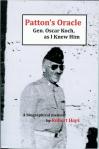
authcoverphoto (2)Today’s guest post is by Robert Hays (“Blood on the Roses,” “The Life and Death of Lizzie Morris”) who returns to his nonfiction roots with Patton’s Oracle: Gen. Oscar Koch, as I Knew Him. Since my writing career also began, like my father’s and Robert Hays’, in journalism, I wondered how Robert handled the move from fiction to nonfiction for this book.

Returning to Nonfiction

After four novels, I returned to non-fiction for my new book, Patton’s Oracle: Gen. Oscar Koch, as I Knew Him. I love writing fiction—the freedom to create settings and characters, the magic of working with different plots, the fun of trying ideas just to see if they work—but I also find great satisfaction in non-fiction. I’ve spent most of my adult life as a journalist. I loved newspaper reporting and the prospect of offering readers factual information that I consider interesting and important never wears thin.

Oracle cover 001 (2)What’s new for me in Patton’s Oracle is the addition of subjective material to the mix. The book is a biographical memoir, my effort to recount a marvelous four years of friendship and work with Oscar Koch, an unsung hero of World War II who became my personal hero as well.

Oscar Koch was a brilliant intelligence officer who deserves great credit for his behind-the-scenes role in the success of his celebrated commander, Gen. George S. Patton Jr. My military service had been two years as a draftee enlisted man and I had just turned 31 when I met Gen. Koch, who besides having a distinguished military career of almost forty years was well beyond twice my age. Surely the likelihood of us finding things in common was slight. But we live in a world of chance and in this case the unlikely came to pass.

I discovered the general to be a modest, scholarly and charming man. He found no glory in war, and sought none for himself. He was not enthusiastic when I asked to make him the subject of a personality profile article for the St. Louis Post-Dispatch. I believe he consented principally as a favor to me. He was pleased with the article, though, and invited me to collaborate with him on a book that had become his final goal in life.

kochGen. Koch was a joy to work with. His book quickly became almost as important to me as it was to him. But shortly after we began, he was diagnosed with terminal cancer. From that point forward I knew this was a race against time. We finished the book, G-2: Intelligence for Patton, but Oscar Koch did not survive to see it published. It came out in 1971 and still is in print.

As I summarized this experience in Patton’s Oracle: “I was granted only four years to share life with the general, a period that was far too short. In the beginning he lifted my spirits as we joined in a common purpose. In the end, I endured the anguish of watching an insidious cancer purloin the life from his body even though he never would surrender his gallant spirit. But what a remarkable four years it was, how grateful I am to have had that privilege.”

Patton’s Oracle is my tenth book. But it is the one I’ve wanted for decades to write, timid that I might not do justice to the subject. Even though the words are my own, there are passages that bring tears to my eyes. And of the ten, it is the book that is dearest to my heart.

You can find Robert Hays on the web on WordPress and on Facebook.

A talk with Scott and Smoky Zeidel, authors of ‘Trails’

scottandsmokyIt’s a pleasure to welcome Smoky and Scott Zeidel to Malcolm’s Round Table to talk about their new book Trails: Short Stories Poetry and Photographs released in paperback and e-book this month by Vanilla Heart Publishing.

Smoky is the author of fiction and nonfiction, including The Storyteller’s Bracelet (2012) and Observations of an Earth Mage, (2010). Her husband Scott, who plays the guitar, teaches music history as an adjunct professor at Mt. San Antonio College in California.

MALCOLM: Trails has been dedicated to the squirrels. Is this the entire family of tree or ground squirrels or a bird-feeder robbing band in your yard?

SCOTT: The squirrels are metaphors for nature. So, to answer your question, the book is dedicated to every type of squirrel in the world, the little bastards.

SMOKY: I started to say, “He doesn’t really mean that last part.” But then, I looked out my studio window, and there’s a pregnant ground squirrel out on the deck, ripping a rug to shreds, to get wool to line her nest, and I think, maybe Scott’s right.

trailsMALCOLM: I’ve had many conflicts with squirrels over the years, usually a difference of opinion about just who the bird feeders are for. Scott, when you write that you once thought everyone remembered their own birth, I thought of people who had either bad vision or better than normal vision and supposed everyone’s eyesight was the same. What has this memory given you that others do not have—long-term vision, connectedness to your family going back in time, insight into the big picture of our incarnation, or something else?
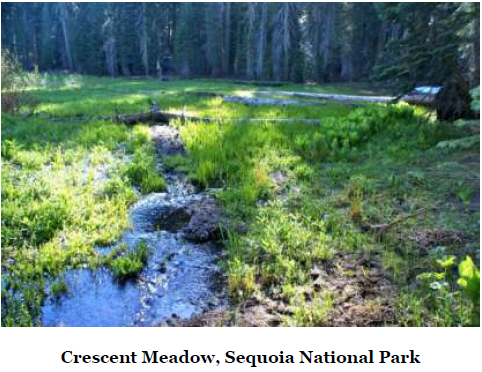
crescentSCOTT: I can’t speak for others, but, like I said, I do remember my birth. Nevertheless, was I instantly awake, instantly aware, at the moment of my birth? On a purely rational level, is this even possible? I think not. On a metaphysical level, when did my life really begin as a sentient being? When will it end? These are the big questions.

MALCOLM: Smoky, some people say that old stories change every time they’re told. Did you hear different versions of your childhood stories over time and do you now find yourself telling them differently when you relate them to others? Do you begin to wonder what parts of them have slowly become fiction?

SMOKY: I assume you’re referring to the stories I relate in the book about how I became a storyteller; the stories about my mother being a turkey murderer and my uncles’ wild snake stories. Hell, when I heard them the first time I wondered how much of them were true and how much my mother and my uncles made up. Even as a little girl I recognized these magical stories as being part truth, part fiction. What I garnered from them wasn’t whether my elders were being totally truthful or not, but rather the love they poured into the stories as they told them. Stories without love are dull, and seldom are they remembered. But these stories? There was so much love in them it wouldn’t have mattered if my mother said she’d slain a dragon, or my uncles done battle with Kaa (from Rudyard Kipling’s The Jungle Book) himself. The stories would have stayed with me.

MALCOLM: Scott, when you follow Smoky into the hospital for seemingly an infinite number of visits leading back to her being struck by lightning in 1989 and you sit, as you wrote, in another waiting room that looks the same as all the others, do you see it all as being within the hands and plans of the universe or do you watch people, read books and wait in a stoic limbo mode?

SCOTT: My intention was not to be particularly deep or philosophical here. I’m just a man. This is what I do; this what everyone should do. We all should hold out our hands and arms to others, friends, enemies, loved ones. What else is there? I comfort Smoky because this is what I do.

MALCOLM: Smoky and Scott, before either one of you wrote the first word of this book, did one of you say to the other, “Let’s co-author a book about life, walking and nature” or was it a muse or a publisher that suggested the project?

SCOTT: Our wonderful publisher, Kimberlee Williams, suggested the project. She has been so supportive and helpful. Kimberlee is our muse.

SMOKY: Let me clarify that “Kimberlee is our muse” thing. I talk about Muse frequently in the book; Kimberlee is not that muse. Kimberlee could ask me a thousand times to dive naked into a freezing mountain river and I wouldn’t do it. Muse, however… well, you’ve read the book, Malcolm. And whoever reads this here, on your blog, can read the book to learn more about that Muse.

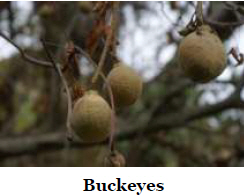
buckeyeMALCOLM: Smoky, has it taken a lifetime to learn the lesson of the California buckeye, that it’s part of a continuing process of life rather than a work of art to be preserved for all time as it was during one moment? Or, did the beauty of nature’s changes come to you more as an epiphany when you looked at the seeds you collected?

SMOKY: The beauty of nature’s changes first came to me when I was three years old and sitting in a blooming apple tree in my parents’ back yard. (I wrote about that experience in my “I Am Nature” essay in my book, Observations of an Earth Mage.) I’ve always been keenly in tune with the cyclical nature of Nature. In tune so much, in fact, I feel intense physical pain when rain is coming, for example, or when I’m near a place where our Mother Earth has been ravaged by bulldozers or mining equipment. The lesson of the buckeye is best summarized as a lesson in the impermanence of beauty; the impermanence of life as we know it. Life goes on, of course. It just changes form. The buckeye becomes a sprout, then a seedling, then, over time, an enormous tree. It would be wrong—it would be impossible, in fact—to try to contain it in any one form, no matter how beautiful. We also talk about that in the last chapter of Trails.

MALCOLM: Scott, you traveled a long way—and many years—from your childhood play in the dirt outside your house to the Big Sur where you re-discovered the land on a rainy night while reading Vonnegut. Do you wonder now why the journey to the Big Sur took as long as it did or whether you had missed signs and hunches early on that you needed to go there, or somewhere, to re-connect?

SCOTT: I do wonder why it took so long. I certainly missed signs along the way, many signs. When I would sit at a table in one of my many Ph.D. seminars, I felt like a robot, a machine, waiting for something. But sometimes I felt something taping, taping on my shoulder. Now I know what it was. It was Poe’s raven. It was my muse. I just brushed it away.

MALCOLM: Smoky, you write that you “find there are two kinds of people: those who believe it is possible to talk and listen to trees, rocks, animals, and rivers, and those who do not.” You talk and listen. Are you “wired differently” or are whose who don’t understand the dialogue brainwashed that it’s impossible or too busy to consider it?

SMOKY: Brainwashed might be too harsh a term. I think children hear Nature speaking. But as they grow, they’re told to put aside their playful, creative natures and buckle down and study hard so they can get a good job and support a spouse and 2.3 children and begin the cycle all over again. The quashing of creativity quashes the ability to hear Nature speak. By the time we reach adulthood, we’ve learned the only people who talk to rocks and trees are crazy people. So call me crazy, but I know what I know, and I know when Nature and her children—the rocks, trees, birds, rivers—are talking to me. And I think other people hear it too. They just don’t remember the language. It’s not unlike being dropped on some random street in, say, the Middle East, and all you hear is Farsi. You hear something. You just don’t understand it. The good thing is, this is a skill that can be re-learned, understanding what the trees and rocks are saying. You just have to sit still and listen long enough.

MALCOLM: Scott and Smoky, what draws you to the Kings River in the Sierras? Would another river serve the same purpose or is the voice of this one Sympatico with your thoughts and feelings?

SCOTT: All mountain rivers inspire us: the movement, the sound, the color, the smell. So sensual. But there are many levels to a mountain river. They’re veins through the natural world; they’re Gaia’s poetry; they’re the beauty of life; they’re spirit. But the Kings River is special; it’s a mountain river on steroids.

SMOKY: For me it’s all that Scott said, but I’d add one thing: the Kings was the river of a profound spiritual renewal I experienced and write about in Trails. While other rivers are sacred to me—the Little Pigeon in the Smokies especially comes to mind—none of them have affected me, spiritually, as profoundly as the Kings. The Little Pigeon is the river of my heart; the Kings is the river of my soul.
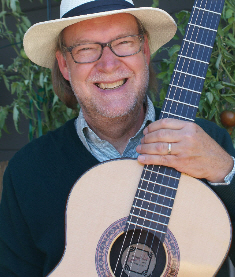
scottMALCOLM: My feelings about mountain rivers are the same. Smoky and Scott, one of you is inspired by a guitar and one of you is inspired by Snake. Is this an example of opposites (or differences) attracting, or is there a synchronicity here that lurks within your respective muses?

SCOTT: Yes, synchronicity! Someone strums a snake; someone strums a guitar. There’s really no difference. As Rumi said, “Everything is music.”

SMOKY: Our muses are definitely entwined, which evokes an image of Snake. And music is a theme of our lives: there are times we live our lives at a fevered pitch, and times when we sit in quiet repose. There are slow, dark sonatas when I am sick; there are times the music plays so fast we can hardly dance fast enough to keep up.

MALCOLM: Does each of you have a favorite line from the book that best communicates the depth and breadth and intent of the book?

SCOTT: For me, it’s what I just said, “Everything is music.”

SMOKY: For me it would be “ …we went to the mountains, deep in the wild Sierra, to refresh our tired bodies and restore our faith in all that is Nature, and wild, and sacred, and good.” I hope our book, Trails, is like that, that it restores readers’ faith that there is good, and it is as close as our own back yards.

MALCOLM: Thank you for stopping by the Round Table today with your wonderful background about Trails.

Trails is available on Kindle, Payloadz and OmniLit. More formats will be released in the coming weeks.

Review: ‘Crescendo’ by Deborah J. Ledford

crescendoIn music, “crescendo” indicates a gradual increase in force or loudness. If Deborah J. Ledford’s three-book Steven Hawk/Inola Walela Thriller Series (Staccato, 2009, Snare, 2010, Crescendo, 2013) were a concerto, the audience would leave the concert hall at the end of the performance electrified by the force of the third movement and the virtuosity of soloist Inola Walela.

Crescendo (Second Wind Publishing, January 27) begins with great force when antagonists Preston Durand and private investigator Hondo Polk push Billy Carlton to tell them what he knows about the location of Durand’s son and ex-wife. The book’s volume increases when Inola’s partner is killed during a traffic stop by a bullet that might have come from her gun and a female passenger in the stopped car is struck and killed by another vehicle just after she says, “I got you the money.  Where is my son?”

Though she’s a decorated Bryson City, North Carolina police officer, Inola is put on administrative leave pending a departmental investigation into the deaths at the scene. She’s told to stay away from the investigation, including trying follow up on her gut feeling that the woman’s son has been kidnapped.

Inola’s fiancé Steven Hawk, now the county sheriff, wants to play everything by the book. He tells Inola that there’s no evidence of a kidnapping and the city police and county sheriff’s departments can’t take action until evidence and leads, if any, materialize—and she is to stay home.

Readers of the Steven Hawk/Inola Walela Series were introduced to Inola in Staccato when Hawk, who was a sheriff’s deputy then, first became aware of her: “Hawk had noticed Inola Walela, the only female cop on the Bryson City police force. She was captivating, beautiful, smart, tough, exactly what he hoped to find in a woman.”

Inola, who played a larger, but secondary, role in Snare, is Ledford’s on-the-hot-seat protagonist in Crescendo. She comes into her own in this tense novel as a three-dimensional, risk-taking police officer who needs to find the young woman’s son and who has kidnapped him even though she may be suspended or terminated regardless of what she learns.

This is a richly told psychological and physical thriller. Ledford, who knows her characters and her settings well, increases the volume of this story until the last shot is fired.

Malcolm

Malcolm R. Campbell is the author of contemporary fantasy novels, including “Sarabande’ and “The Sun Singer.”
We could fill cemeteries with neglected books

books“There was a time when a learned fellow (literally, a Renaissance man) could read all the major extant works published in the western world. Information overload soon put paid to that. Since there is “no end” to “making many books” – as the Old Testament book Ecclesiastes prophesied, anticipating our digital age – the realm of the unread has spread like a spilt bottle of correction fluid.” – The Guardian in “In theory: the unread and the unreadable”

Carlos Ruiz Zafón writes about a “cemetery of forgotten books” in his novel The Shadow of the Wind. This cemetery is a library maintained by the secret few who know about it and who may lend you a volume if you will protect it for life. After reading the article in “The Guardian” which led me to The Neglected Books Page which led me author Jo Walton’s lengthy 2010 Neglected Books: The List (with a science fiction and fantasy focus), I wondered if we should build a cemetery, that is, a library, of forgotten AND neglected books.

neglectedbooks

You probably have some favorite authors and books that never seem to catch on with the general public. With my Georgia focus, I can usually name several Georgia authors who seem to be lost in the shuffle even though they have won awards and/or had a book or two made into a movie. While I’ll probably read the upcoming Dan Brown book Inferno, I don’t usually follow fads. Reading outside the latest fad, I’m usually able to think of wonderful books that are being overlooked.

“The Guardian” article mentions information overload. That’s certainly a factor. Adults aren’t known for reading a lot of novels per year. Perhaps high school and college literature classes made fiction seem boring. Perhaps the latest reality show, movie, or trending Internet story gets in the way. There are plenty of reasons.

One can also say that small press authors, not including those published by old-line prestigious small presses, are likely to feel neglected. For the most part, small press books do not get reviews from Kirkus, Booklist, Publishers Weekly and major newspapers. There usually are no noteworthy interviews with small press authors or off-book-page stories about their work. With few exceptions, their books are not entered into awards competitions, included on the media’s best-books-of-the-year lists, optioned for movies, or remotely on the radar of most prospective readers.

If you ask a major critic, book reviewer, literary magazine, or publishing magazine what a neglected or a forgotten book is, it is normally considered one from a major publisher that was well reviewed, but had lower than expected sales and was allowed to go out of print. Books by popular authors that don’t catch on like the authors’ other works are also in the “neglected” category.

The cemetery/library in The Shadow of the Wind resonated with me in part because of the novel’s notion that “Every time a book changes hands, every time someone runs his eyes down its pages, its spirit grows and strengthens.” In “real life,” a secret library that almost nobody knows about won’t serve our need. Perhaps books need patrons or people who love them and talk about them or people who share them with their friends. Perhaps we need more adventurous readers who will commit to buying five books a year that are not on the bestseller list. We need more reviewers: writers often wonder why people say, “hey, I loved youshadowofwindr book” but then don’t follow that up with a reader review on GoodReads or Amazon.

I think I’m only talking about band-aids here unless more people find more reasons to read. According to ParaPublishing, 27% of adults in the U.S. don’t read books for pleasure (based on figures from a few years ago). What books are the remaining adults going to pick from: an old and forgotten book, a book from a small press author, or the book sitting in the bookstore window and at the top of the national bestseller lists? No wonder so many books are forgotten and/or neglected and/or passed over—depending on your definition of those terms.

Years ago when literature and other liberal arts courses were more valued in high schools and college than they are now, most of the students in my classes came from families where their parents read almost no books. The students learned from home that reading wasn’t valued. Our town’s public library has reading classes for kids, and I love seeing the kids there. But I wonder, is the excitement of the reading program reinforced by parents at home or are the kids just dropped off at the library by parents who need time to run some errands elsewhere?

Reading is an investment in time more than an investment of money. I get offers via e-mail, Facebook and GoodReads for free downloads and sample chapters. I read a lot, but I can’t keep up with the deluge. I try to promote new authors on my blogs and on Twitter, but sooner or later, I want to read the books I hear about rather than free books I’ve never heard about. It’s book overload even for those of us who read a lot.

riflogoPerhaps reading just isn’t a modern-day avocation and perhaps it’s too late to change that. Can reading-oriented groups help or did we let lack of reading get so far out of hand that the problem is too broken to fix? More and more people are writing and publishing, but their viable readership seems to be getting smaller no matter how much time we all spend arguing about whether e-books should be almost free or should sell for enough to support the authors who wrote them?

  • So, what books and authors do you like that have fallen into the neglected or forgotten categories?
  • What happens when you tell your friends about these books? Do they yawn and then spend another evening watching reality TV shows or reading only the top ten book on their genre’s bestseller list?

Malcolm

trilogybanner

Speculative Supernatural Novels and the Growing Fantasy Genre

CowanToday’s guest post by Laura K. Cowan (The Little Seer) examines speculative supernatural fiction and its relationship to fantasy. As authors, we often like to push the envelope, so to speak, and explore new realms. Speculative fiction of all kinds has been a popular arena of late.

It’s difficult to sort through all the variables that make for good fiction as new genres and sub-genres come on the scene, but one important consideration is the readers’ comfort level. Some fantasy readers stick to one area, while others see all the colors and hues of fantasy as a tempting smorgasbord. I’m always tempted to try new treats. How about you?

Speculative Supernatural Novels and the Growing Fantasy Genre

The fantasy genre is a diverse one, from the elves of high fantasy to pookas and werewolves at the intersection of fantasy and fairy tales, all the way to the dark fantasy of authors like Neil Gaiman with mainstream appeal. But a growing number of writers not satisfied with the status quo is beginning to write a new sub-genre called speculative supernatural. What is it and why should fantasy readers care?

Well, as a speculative writer, I suppose I’m biased, but I think readers of fantasy will embrace the speculative supernatural genre for one reason: it’s never boring! In a similar way that science fiction takes a “What if?” question of technology or science and stretches it into the future, speculative supernatural takes a “What if?” question and pushes into the spiritual or supernatural. Everything from weird ghost stories to spiritual warfare novels with warring angels and demons, to the cosmological stories that explore the physical and metaphysical nature of the world can fall under speculative supernatural, and that can take a reader and a writer down a very deep rabbit hole indeed. Isn’t that where all the best fantasy fiction goes?

Angels, Demons and Dreams

SEER FINAL V 2013-FrontThis week, my debut novel The Little Seer was pushed to the top of the Amazon Bestseller lists for free fiction when I made the first book of the novella trilogy, Exodus, free for 5 days. We all love free, but what I think really made this book an instant hit with readers was the premise. The story follows a young girl who wakes from a nightmare that her church is destroyed by a tornado and her pastor orders crows to peck out her eyes, only to discover deep cuts on her arms where she was attacked. And it only gets stranger from there, as her dreams unfold in her waking life and she finds herself the focus of a spiritual war over her life and town that could decide the fate of millions.

The supernatural angle of this book is obvious: angels, demons, and a behind-the-veil look at heaven as it manifests itself in our minds and around us at all times. But in order to make this story really gripping, I had to bring the supernatural into the natural in a literal way. “What if your dreams could really hurt you?” I asked myself. “What if what appears to be the safe choice spiritually could not only devastate your soul but risk your life?” “What if God wasn’t who you were told he was, and neither were you? How would you find the truth? ” And suddenly my character was an armchair theologian no more. She found herself diving deep into symbolic prophetic dreams and the depths of her own mind to seek answers to pressing questions, even as her family and church and community fell to pieces.

A Viable Fantasy Sub-Genre

The books I’m working on for the next few years all contain a similar thread of speculative thought and supernatural themes, but I’m excited to see how this work doesn’t fit in a box. It’s too out there for the Christian market even when it does contain angels and demons, but it’s too spiritual for a mainstream market. I think fantasy is the ideal home for my work, because my next novel Music of Sacred Lakes deals with a mystical connection with nature through a haunting that saves a young man’s life, and my upcoming short story collection The Thin Places: Supernatural Tales of the Unseen actually takes 30 separate speculative “What if?” questions and spins them in all directions, from modern mythology to the marriage of fairy tales and time travel. Like I said, never boring, and who knows interesting stories better than fantasy fans?

Welcome to the speculative supernatural genre. Let’s jump in together and see how deep the rabbit hole goes.

rabbitOn February 19th, Amber McCallister, who often reviews speculative fiction, will overview The Little Seer and provide an excerpt on her Wonderings of One Person weblog. Erin El Mehairi will be interviewing Laura on February 20 at Oh for the Hook of a Book! 

The Little Seer is available on Amazon in paperback and on Kindle.

You can also find Laura at her website and on Facebook and Twitter at @laurakcowan. And, I would like to thank her for stopping by Malcolm’s Round Table today.

–Malcolm

The Annual Library Book Sale

jeffersonlibraryEvery year, our local library holds a book sale that has become so popular it can no longer be held in the library’s modest lecture room. Now it occupies a huge space at the civic center where multiple tables have been set up with books grouped under multiple subject headings and genres by the Friends of the Library and other volunteers. This year’s library sale will be next week and, as usual, I have collected a box of books to donate for the sale.

The sale has been a good fund-raiser for the library as well as an opportunity for readers to find some great books marked down even lower than the used books (when the shipping costs is factored in) on Amazon. The books tend to sell at a blanket price depending on whether they’re hard cover or paperback. This streamlines the checkout procedure, though I think there are some cases where a few of the more popular, recent books could be marked up.

The Murphy’s Law of Donating Books

Over the years I’ve discovered a universal truth about book sales, a truth that also applies to anything sold on eBay or Amazon or donated to book drives held for various worthy causes: You may not have looked at the book for years, but once you sell it or give it away, you’ll sooner or later want to look at it again, Years ago, after finishing my first fantasy novel The Sun Singer, I sold off an Allerton Park brochure (where the real Sun Singer statue stands) on eBay because the book was done and I needed the money. Years later, I bought it (not the same copy) back on eBay because it was the only source for information I was using to market the novel.

Now, once again, I remember that a book by Eric Berne (widely known for Games People Play) that I’ve been looking for around the house for several days was, in fact, donated to the library book sale several years ago. I wanted information for an upcoming post on this blog about the multiple meanings behind the popular Little Read Riding Hood fairy tale. I’m still going to look at LRRH, as Eric Berne calls her, but the post would be easier to write if I still had Berne’s book about psychological scripts.

My wife and I will probably got to this year’s library sale. I’ve gotten in trouble there before, mainly for buying only one or two books when the librarians remembered me donating 50 books. “Malcolm, you need to take away more than you bring.” Sorry Laura and Amy, but the house isn’t big enough.

I don’t expect to find any books by Eric Berne, but there’s probably going to be something tempting on one of those tables. The librarians know that those of us who are addicted to books are going to show up!

Coming on Monday, February 18th:  Speculative Supernatural Novels and the Growing Fantasy Genre, a guest post by Laura K. Cowan (“The The Little Seer”)

You May Also Like: ‘Loki’s Wolves’ is coming in May, my latest post on Magic Moments.

Malcolm

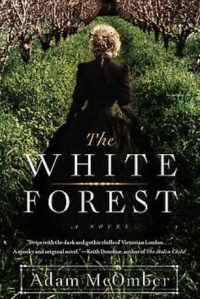
Briefly Noted Novel: ‘The White Forest’ by Adam McOmber

whiteforestAdam McComber’s The White Forest (which I’m currently reading when I should be working) introduces protagonist Jane Silverlake, a young lady with an affinity for man-made objects that transcends psychometry. It’s as though they have souls and agendas that are much more than simply the traces of those who made them or owned them.

The novel is set in Victorian England at a time when some people are interested in the latest frontiers of spiritualism while others think anyone with odd talents is a witch. Jane has only shared her talent with two close friends and, soon after the novel begins, one of them disappears. Jane’s best friend is distraught as well as suspicious, and the police are looking at everybody.

From the publisher

In this hauntingly original debut novel about a young woman whose peculiar abilities help her infiltrate a mysterious secret society, Adam McOmber uses fantastical twists and dark turns to create a fast-paced, unforgettable story.

Young Jane Silverlake lives with her father in a crumbling family estate on the edge of Hampstead Heath. Jane has a secret—an unexplainable gift that allows her to see the souls of man-made objects—and this talent isolates her from the outside world. Her greatest joy is wandering the wild heath with her neighbors, Madeline and Nathan. But as the friends come of age, their idyll is shattered by the feelings both girls develop for Nathan, and by Nathan’s interest in a cult led by Ariston Day, a charismatic mystic popular with London’s elite. Day encourages his followers to explore dream manipulation with the goal of discovering a strange hidden world, a place he calls the Empyrean.

A year later, Nathan has vanished, and the famed Inspector Vidocq arrives in London to untangle the events that led up to Nathan’s disappearance. As a sinister truth emerges, Jane realizes she must discover the origins of her talent, and use it to find Nathan herself, before it’s too late.

Praise from the Chicago Sun-Times

“What sets “The White Forest” apart from other contemporary novels is Adam McOmber’s careful attention to language. While it is the Columbia College professor’s first full-length novel, “The White Forest” is written with an imaginative and haunting prose reminiscent of H.P Lovecraft.”

Praise from Kirkus Reviews

“Teeming with as many twists and turns and shadowy characters as the narrow Victorian streets in which the tale is partially set, McOmber creates a . . . supernatural mystery that bombards the senses with rich dialogue and imagery.”

Opening Lines

“When Nathan Ashe disappeared from the ruined streets of Southwark, I couldn’t help but think the horror was, at least in part, my own design. I’d infected him, after all, filled im up with my so-called disease. The rank shadows and gaslight in the human warens beyond Blackfriars Bridge did the rest. Madeline Lee, my dearest friend, would come to hate me for what I’d done.”


This well-written mystery/historical/fantasy has lured me into another world.

Malcolm

gohFBcover