Finding Thomas Hall – Author Beth Sorensen Discovers Her Passion in a College Course

Sorensen

Today’s guest post has been contributed by Beth Sorensen, author of “Crush at Thomas Hall” (Chalet, August 2010) and “Divorcing a Dead Man” (Chalet, August 2011). My review of her romantic mystery, “Crush at Thomas Hall” appeared here on Malcolm’s Round Table in September 2010. Sorensen lives in Delaware with her husband and three children.

Finding Thomas Hall

When I sat down to write Crush at Thomas Hall, I already knew I wanted my story to take place in Virginia. I was born and raised there and the eastern coast of the commonwealth as only a native would. Most people, however, would not necessarily associate wineries with this part of the United States. And until I was in my mid-twenties, neither did I. Until I returned to Old Dominion University in the mid-nineties, to finish a degree I had started six years earlier. My interests had changed and so did my major. I enrolled in the geography program and set myself on a track that included taking classes year-round.

As a single mom, I often took a night classes. I was fortunate to have the help of family with my son and I could knock out a three credit class while only being away from home one night a week. In the summer of 1996 I enrolled in the geography of wine. Sounds like an easy class, right? Wrong! It turned out to be two nights a week of six weeks. One night lecture, the other lab. Okay, so the lab was fun, but lecture was no joke. The history of wine, wine in early America, how and what type of grapes are grown, how wine is made, stored, and sold were all topics on the syllabus.

I fell in love with every part of the class and when I went out on our field assignment, this was a 400 level class; I fell in love with wineries as a location. I had the great pleasure of spending several hours at Ingleside Winery with their then wimemaster Tom Payette. The day left me with a true sense of what vineyard and winery life was like. I visited others that summer and discovered that they were all beautiful and romantic with a touch of mystery. And for our final, we had to design our own winery and defend its practicality.

So when it came time to choose which winery to use as a setting for my romantic mystery series I knew exactly where it would take place. A winery of my own design, named after my great-grandmother’s maiden name, Thomas Hall.

Protagonist Cassandra Martin from “Crush at Thomas Hall” returns in “Divorcing at Dead Man,” available in Kindle and trade paperback editions.

Cassandra Martin’s life is bordering on perfection. She has settled down in the Northern Neck of Virginia and has an amazing job running a winery. In addition, she plans to marry the man of her dreams, sexy billionaire Edward Baker.

However, in Cassandra’s world, perfection usually means the earth is about to drop out from under her and this time is no exception. What starts as a series of prank calls, soon reveals her abusive, late husband, Tony Martin, is very much alive and looking for her, three weeks before she plans to remarry. Now she must do the unthinkable as a devout Catholic, divorce Tony. When secrets  alienate her from her fiancé, Cassandra begins to question the advances of a man that wants more than her friendship. And when she wakes up after having been  drugged and kidnapped, Cassandra begins to wonder if she’ll live long enough to decide whether or not she wants to walk down the aisle.

The Writer’s Comfort Zone

Robert Hays

Today’s guest post is by Robert Hays, author of four novels, including Blood on the Roses (Vanilla Heart, July 2011) and The Life and Death of Lizzie Morris (Vanilla Heart, January 2009). He has worked as a newspaper reporter, public relations writer, magazine editor, and university professor and administrator.

The Writer’s Comfort Zone

Most writers seem to do their best work when they stay within their own comfort zone. This may be through genre—once you’ve written a couple or romance novels, for example, or a murder mystery or two, you’re likely to begin a new work of that kind with a better idea of where you’re going with your story and have a good sense of its possibilities and  limitations. I don’t consider myself a genre writer, but after being a journalist for most of my adult life I’m definitely a realist. This means my comfort zone is in settings that will seem familiar to readers and characters that are like people I know. Further, my story line is likely to be based on actual experiences, either my own or those I’ve read about or heard about and can research for realistic detail.

I love Malcolm Campbell’s exotic fantasy novels, particularly since he uses my home region—central Illinois—as a setting. But I could never write what he writes. Or if I did no one would want to read it. I’m glad there are writers, like Malcolm, who are more creative than I.

Being a realist has its advantages. When I decide that I want to tell a story based on some past experience, I’m half way home. This was especially true in the case of my newest work, Blood on the Roses. During my last few years of teaching at the University of Illinois, I learned that students today—our best and brightest twenty-year-olds—have little knowledge of the history of racism in America. Perhaps they’ve heard about it in school, but they don’t really understand it or comprehend how bad it was. They have never experienced anything like it.

Understanding Our Past

I believe we need to know and understand our past. The bitter as well as the sweet, the ugly along with the beautiful. We need to know the wrongs if we are to make sure they don’t happen again.

Blood on the Roses is about racism and other prejudices. It is set in east Tennessee in 1955, which just happens to be the year before I was sent to the South by the U.S. Army and witnessed racial segregation as state policy for the first time. It also is the time of the Emmett Till murder in Mississippi and just months after the U.S. Supreme Court outlawed school segregation. I remember very well the “Impeach Earl Warren” billboards along major highways in  the South. This all became fodder for my mill, and the reader will understand that this is an authentic story of life at that time.

I love the South. I love Southern people. I’ve been married to one for decades, as a matter of fact. Blood on the Roses is not an indictment of Southern people or the Southern way of life. It is an indictment of racism as it existed then, and as it must never be allowed to exist again. And it is solidly grounded on my realistic journalist’s view of the world as I saw it.

Visit Robert Hays’ blog site at http://authorroberthays.wordpress.com/ or his personal web site at http://home.comcast.net/~roberthayswriter/site/. You may also like his review of Kathryn Stockett’s bestselling novel “The Help.”

Deltona, Florida Regional Library to host authors book fair in October

The Deltona Regional Library’s second Authors Book Fair Celebrating Writers and Readers will take place Oct. 15, 2011, in the library.  The doors open to the general public from 11:00 to 3:00 preceded by two workshops for authors from 8:45 to 11:00.

The book fair attracted 70 authors its first year and served as an introduction to authors and poets in Florida or those who call Central Florida readers their audience.

“This is an idea that took off,” said Melinda Clayton, author and co-chair of the event. “The Deltona Library is the perfect venue with indoor space for authors and rooms for speakers and workshops.”

“Our library receives many calls every year from authors who would like to do a book signing and this is the perfect opportunity to bring writers and readers together,” said Suzan Howes, regional librarian.

A single table at the book fair is $50 or $25 for a shared table.  “We want to keep our fees really reasonable for this fundraising event sponsored by The Friends of Deltona Library,” said Clayton.

The event is available for additional business sponsors to join those all ready committed: Ruby Tuesday, Holiday Inn Express and the Scrub Jay Café.

Workshops for Authors

 7 Steps for a Wildly Successful Book Tour presented by Sarasota author, Liz Coursen, who will have just completed an 81 city book tour.

Pamela Starr, Regional Development Director for Constant Contact will be conducting a social media workshop entitled:  How (and why) to incorporate
social media into your marketing strategy.

 Both presenters were enthusiastically received in other Deltona Library workshops.

Authors and publishers interested in setting up a table at the fair should call Christy Jefferson at 386.574.9376 for information.

I’m happy to say that my publisher, Vanilla Heart, will be attending the fair with an exciting assortment of books.

–Malcolm

Contemporary Fantasy Adventure

Author’s ‘In a Flash’ Recounts Being Struck by Lightning

In July 1989, Chicago Tribune headlines brought readers the first chapter of the saga of a young woman who was struck by lightning:

  • 3 INJURED BY BOLT OF LIGHTNING
  • 2 HIT BY LIGHTNING SHOW IMPROVEMENT; MOM IS STILL IN CRITICAL CONDITION
  • LIGHTNING VICTIM ON THE REBOUND

Today, my guest is author Smoky Trudeau Zeidel whose new Kindle story In a Flash recounts the lightning strike, the immediate aftermath and the twenty two years of pain and suffering that followed.

Malcolm: In the story, you say that you didn’t know you were struck by lightning until you woke up in the hospital. Did you believe them when they told you what happened or did it sound too farfetched?

Smoky: It was confusing at first, because I had no memory of the event, but I was in such a fog from the morphine I guess I would have believed anything they told me. I couldn’t speak, because I was on a respirator, so I was in no position to question them. I guess I realized how seriously injured I was when I saw that all my siblings—who lived as far away as Georgia to the east and Washington to the west—had gathered at my bedside.

Malcolm: Do you see the incident as random bad luck that could have happened to anyone or as something that was meant to be? That is, was it destiny?

Smoky: Both. I believe it was random luck—I was simply in the wrong place at the wrong time. I don’t believe God was out to get me, as one misguided person wrote me in a letter shortly afterward. However, I believe that random luck can force a person to confront their destiny if they’ve been on the wrong path, and that happened to me. I came to that realization when I met a Native American teacher at a lecture on native healing. Somehow, the story of my being touched by lightning came up. He urged me to explore and study shamanism. “With many indigenous peoples, their shamans are people who have been touched by the Thunder People,” he told me.  You were struck by lightning—touched by the Thunder People.  You are being called for something.” I take that charge seriously.

Malcolm: Since the story got into the newspapers, did you go for a while constantly being hounded by reporters for the latest update? If so, did you ever get tired of all the attention? Did people on the street recognize you from a picture in the paper and say, “hey, there goes that lady who do struck by lightning?”

Smoky: I did get hounded by the press, especially once they found out the following spring that I was pregnant. One exuberant reporter asked to be present at my first ultrasound so they could report that on the news! At that point, I had to ask the press to please back off and give me my privacy. I promised the reporter I’d call him before any other reporter after the baby was born, and I did that. News spread quickly; when I was discharged from the hospital there were reporters from every major news station in Chicago filming me leaving the hospital with Robin!

Even years afterward, I would get calls to make comments on stories about people being hit by lightning. Eventually, the bruhaha settled down, but it took years.

Fortunately, people on the street didn’t seem to notice me that much. You know how it is—when you see someone out of context you might think they look familiar, but not be able to place who they are. Medical personnel, however, all seemed to know my story.

Malcolm: When reporters and others asked “what was it like,” were they disappointed when you told them the lightning caused short-term memory loss and that you didn’t really know what it was like? That is, were they hoping for a dramatic story?

Smoky: I don’t think anyone was disappointed. Plenty of witnesses saw the event, so the press got the lurid details from then. And because I had so many serious issues that developed as a result of the event, they got fresh story material on a pretty regular basis. It did get tiring after a while.

Malcolm: Do you do anything every year on the anniversary of the lightning strike?

Smoky: When I still lived in the Chicago area, I would take donuts or cupcakes to the paramedics at the firehouse—the team that saved my life initially, and who continued to save me every time I had a health crisis and had to call them. But once I moved away, I stopped doing anything like that. Now, I just stop at 10:21 on July 11 for a moment and give thanks for my life and the blessings I’ve had since that day.

Malcolm: What was it about the lightning strike and its aftermath that made you decide to change you career plans from social work to writing?

Smoky: I was so seriously injured I could no longer attend graduate school. Nor could I hold any kind of full-time job. Who would hire a person who was in the hospital for a week every month? But as broken as my body was, my mind was just fine, blessed be. Writing gave me an outlet to do something worthwhile, something that mattered. I started out as a freelance feature writing for my community’s newspaper. I had a great editor, a guy who was familiar with my story. He gave me stories when I felt well enough to work, and let me be when I was not. It was perfect for me. I gradually expanded to working for other newspapers, and doing magazine stories. But my lifelong dream had been to write a book. Once my first book, Redeeming Grace, was published, I retired from feature writing an focused all my attention on creative writing.

Malcolm: And, the story continues. Your recent knee surgery ended up being more difficult than the doctors expected. What’s their latest prognosis on the long-term viability and functionality of the replacement knee?

Smoky: It’s finally doing better. I have to wear a splint for eight hours a day that is helping loosen the stiff muscles and tendons—a splint I have affectionately named Gizmo Sally. It’s working quite well, and I now have hopes the knee will be working almost normally in another few months.

Malcolm: During your recovery, you met an energy healer who, in the process of helping you deal with the pain, led you to discover Bear, your totem animal. Does Bear still appear to you in dreams and meditations or as an aspect of your intuition when you have important decisions to make?

Smoky: Absolutely! Bear still is a constant presence in my life. People who walk with Bear tend to be introspective, to have inner strength. I would not be alive today if Bear did not share her inner strength with me. I live in almost constant pain, and sometimes that pain reaches almost unbearable levels. But what is in the center of the word un-BEAR-able? Bear herself! Letting me know that even though I hurt, she is with me.

Bear also introduced me to Snake—Rattlesnake, to be more specific. Snake energy tends to awaken in women in the midlife, and appears as a burst of creative energy—awakening kundalini. Bear taught me I could not rid myself of my pain, but that I could use that pain to do wonderful things. When Bear awakened Snake, my creative, artistic side really blossomed. I branched out from writing and began expressing my creativity in a variety of ways. I now consider myself not only a writer, but a visual artist as well.

I have both Bear and Rattlesnake tattooed on my arm as a constant reminder that, no matter what life throws me, I walk side by side with powerful protection. Seeing them on my arm also reminds me to slow down, to focus (Bear energy) on channeling my pain into more useful, creative outcomes (Snake energy).

I believe, ultimately, this was my gift from the Thunder People—Bear and Rattlesnake as my companions in life, keeping me strong, keeping my creative energy, my kundalini energy, flowing. Sometimes, it is hard to live up to this gift. Sometimes, I just want to lie in bed and moan and groan and scream, “Why me?” But ultimately, Bear and Rattlesnake won’t let me do it, at least not for long. I’m a better person because of them, and that is something I will never take for granted.

Malcolm: Than you for stopping by Malcolm’s Round Table, Smoky. Readers will find my review of In a Flash here.

Excerpt from In a Flash

Forty thousand amps of raw electrical power tore through my body and into Bob, who was still holding my hand. The force of the lightning was so great that we were literally catapulted out of our shoes and tossed twenty feet through the air like rag dolls. Hit by the wall of intense heat created by the blast, Steven tumbled over backward. Bob’s plastic key ring melted into his hand. I ended up face-down in a pool of blood, my pierced earrings blasted out of my earlobes like miniature missiles, my gold and opal necklace vaporized into my chest skin. To all outward appearances, we were dead.

Smoky is also the author of “The Cabin” and “Observations of an Earth Mage.” Malcolm is the author of “The Sun Singer” and “Jock Stewart and the Missing Sea of Fire.”

Is there a Red Herring in the room?

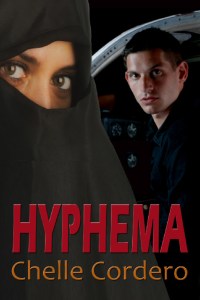
Today’s guest post is by Chelle Cordero, author of the recently released novel Hyphema (Kindle Edition, Vanilla Heart Publishing, April 15). She is the author of eight novels, including “Bartlett’s Rule,” “Hostage Heart,” and “Final Sin.”

You can see the “Hyphema” book trailer here , Chelle’s web site here and Chelle’s blog here.

Is there a Red Herring in the room?

The heroine of my latest novel, Hyphema, is a recent immigrant from Pakistan. Sudah has a reasonable command of the English language, but American idioms sometimes confuse her. I wonder what she would think of the expression “Red Herring”?

According to Wikipedia, the idiom “Red Herring” in a mystery story refers to something thrown in to distract the reader, perhaps to make the “whodunit” a bit harder to figure out.

I used Sudah’s ethnic background, and her Muslim religion, as an excuse in my story ~ an excuse for the local police and her husband’s coworkers to assume the strange happenings threatening Sudah’s family were just the locals letting their feelings be known. In today’s contemporary society, isn’t that what often happens? Even though Muslims have been in this country for years, since September 2001 there has been a heightened suspicion of this group of people. Add to that Sudah’s brown skin and the hajib (scarf) she wears in public, and a lot of people look at her with resentment and mistrust in their eyes.

Sudah is married to Matt Garratti, an “All American male” (at least a few generations), a flight medic, a Christian, and a New York transplant. They share a son. Sudah was just a child in Pakistan the day extremists hijacked four airplanes to use as weapons. She remembers her mother consoling a friend whose husband had come to America and hoped to become a citizen and bring his family along only to die along with three thousand innocent souls simply because he ran to the towers to try to help.

It’s a sad commentary when we accept intolerance and it’s sad when we direct our hyper-vigilance towards an entire ethnic group. And just perhaps, the police in this story are a little too quick to assume that someone is out to get them because of Sudah’s ethnic background.

Excerpt from Hyphema

Click cover for sample

“I don’t have to calm the hell down!” Matt’s voice rose. “We could have died a couple a weeks ago because somebody messed with the stove pipe and my CO detector. And you didn’t do anything then. And now someone tried to kidnap my son. They probably would’ve gotten away with it if I hadn’t pulled down the road when I did.”…

 “Sit down and be quiet.” Matt blustered and finally sat. He was furious. “You’ve been making a lot of noise that the police down here aren’t doing their jobs. Now I know you’ve had a few incidents of vandalism…”

“It’s been more than a few incidents of vandalism.”

“Shut your mouth. I am still talking.” The detective stood over Matt and waited. “Now I admit you probably got a few folks around here upset thinking they might have a terrorist living here.” He tilted his head towards Sudah. “And they really should be more open minded, so you have a reason to be upset.”

“My wife is not a terrorist!”

You can purchase “Hyphema” for Kindle from Amazon (http://amzn.to/fEYUR7) or Smashwords for multiple e-book formats (http://bit.ly/epqtjy


L. E. Harvey’s novels focus on women’s strengths

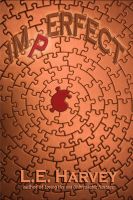
L. E. Harvey, author of “Loving Her” (2009), a collection of short stories and “Unbreakable Hostage” (2010), a suspense/thriller, turns her attention in her latest novel “Imperfect” to the love and chaos of a relationship between life partners who are not only confronted with small-town prejudice against interracial gay couples, but are also coping with AIDS. As a sickly child, Carol Mathers received a blood transfusion in the early 1980s before blood donors were screened as they are now. When she is diagnosed with AIDS in her mid-30s, she fears she may have unknowingly infected Alexandria, her partner of twelve years. The e-book addition of “Imperfect” is available now from Vanilla Heart Publishing. The trade paperback is scheduled for a November release.
Malcolm: Welcome to the Round Table, Lauren. In Unbreakable Hostage, released earlier this year, your protagonist, a PhD candidate in algebra, is kidnapped by one of her classmates and ends up using algebra-related messages to get word to the outside world. How difficult was it to shift gears from the life of a hostage to the world of a young couple who meet in Imperfect, fall in love and decide to share their lives together?

Lauren: Thanks so much for having me, Malcolm! I’m thrilled to be here! There was actually no real transition for me. The intensity of Unbreakable Hostage mirrors the intensity an interracial lesbian couple would face in a not-so-gay-friendly environment. Granted the situations are different, but on an emotional level, they’re actually quite similar. Fear is fear, hatred is hatred and love is love, no matter what situation you’re in.

Malcolm: To what extent is the tone of your daily life affected by the joys, sorrows and challenges of the fictional characters you’re writing about? That is, did you feel tense while writing about the kidnapping and angry and sad while writing about Carol and Alexandria?

Lauren: Very much so. I’m a very emotional person as it is, and I get swept up into my characters’ emotional states as well. To boot, I typically play music that’s reflective of what I’m writing, so I am very much engrossed and enveloped in their lives and emotional states. My books can easily sway my emotions! LOL. I’m sure that can’t be easy on my family! 🙂

Malcolm: What do you hope your will take away from reading Imperfect?

Lauren: My hope is that this book really causes people to stop and think. I want them to throw out any stereotypes or judgments they may have had after reading Imperfect. Perhaps it’s a lofty goal, but I really want my readers to walk away from this book seeing us all as human beings, hopefully diminishing some prejudicial thoughts/assumptions.

Malcolm: To what extent does your women’s rights and gay rights activism shape the plots and themes in your fiction?

Lauren: I think it shapes my books tremendously. If you look, I have very strong heroines. Not that the male characters are weak, mind you, but the women definitely take the spotlight! Whether intentional or subconscious, my three current titles all have themes regarding the strength and capabilities of women, equality for all people, etc. I guess I have a hard time separating my various passions & work!

Malcolm: I haven’t met many authors who also work as “pin-up girls.” How did you get started in that business? Are you finding any good story material in your modeling experiences?

Lauren: LOL. I kind of accidentally fell into modeling. I’m only 5’1″ and don’t look “model-ish” at all! 🙂 But for some reason, people like taking my picture! It’s fun, so I won’t stop ’em! 🙂 As far as pinup work goes, I just happen to be naturally inclined to make those silly, over-the-top cheesecake pinup facial expressions, so it all just kind of worked itself out. 🙂 You know, I haven’t thought to look at my modeling work for inspiration, but now that you said that, I’m going to start thinking about that! 🙂

Malcolm: Your website is promising a sequel to Imperfect. What can you tell us about that without giving away too many spoilers?

Lauren: Well, what I can tell you that is that Impeccable, the sequel to Imperfect, lives up to its name. I hate to sound like an ego maniac, but I am just so proud of this book! I really think it’s going to touch people’s hearts. You will have the same cast of characters, but you get to know them on a much deeper level. You’ll learn things about them that you never could have imagined. It gives you a more clear and defined understanding of the entire story and all of the players involved. Impeccable is very cerebral and also very emotional. If you liked Imperfect, you’ll love Impeccable! 😉

Malcolm: When you’re not writing and not modeling, do you find time to relax and smell the roses?

Lauren: Do I find the time to relax and smell the roses? LOL. Ummm…I am a self-admitted workaholic. Actually, working with my partner on our house or her sculptures is very relaxing for me. Doing anything with my family is really the best down time I can ask for. Whether it’s sanding wood or making dinner with our little one, family time is my down time. So, I do stop and smell the roses, in my own unconventional kind of way.

Malcolm: I’ve enjoyed our conversation, Lauren. I must tell you that after your powerful ending for Imperfect, I’ll be waiting to read Impeccable as soon as it’s hot off the press.

You can also find Lauren’s work in Vanilla Heart’s With Arms Wide Open anthology of poems and prose celebrating living and loving. You can read excerpts from “Loving Her,” “Unbreakable Hostage,” and “Imperfect” on fReado. Lauren’s books are also available to coalition troops serving overseas via Operation E-Book Drop.

To keep up with Lauren and her work, visit her blog “The writings and ramblings of a Philadelphian.”

Malcolm

Authors who connect with readers

“Funny how people are. Known for books that can make people pass out from nausea, Chuck Palahniuk in person is a gracious, sweet guy who really connected with the crowd at our event last Tuesday. He spent two to three minutes with each person who was getting a book signed, asking them questions and posing for pictures.” — Tom at RiverRun Bookstore in Portsmouth, NH

Don’t you wish it were always like this?

Not passing out from nausea while reading a novel, but meeting an author at a book signing who is genuinely glad you’re there.

After all, you’re giving up an afternoon or an evening. Perhaps it took you 30-40 minutes to get to the store and it will take you another 30-40 minutes to drive home.

Maybe you planned to buy the book anyway or maybe you heard something during the reading that caught your interest and you fished out a credit card and bought the book on an act of faith. At this point, I think you deserve more than an assembly-line book signing experience. We’ve all been to these and we’ve seen them on TV.

Sure, if 1000 people are lined up and the end of the line is five blocks away, the author–or, the store, at least–can’t afford a five minute chat per person. But how about a smile, a handshake, and a few questions about you? That shows an author is glad you’re there as contrasted with those who take you, your book reading experience, and your credit card for granted.

Good show, Chuck Palahniuk and RiverRun Bookstore.

Read the book, then visit Glacier and discover the magic again.

I had high hopes for literary monkeys

“Remember the old adage about how an infinite number of monkeys typing on an infinite number of typewriters will eventually type something beautiful? Well, the Internet disproves that.” — Kurt Vonnegut

I’ve had high hopes a monkey or two would make it onto the New York Times bestseller list. Figuratively speaking, these hopes have been realized many times over.

But literally, literary monkeys have been a disappointment, though the odds (I thought) were good that sooner or later, out of all the gibberish and all the jammed keyboards, a monkey would finally type: “Call me Ishmael” or “Lolita, light of my life, fire of my loins.”

Some say that the opening line to Finnegan’s Wake would have been better if a monkey had co-authored the book with James Joyce, starting with: “riverrun, past Eve and Adam’s, from swerve of shore to bend of bay, brings us by a commodius vicus of recirculation back to Howth Castle and Environs.”

As far as I know, there aren’t currently any Federally funded monkey typing and literature experiments even though finding out once and for all whether an infinite number of monkeys typing on an infinite number of typewriters will eventually type something beautiful is a typical usage of tax dollars.

I mean no disrespect to monkeys: there’s nothing better than a barrel if them for a lot of laughs, and I’m talking about higher quality laughs than I’m hearing on most ABC network sitcoms which, quite possibly, may have been scripted by monkeys to a greater extent than we know.

Monkeys get a lot of bad press, bless their hearts, for you seldom hear anyone say that something or other is more fun than a barrel of laughing hyenas or that an infinite number of wharf rats typing at an infinite number of typewriters will ultimately write a novel that begins “Once upon a time and a very good time it was there was a moocow coming down along the road and this moocow that was coming down along the road met a nicens little boy named baby tuckoo.”

Most wharf rats are looking for something better than the lowly life of a writer: Congressman, for example, or IRS agent.

Most logical people think that monkeys will never amount to anything, but that if they did, they would find their true calling in show business rather than the writing business. Hollywood has proven to us that this is true since an above average number of celebs either claim to be monkeys’ uncles or act like them.

“I wish either my father or my mother, or indeed both of them, as they were in duty both equally bound to it, had minded what they were about when they begot me; had they duly considered how much depended upon what they were then doing.” Such thoughts have occurred to many people, especially to Hollywood agents, Congressmen and IRS operatives because, when it comes down to it, even if a monkey had accidentally typed it, it’s not a monkey sentiment.

Of course, to some, Tristram Shandy might have been a better book had it been improved with either monkey business or rat droppings. My theory has always been that no self-respecting money will type everything it can just because it can, meaning that some of the worst possible fiction has yet to be created.

Thousands and thousands of monkeys are sensible enough not to ape everything a human under the pressures of riches and deadlines might type on a single typewriter in a single day. That’s my theory, anyway, and I’m sticking to it.

–Malcolm, author of “Jock Stewart and the Missing Sea of Fire,” a satirical thriller that pokes fun at the real or imagined monkeys in government and newsgathering.

One positive person makes my day

Truth be told, I experience blue days in spades.

Call me cynical, but the sugary tweets on Twitter (WHO CAN I HELP TODAY) and (LEARN TO LOVE ONE ANOTHER) just don’t help. I applaud the person who approaches each day with a WHO CAN I HELP ATTITUDE. But when a person says that, alarm bells go off.

I wonder, why are they saying that on Twitter? It’s marketing, I think, for clearly getting their help will cost me a lot of money. Maybe I would trust them more if they would just say something that helps me without flaunting the fact that they want to do it.

In contrast to this, I attended a book signing at Hall Book Exchange in Gainesville, Georgia yesterday afternoon for hypnotherapist Melissa Watts. She didn’t sit down and say WHO CAN I HELP TODAY or read a string of tweet-length platitudes off a prepared script. She sat there and was genuinely and infectiously herself: positive, giving, sharing.

Her words changed the tone of my weekend and inspired me anew to look within, to listen, to set aside doubts and to remember that what I see in the mirror is, using her words, like an overcoat, and that I am more than that and so is each of us who sat with her for two hours and shared our beliefs about past lives, energy, vibrations, and the big picture.

I may not know exactly why I drove 22 miles to sit in that room with Melissa Watts and five other people, but I know I was led there. I’m led everywhere I end up. The why of yesterday afternoon is probably summed up in answers I already know subconsciously. Short term, I walked in feeling blue and dark and I walked out with a sunny mood.

One positive person per day is all I need to keep my life and my emotions on track. I’m always looking for that person, hoping that through “chance” and “circumstance” I will be led to that person and that they will say what I need to hear and that, just maybe, I will say what they need to hear.

A transcendent novel set in Glacier National Park

A note to the Nobel committee

“I would like to learn, or remember, how to live. I come to Hollins Pond not so much to learn how to live as, frankly, to forget about it. That is, I don’t think I can learn from a wild animal how to live in particular…but I might learn something of mindlessness, something of the purity of living in the physical senses and the dignity of living without bias or motive.” — Annie Dillard

Perhaps it as escaped your notice, but all “who shall have produced in the field of literature the most outstanding work in an ideal direction” are not European, and neither is their focus restricted to fiction.

That said, Annie Dillard’s literature invites your consideration.

Much has been written about the lack of precision in the passages in Alfred Nobel’s 1895 will outlining the scope and intent of the Nobel Prizes. Yet, within the world of fiction, nonfiction and poetry, outstanding work seeks (and finds) its own angle of repose, and there it sits like a beating heart within the body of all literature as that which best sustains the art within its time and place. Its pulse beat is unmistakable. Had Nobel been more precise, our definition of great literature might have had the clarity of a very small pond.

Much has been written about the great precision author Annie Dillard brings to her fiction and narrative nonfiction, including her Pulitzer Prize winning Pilgrim at Tinker Creek (1974) and her metaphysical exploration of God, pain and suffering, Holy the Firm.

In spite of Dillard’s well-developed powers of observation and the precision with which she describes that she sees, critics and other readers have not been able to pigeon-hole the author’s intentions and stance. Henry David Thoreau’s influence on her work is obvious; her work also calls to mind such nature writers as Aldo Leopold and Edward Abbey as well as the transcendent quality of anthropologist Loren Eiseley.

Yet, in an age where knowledge and respect for the natural world tend to go hand in hand with advocacy, Dillard’s focus is nonjudgemental. She observes and writes without bias and without prescription.

As Pamela A. Smith wrote in her essay The Ecotheology of Annie Dillard: A Study in Ambivalence, Dillard is hard to pin down in the realms of theology, ecology and ethics.

“Dillard dazzlingly and fearsomely expresses what most people never pause to notice. That facility with language and capacity for sitting still and remaining awake to detail constitute her great gift. Her central contribution to ecotheology is that she displays, in minutiae, what has been and what still exists in a number of significant bioregions. She also exhibits for the ecological thinker that familiar twentieth-century phenomenon: an inability to move from observation to ethic, a sense of personal insignificance and alienation, a tendency to let things alone,” writes Smith.

Dillard’s work returns again and again to the natural world and to man’s place within it. While critics and other readers might be more comfortable if her writings could be defined with a short, crisp, unambiguous statement, such a thing would greatly limit the scope of Dillard’s most outstanding work in an ideal direction.

In her New York Times review of Dillard’s 2007 novel The Maytrees, Michelle Green aptly sums up the author to the extent that that’s possible: “In the three decades since Pilgrim at Tinker Creek, the nonfiction debut in which she introduced a prose style so gorgeously precise that every sentence sang, this poet, essayist and journalist has written nine original volumes powered by spare but brilliant language.”

An ideal direction, to be sure.

A recent suggestion by critic Janice Harayda that I consider what nature writer might be worthy of the Nobel Prize was the welcome catalyst for this post.

Malcolm

COMING SOON

A discussion with author Pat Bertram

Spoken word poetry – a slam poet’s new book

Glacier National Park’s Centennial volume of stories