PEN AMERICA MOURNS THE DEATH OF ‘WRITER’S WRITER’ PAUL AUSTER

FOR IMMEDIATE RELEASE

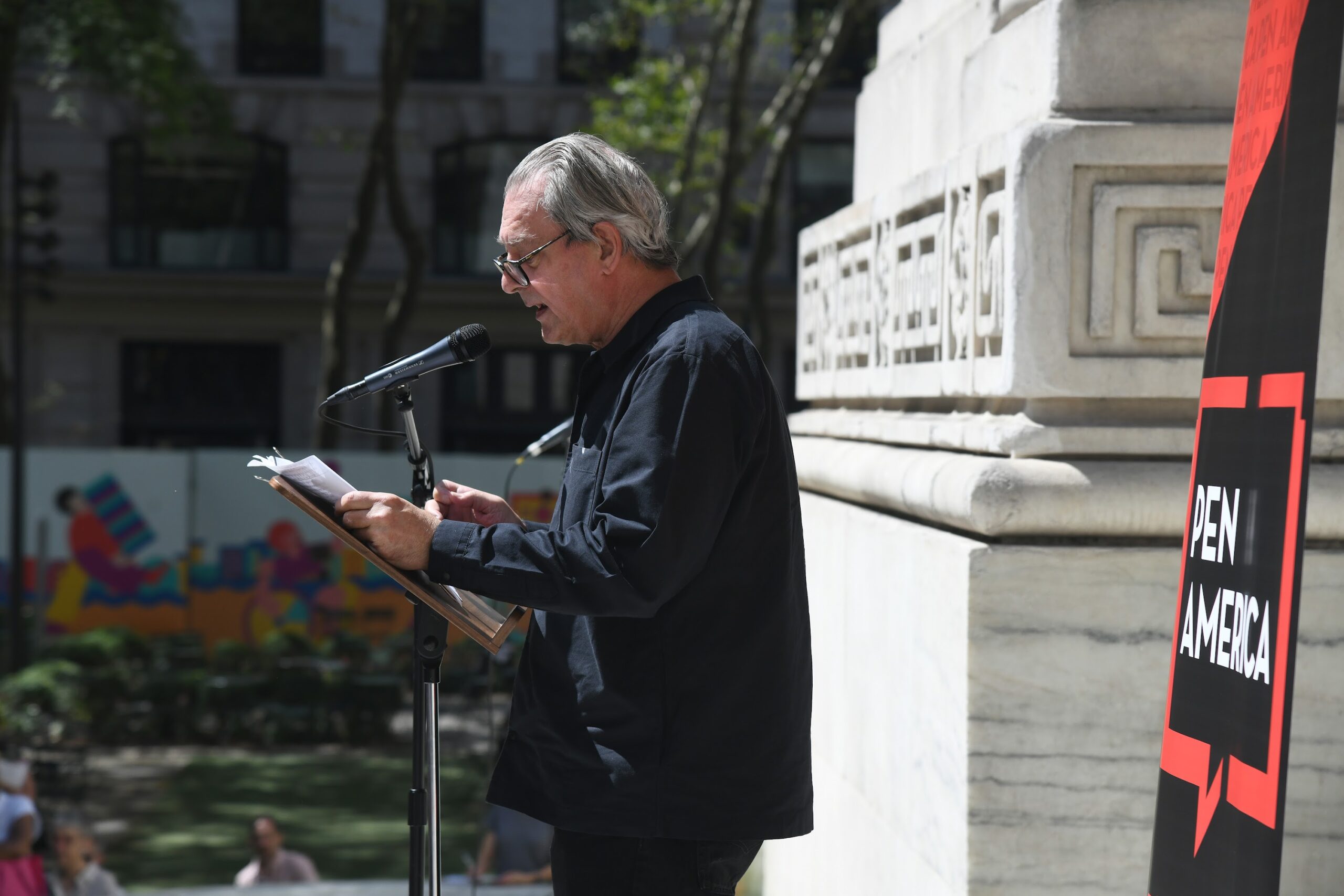
MANHATTAN, NY, AUGUST 19, 2022 Paul Auster reads a passage from Salman Rushdie’s book at a PEN America rally at the New York Public Library in Manhattan, NY. Photo by ©Jennifer S. Altman All Rights Reserved

(NEW YORK) — PEN America mourns the death of prolific author and longtime friend of PEN Paul Auster, who died on Tuesday at age 77. Suzanne Nossel, CEO of PEN America, said the following:

“In addition to shaping the worldviews of generations of Americans through his bracing and beloved novels, Paul Auster was a writer’s writer, consistently standing in solidarity with authors in China, Iran, Russia and around the world who were persecuted for what he was able to do freely: exercise his imagination and tell stories.  A dean of New York City’s literary community, he was a friend and mentor to many and a treasured colleague and stalwart supporter of PEN America and writers in need everywhere.”

Auster, who once served as the Vice President and Secretary of PEN America, and his wife Siri Hustvedt have been active supporters of PEN America’s efforts on behalf of jailed writers worldwide. They joined other members of the literary community in PEN America’s event in support of Salman Rushdie after the horrific attempt on his life in 2022.

Auster participated in the PEN World Voices Festival and numerous other PEN events, including a 2009 event where he read a series of autopsy and death reports of detainees held in U.S. custody in Iraq and Afghanistan, and another where he read new poems from Liu Xiaobo, who received the 2009 PEN/ Barbara Goldsmith Freedom to Write Award.

N. Scott Momaday: Obituary

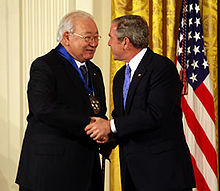
Navarre Scott Momaday (né Mammedaty) (February 27, 1934 – January 24, 2024) was an American and Kiowa novelist, short story writer, essayist, and poet from Oklahoma and New Mexico. His novel House Made of Dawn was awarded the Pulitzer Prize for Fiction in 1969, and is considered the first major work of the Native American Renaissance. His follow-up work The Way to Rainy Mountain blends folklore with memoir. Momaday received the National Medal of Arts in 2007 for his work’s celebration and preservation of Indigenous oral and art tradition. He held 20 honorary degrees from colleges and universities, the last of which was from the California Institute of the Arts in 2023, and was a fellow of the American Academy of Arts and Sciences. Wikipedia

Pulitzer Prize

“A special 50th anniversary edition of the magnificent Pulitzer Prize-winning novel from renowned Kiowa writer and poet N. Scott Momaday, with a new preface by the author

“A young Native American,  Abel has come home from war to find himself caught between two worlds. The first is the world of his grandfather’s, wedding him to the rhythm of the seasons, the harsh beauty of the land, and the ancient rites and traditions of his people. But the other world—modern, industrial America—pulls at Abel, demanding his loyalty, trying to claim his soul, and goading him into a destructive, compulsive cycle of depravity and despair.

“An American classic, House Made of Dawn is at once a tragic tale about the disabling effects of war and cultural separation, and a hopeful story of a stranger in his native land, finding his way back to all that is familiar and sacred.”

Review

“Beautifully rendered and deeply affecting, House Made of Dawn has moved and inspired readers and writers for the last fifty years. It remains, in the words of The Paris Review, both a masterpiece about the universal human condition and a masterpiece of Native American literature.” Birchbark Books. Momaday receiving the National Medal of Arts from George W. Bush in 2007

–Malcolm

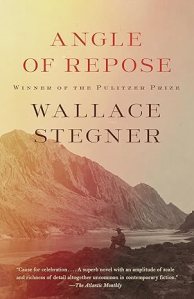
‘Angle of Repose’ by Wallace Stegner

I read this novel soon after it came out in 1971 (and won the Pulitzer Prize in 1972) and, if I bothered to organize my books, it would definitely belong on my shelf of favorites. The novel is about a real historian Lyman Ward and Stegner (1909-1993) based it on the letters of author Mary Hallock Foote. Some say he shouldn’t have used actual passages from her work. He says he had permission to do so. The controversy remains amongst scholars.

Wikipedia notes that “The title, seemingly taken from Foote’s writings, is an engineering term for the angle at which soil finally settles after, for example, being dumped from a mine as tailings.”

From the Publisher

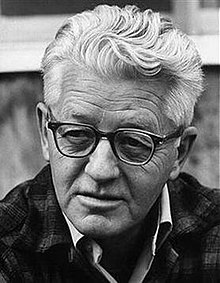
Stegner in 1969

An American masterpiece and iconic novel of the West by National Book Award and Pulitzer Prize winner Wallace Stegner—a deeply moving narrative of one family and the traditions of our national past.

Lyman Ward is a retired professor of history, recently confined to a wheelchair by a crippling bone disease and dependent on others for his every need.  Amid the chaos of 1970s counterculture, he retreats to his ancestral home of Grass Valley, California, to write the biography of his grandmother: an elegant and headstrong artist and pioneer who, together with her engineer husband, made her own journey through the hardscrabble West nearly a hundred years before. In discovering her story he excavates his own, probing the shadows of his experience and the America that has come of age around him.

The Atlantic Monthly called the novel a  “Cause for celebration…A superb novel with an amplitude of scale and richness of detail altogether uncommon in contemporary fiction.”

About the Author

“Wallace Stegner (1909-1993) was the author of, among other novels, Remembering Laughter, 1937; The Big Rock Candy Mountain, 1943; Joe Hill, 1950; All the Little Live Things, 1967 (Commonwealth Club Gold Medal); A Shooting Star, 1961; Angle of Repose, 1971 (Pulitzer Prize); The Spectator Bird, 1976 (National Book Award, 1977); Recapitulation, 1979; and Crossing to Safety, 1987. His nonfiction includes Beyond the Hundredth Meridian, 1954; Wolf Willow, 1963; The Sound of Mountain Water (essays), 1969; The Uneasy Chair: A Biography of Bernard DeVoto, 1974; and Where the Bluebird Sings to the Lemonade Springs: Living and Writing in the West (1992). Three of his short stories have won O. Henry Prizes, and in 1980 he received the Robert Kirsch Award from the Los Angeles Times for his lifetime literary achievements. His Collected Stories was published in 1990.” – Amazon Listing

Malcolm

Congress should pass a law that mandates more novels from non-prolific authors

And why not? The feds are already sticking their noses into a lot of stuff that isn’t the government’s business. And if Congress were fair about the matter, it wouldn’t force everyone to churn out books like James Patterson who, as we all know, has a truckload of co-authors except on his Alex Cross novels.

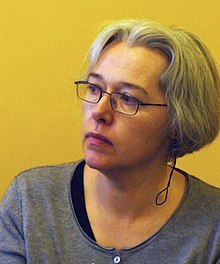
Clarke has aged since this 2006 photo was taken.

Since the idea for this legislation is mine, I get to choose the authors: they would include Mark Helprin, Erin Morgenstern, Susanna Clarke, and Donna Tartt. Oh shoot, Clarke has chronic fatigue syndrome, so we can’t put her on the list. We want to, but we shouldn’t. While it’s taxing to write books, maybe the feds should impose a tax on authors who really ought to write more, the rationale being that we need their stories to stay sane–or mostly sane.

Jonathan Strange and Mr. Norrell (2004) and its alternate history of Britain and magic, is probably one of the best magic/fantasy novels anyone has written.  We need more, much more because these books show us the world as it really exists. Perhaps Congress can convene a committee of dunces to learn why there’s been no sequel.

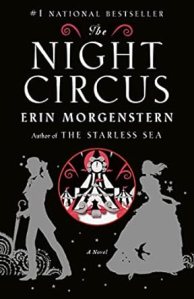
One pleasant surprise of 2012 was the appearance (without warning) of Morgenstern’s The Night Circus about a strange circus that appears without warning and spreads magic and humor in the towns where it manifests. The Starless Sea (2020) also captured our imagination with a magical world just as stunning as that of the circus.

Perhaps the tactic Congress should take is that readers need more of these books for national security reasons. We know that rationale is always bullshit, but it seems to work.

Mark Helprin, at 76, has appeared with another novel that will help save us from the Ruskies, Hamas, and other bad people called The Oceans and the Stars. I like all of his work, but think nothing holds a candle to Winter’s Tale.

Donna Tartt who–thank the good Lord is only 59–has always written at a snail’s pace. Congress can fix this because the country, as the Department of Homeland Security would say, “needs the security of books,” and that means that Tartt cannot take a few years off to play video games or watch “Survivor” and “Hells Kitchen” while the Pulitzer gathers dust on the shelves.

We need the stories, but we wither on the vine when we’re stuck waiting for them for too long.

–Malcolm

If you weren’t a writer, what would you be?

When I’m interviewed, I dislike interviewers who don’t know anything about me and read through a list of lame questions they probably use for all writers. I won’t play that game, so I try to derail it as soon as I hear the first stupid question.

Book Blogger: If you weren’t a writer, what would you be?

Me: Lying drunk in a gutter on the south side of Chicago down where Mickelberry’s Log Cabin Restaurant used to be.

BB: (Those who aren’t listening move on to the next question but a few rephrase the question.) No, seriously what would you be doing?

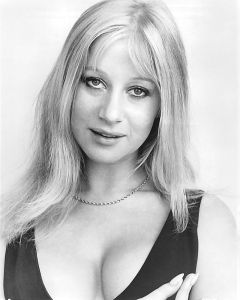
Me: Working as a feature film leading man while dating Helen Mirren.

BB: Oh, wow, what a life that would have been.

Me: Helen liked it. So did I–until Liam Neeson came along.

BB: Oh, wow, so when did the writing start?

Me: When Liam Neeson came along and “Readers Digest” offered me a boatload of cash to write about who was doing it with whom in Hollywood.  I used a pseudonym because anyone who told that story under his own name would have ended up wherever Judge Crater ended up when he disappeared in 1930. Actually, his picture rather messes up this post, but such is life. Anyhow, nobody ever knew I wrote the “tell-all” about everyone in or near Hollywood.

BB: Do you know where Judge Crater is?

Me: Dead.

I dislike the “what would you be” question because inept interviewers usually save it for writers when they would get better interview material if they asked a mobster how he got into the business. Most of the mobsters I know really wanted to teach kindergarten, but the family won out career-wise.

Great Northern Empire Builder at Glacier Park

But nobody asks the head of a funeral parlor, the desk sergeant at the local precinct, or the guys busting into the house during a home invasion what careers they wish they had. If you must know, I wanted to work for the Great Northern/Burlington  Northern/BNSF railway, but that doesn’t grab as many headlines as talking about Hellen Mirren even though it’s the closest I can come to telling you the truth.

Quite likely, most of us don’t know what we’d be doing if we weren’t doing what we’re doing. So don’t ask because most of us will lie to you.

–Malcolm

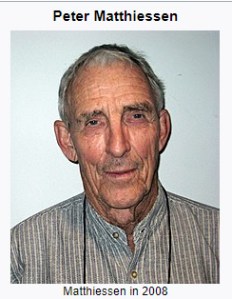
Remembering Peter Matthiessen

After mentioning a favorite of mine, Peter Matthiessen (May 22, 1927 – April 5, 2014) in yesterday’s post about The Land’s Wild Music, I thought, “Why not talk to Peter, see how he’s doing, find out who he likes in the college football bowl matchups, &c.” Easier said than done. It took me several hours to find my Ouija board. It was under the bed with my Radio Flyer wagon, an old baseball glove, and assorted monsters.

He was happy to have a little conversation and to let me now that he now sees two or three snow leopards every day, something he hoped for in his trek through the Tibetian Plateu in the 1973 with biologist George Shaller, recounted in his 1978 book The Snow Leopard. I’ve read a lot of Matthiessen’s work, but always return to The Snow Leopard as my favorite, winner of the National Book Award in 1979. The current edition has an introduction by Pico Iyer which is fine, but which I skip when reading old classics that are new to me.

I don’t want any help or advice when reading such words as these from the book: “The secret of the mountain is that the mountains simply exist, as I do myself: the mountains exist simply, which I do not. The mountains have no “meaning,” they are meaning; the mountains are. The sun is round. I ring with life, and the mountains ring, and when I can hear it, there is a ringing that we share. I understand all this, not in my mind but in my heart, knowing how meaningless it is to try to capture what cannot be expressed, knowing that mere words will remain when I read it all again, another day.”

I also especially liked At Play in the Fields of the Lord, Blue Meridian, African Silences, Far Tortuga, and In the Spirit of Crazy Horse.  As for the last book on my list, Wikipedia says, “Shortly after the 1983 publication of In the Spirit of Crazy Horse, Matthiessen and his publisher Viking Penguin were sued for libel by David Price, a Federal Bureau of Investigation agent, and William J. Janklow, the former South Dakota governor. The plaintiffs sought over $49 million in damages; Janklow also sued to have all copies of the book withdrawn from bookstores. After four years of litigation, Federal District Court Judge Diana E. Murphy dismissed Price’s lawsuit, upholding Matthiessen’s ‘freedom to develop a thesis, conduct research in an effort to support the thesis, and to publish an entirely one-sided view of people and events.’ In the Janklow case, a South Dakota court also ruled for Matthiessen. Both cases were appealed. In 1990, the Supreme Court refused to hear Price’s arguments, effectively ending his appeal. The South Dakota Supreme Court dismissed Janklow’s case the same year. With the lawsuits concluded, the paperback edition of the book was finally published in 1992.”
The book focuses on Leoard Peltier’s 1977 murder conviction for purportedly killing two FBI agents during the agency’s misguided attack on the American Indian Movement. I followed the case and agreed with Matthiessen’s assessment. Peltier is still in prison. I don’t think he should be.

Wikipedia writes: “In 2008, at age 81, Matthiessen received the National Book Award for Fiction for Shadow Country, a one-volume, 890-page revision of his three novels set in frontier Florida that had been published in the 1990s. According to critic Michael Dirda, ‘No one writes more lyrically [than Matthiessen] about animals or describes more movingly the spiritual experience of mountaintops, savannas, and the sea.'” I agree.

–Malcolm
PEN AMERICA APPLAUDS NOBEL PEACE PRIZE FOR WRITER AND HUMAN RIGHTS ACTIVIST NARGES MOHAMMADI

Nobel Committee recognizes the immense courage and dedication of PEN America Honoree Narges Mohammadi and all the writers and cultural workers like her in Iran

FOR IMMEDIATE RELEASE

(NEW YORK)— The Nobel Peace Prize awarded today to imprisoned Iranian writer, human rights activist, and 2023 PEN/Barbey Freedom to Write Award honoree Narges Mohammadi recognizes her singular courage in standing against government repression of women, writers, activists, intellectuals, and cultural figures who face unspeakable consequences for daring to speak out or write, PEN America said.

Narges Mohammadi

Commenting on the award, PEN America CEO Suzanne Nossel said, “The awarding of the Nobel Peace Prize to Iranian writer and activist Narges Mohammadi is a tribute to her courage and that of countless women and girls who have poured out into the streets of Iran and faced down one of the world’s most brutal and stubborn regimes, risking their lives to demand their rights. For those of us at PEN America, Narges is an inspiration and also a personal friend, a woman whose story of unyielding defiance at crushing personal costs awakens the righteous indignation within each of us. We applaud the Nobel Committee for putting the weight of its Prize behind the struggle of Narges and all Iranian women for their freedom to dress, behave, think, and write as they wish.”

“Narges’ indefatigable will to be heard, even from the darkest, coldest, and most isolated corners of an Iranian prison, is astounding. She championed change in Iran from her jail cell with a passion and bravery that can truly be described as heroic. As a witness to decades of atrocities, she has used her voice as a catalyst to awaken a new generation to understand that their words are one of humanity’s greatest tools. PEN America enthusiastically congratulates Narges Mohammadi and calls for her immediate release.”

PEN America honored Narges Mohammadi with the 2023 PEN/Barbey Freedom to Write Award, which her husband, Taghi Rahmani, accepted on her behalf at the PEN America Literary Gala in New York City in May. Conferred annually, the PEN/Barbey Freedom to Write Award recognizes writers who have been jailed for their expression. PEN America galvanized celebrities including John Mullaney, Colin Jost, Candice Bergen, Diane Sawyer, Alec Baldwin, Chimamanda Ngozi Adichie and others to rally to Mohammadi’s cause, drawing international media coverage and global recognition of her plight. Of the 53 jailed writers who have been honored with the PEN America Freedom to Write Award since its establishment in 1987, 46 have been released from prison within an average of about 18 months due in part to the global attention and pressure generated by PEN America’s recognition. This is not the first time PEN America’s Award has led directly to the conferral of a Nobel Peace Prize. PEN’s 2009 Freedom to Write honoree Liu Xiaobo, the President of the Independent Chinese PEN Center, was awarded the Nobel Peace Prize in 2010, the culmination of a campaign set in motion by PEN America.

Narges Mohammadi has been forced to make unimaginable sacrifices for her work, including currently serving multiple sentences totaling more than 10 years in Iran’s notorious Evin Prison, where she has been threatened, beaten, and kept in periods of solitary confinement, a practice she has termed ‘white torture’ in her books and writings. Additionally, it has been almost nine years since Mohammadi last saw her husband and two children, who are now in exile in France. And yet, despite these arduous circumstances, Mohammadi continues to defend human rights and speak out against authoritarianism from within prison, drawing attention both to ongoing political events and to abuses against her fellow prisoners. “They will put me in jail again,” she wrote in her book, White Torture. “But I will not stop campaigning until human rights and justice prevail in my country.”

Mohammadi’s case is among dozens of cases of writers and activists who have faced political repression in Iran in the last year alone. Starting in September 2022, the country was swept by a widespread protest movement in favor of democracy and women’s rights following the state’s killing of Mahsa (Jina) Amini. In response, the Iranian regime further cracked down on free speech and arrested thousands for their participation in, or support of, the demonstrations. Iran’s literary and creative communities continue to use writing, art, and music as vehicles to express political dissent, even in the face of the brutal government crackdown.

Writing is the Lifeblood of a Writer

Didion in 1970

“When she was a teenager, [Joan] Didion taught herself to type and to write by pecking out stories by Ernest Hemingway and Joseph Conrad on an Olivetti Lettera 22. Her goal: ‘To learn how the sentences worked,’ she told the Paris Review. Thus began her immersion in the physical act as well as the craft of writing. Call it a form of machine learning. ‘I’m only myself in front of my typewriter,’ Didion once told an editor at Ms. magazine.” –from “’To Be A Writer, You Must Write:’ How Joan Didion Became Joan Didion” by Evelyn McDonnell.

“I’m only myself in front of my typewriter,” updated to include “computer keyboard” explains a lot about those of us who write. That might include hints about why many of us are awkward when we have to talk to people–or think.

I like Didion (1934-2021) because she came on the scene during the exciting and controversial days of “new journalism” in which reporters in many ways became part of the story they were reporting. Tom Wolfe, Gay Talese, and Norman Mailer were leaders in this genre. The style purportedly communicated what the “just the facts” of standard reporting couldn’t address.

While Didion was, in large part, an essayist who could be found in major publications, it’s likely that those who remember her are probably more familiar with her fiction, including Play It as it Lays and A Book of Common Prayer. Others remember her from her nonfiction book  The Year of Magical Thinking about her daughter’s illness and the death of her husband, author John Gregory Dunne (Crooning, Playland) in 2003.

If you want to know more about Joan Didion, McDonnell’s book is a worthy starting point that, according to Booklist is “Shaped by intellectual rigor and artistic grace … McDonnell’s portrait is vibrant, fluent, sensitive, and clarifying.”

Malcolm

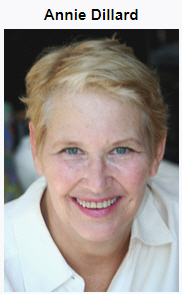
Annie, that Pilgrim, whose words I go back to again and again

“I can no longer travel, can’t meet with strangers, can’t sign books but will sign labels with SASE, can’t write by request, and can’t answer letters. I’ve got to read and concentrate. Why? Beats me.” – Annie Dillard, from her website
I was browsing through the Poets & Writers website today when I saw that a profile of Annie Dillard, by John Freeman, “Such Great Heights”  from 2016 was displayed from the magazine’s archives.  Freeman writes, “You can almost hear the pops and fizzes of combustion as the flue clears and Dillard’s mind gulps down the oxygen it has been feeding on for years—books. It’s something to behold. Here is the sensibility that emerged from a white-glove Pittsburgh background because she read a novel about Rimbaud and wanted her mind to be on fire too. Here is the writer who pulled it off, chiseling out Pilgrim at Tinker Creek (Harper’s Magazine Press, 1974), the Walden of our time, in nine months because she read a book on nature and felt she could do better. And thus Dillard wrote that great, elegant prayer to the seasons, largely at night, in the Hollins College library in Roanoke, Virginia, powered by chocolate milk, Vantage cigarettes, and Hasidic theology.”

Tinker Creek in Virginia

If there were a website where readers who love a writer’s words and philosophy could sign up to become an official kindred spirit, I would have gone there in 1974 when the Pulitzer-Prize-winning Pilgrim at Tinker Creek emerged to sign my name on Dillard’s kindred spirit page. He work has influenced by thinking .

In Tinker Creek, she writes, “It is so self-conscious, so apparently moral, simply to step aside from the gaps where the creeks and winds pour down, saying, I never merited this grace, quite rightly, and then to sulk along the rest of your days on the edge of rage.
I won’t have it. The world is wilder than that in all directions, more dangerous and bitter, more extravagant and bright. We are making hay when we should be making whoopee; we are raising tomatoes when we should be raising Cain, or Lazarus. Go up into the gaps. If you can find them; they shift and vanish too. Stalk the gaps. Squeak into a gap in the soil, turn, and unlock-more than a maple- a universe. This is how you spend this afternoon, and tomorrow morning, and tomorrow afternoon. Spend the afternoon. You can’t take it with you.”

Yes to all that. And to her words in such books as Holy the Firm, Teaching a Stone to Talk, and Tickets for a Prayer Wheel. She taught for 21 years at Wesleyan University where I wish I’d been a student to audit her classes. If you read a lot, you will most likely find your Annie Dillard, the friendly author you wish lived next door with the porch light on..

We’re about the same age, she and I,  and there’s much we could have talked about.

Malcolm

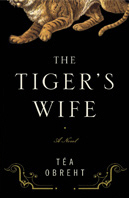
Rereading ‘The Tiger’s Wife’ by Téa Obreht

Several days ago, I posted some ideas that a story happens in a place and can be revisited like any tourist destination. I especially like returning to places filled with magical realism since I often write in that genre. So it is that I decided to reread The Tiger’s Wife which NPR reviewed as Magical Realism Meets Big Cats.

I’m rereading the book now because I wanted to take another look at it before finally getting around to reading Inland, a novel set in the American Southwest.

NPR wrote that “The Tiger’s Wife rests securely in the genre of magical realism, inciting comparisons to Gabriel Garcia Marquez and even Kafka.” The reviewer thought that the ending was too abrupt. I didn’t in my April 2011 review: “The Tiger’s Wife is dark and deep and perfectly crafted, and if you allow yourself to be immersed in it, you will see the blazing eyes of Shere Khan.” The novel won the Orange Prize for Fiction and was a 2011 National Book Award finalist.

From the Publisher

Author’s Website

“Weaving a brilliant latticework of family legend, loss, and love, Téa Obreht, the youngest of The New Yorker’s twenty best American fiction writers under forty, has spun a timeless novel that will establish her as one of the most vibrant, original authors of her generation.

In a Balkan country mending from war, Natalia, a young doctor, is compelled to unravel the mysterious circumstances surrounding her beloved grandfather’s recent death. Searching for clues, she turns to his worn copy of The Jungle Book and the stories he told her of his encounters over the years with “the deathless man.” But most extraordinary of all is the story her grandfather never told her—the legend of the tiger’s wife.”

Téa Obreht was born Tea Bajraktarević in the autumn of 1985, in BelgradeSR SerbiaSFR Yugoslavia, the only child of a single mother, Maja Obreht, while her father, a Bosniak,[10] was “never part of the picture.” – Wikipedia .

–Malcolm

Malcolm R. Campbell is the author of Eulalie and Washerwoman, magical realism set in the backwoods of the Florida Panhandle in the 1950s.