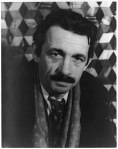
“Thomas Hart Benton (April 15, 1889 – January 19, 1975) was an American painter, muralist, and printmaker. Along with Grant Wood and John Steuart Curry, he was at the forefront of the Regionalist art movement. The fluid, sculpted figures in his paintings showed everyday people in scenes of life in the United States.” – Wikipedia

 I very much like Thomas Hart Benton, especially his murals like the one shown here. One of my favorite old books on my shelves is his autobiography An Artist In America published in 1939. Sad to say, I cannot find the cover art online, but the cover shown here comes from an early edition. The cover, which shows some of his sketches, says that the book includes 64 sketches, representing “A sympathetic vigorous picture of America by one of her great artists.”
From The Publisher (current edition)
“Controversial, flamboyant, contentious, brilliant–Thomas Hart Benton (1889-1975) was certainly all of those. Few American artists have stirred so much love and hatred as he did in a career that lasted almost seventy years. Although his painting aroused much controversy, perhaps equally as much was created by his words, for his piercing wit, profane sarcasms, and insightful condemnations were fired off without restraint. In this fiery and provocative autobiography, Benton presents an intriguing record of American art and society during his lifetime.
“The first installment of this work was published in 1937, but Benton continued his life story in chapters added to editions published in 1951 and 1968. This new edition includes seventy-six drawings that add much to his narrative, plus a foreword discussing Benton’s place in American art and an afterword covering his career after 1968, both written by art historian Matthew Baigell.

“Although Benton is most famous as a regionalist painter and muralist, his complex and fascinating career brought him into contact with many of the most important artists and thinkers of the century, including Jackson Pollock, Grant Wood, Julian Huxley, Felix Frankfurter, Eugene Debbs, John Reed, and Harry Truman. While living in New York and on Martha’s Vineyard in the 1920s and 1930s, Benton often associated with leading intellectuals and radicals. However, when his evolving principles of art led him away from an interest in Marxism, he was bitterly attacked by many of his former friends, and his account of that time reveals strikingly the fierce critical battles he faced in trying to establish his own artistic vision.
“Critics on the Left were not his only opponents, however, and equally revealing are his responses to the moral condemnations heaped on his murals done for the states of Indiana and Missouri and on his realistic nudes of the late 1930s.
“Throughout his account, from descriptions of his boyhood in southwest Missouri, his travels, and his career to discussions of specific works of art and other artists, Benton portrays people and events as vividly in words as he does in his paintings.”

 Malcolm's Round Table