My favorite color is blue. While haint blue is useful on porches and front doors, it’s too light for a signature color. I need navy blue, the blue of ocean water just before the light is gone, the blue of twilight over the city. Naturally, I love the blues which is why I mentioned them often in my novel Conjure Woman’s Cat and its sequels.
According to SantaFe.com, “Blues is the name given to the musical form and the music genre that emerged from the African-American communities and the black cultural melting pot of the American South of the 1890’s, drawing on a fascinating mixture of African-American spirituals, traditional songs, work songs of the slaves, field hollers, shouts and chants, folk ballads, European hymns, contemporary dance music and rhymed simple narrative ballads. During their back-breaking toil in the fields of the Southern plantations, black slaves developed a “call and response” way of singing to give rhythm to the drudgery of their work.”
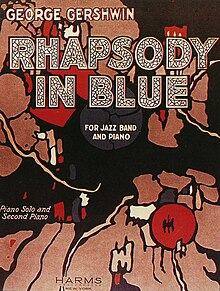 While I especially like the blues when sung with a piano or guitar accompaniment, I fully appreciate George Gershwin’s 1924 instrumental approach for piano and jazz band, “Rapsody in Blue,” that I first heard on my father’s 78 rpm records. The composition was controversial from the beginning because it mixed classical music and jazz.
According to Wikipedia, “The Rhapsody is one of Gershwin’s most recognizable creations and a key composition that defined the Jazz Age. Gershwin’s piece inaugurated a new era in America’s musical history, established Gershwin’s reputation as an eminent composer, and eventually became one of the most popular of all concert works. In the American Heritage magazine, Frederic D. Schwarz posits that the famous opening clarinet glissando has become as instantly recognizable to concert audiences as the opening of Beethoven’s Fifth Symphony.”
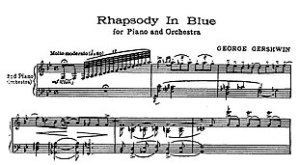 As a clarinet player in high school and college bands, that opening glissando caught my attention and never let it go. First, it was a perfect beginning to the piece. Second, I couldn’t play that 17-note gliding upward cry on my clarinet for love or money. (Not that anyone offered either.) You can hear a YouTube performance here.
What Gershwin produced was not a “jazz concerto” but a rhapsodic work for “piano and jazz band” incorporating elements of European symphonic music and American jazz with his inimitable melodic gift and keyboard facility.
As Classic FM notes, “Gershwin’s original title for it was American Rhapsody. But, by chance, Ira had been to an exhibition of Whistler’s paintings and saw the painter’s Nocturne In Blue And Green of the Thames at Chelsea. Why not call the new piece Rhapsody In Blue instead, he suggested. The title would reflect the European and American influences. Also at Ira’s suggestion, George contrasted the syncopated character that dominates the tune with an expressive romantic theme the composer had previously improvised at a party.”
And so the music plays forever in our consciousness even when we don’t have a band or a record or an audio file.
–Malcolm
 Malcolm's Round Table